
Prime Minister Sir Keir Starmer has vowed that conversations on welfare reform will continue ahead of a crucial vote next week, after 126 of his own backbenchers rebelled against changes.
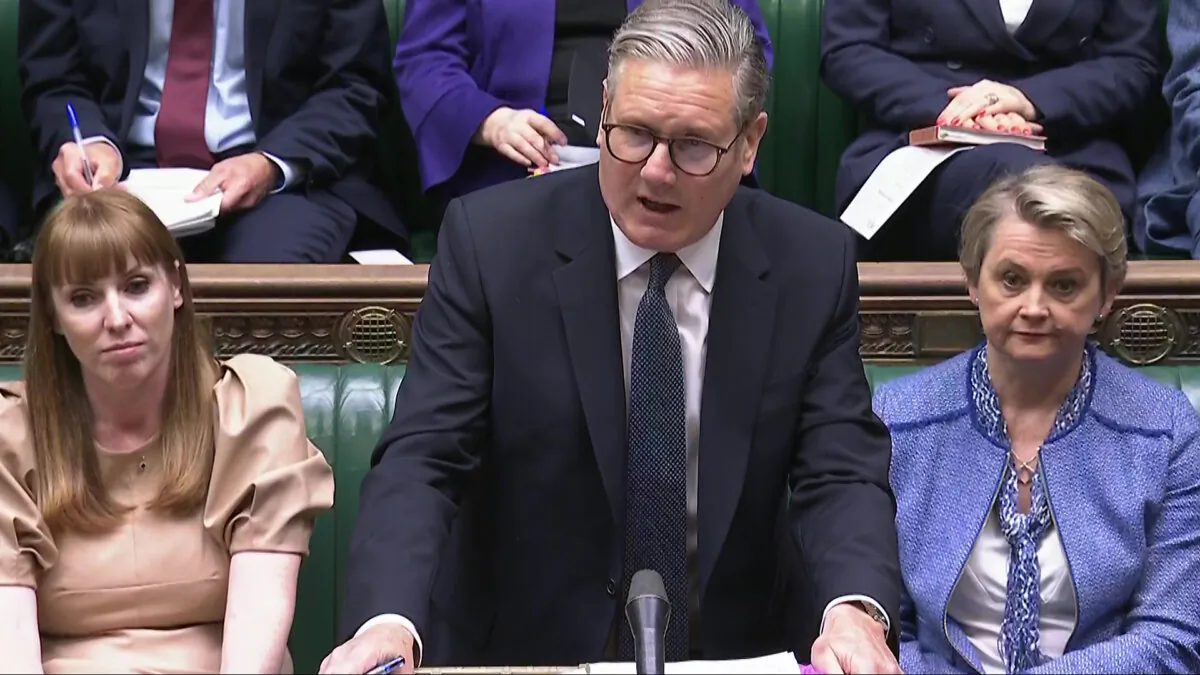
Speaking in the House of Commons on Thursday, Starmer stressed the need to reform the “broken” welfare system.
The government wants to tighten the eligibility requirements for personal independence payment (PIP), reduce the health-related element of universal credit (UC), and increase the UC standard allowance.
MPs are set to vote on these changes, introduced in the government’s Universal Credit and Personal Independence Payment Bill, on July 1.
The bill faces opposition from more than three-quarters of Labour backbenchers, who added their names to an amendment that would stop the legislation at its first vote.
Among them are the Environmental Audit Committee chairman Toby Perkins and Stoke-on-Trent Central’s Gareth Snell.
The amendment, lodged by Treasury Committee chairwoman Dame Meg Hillier, says the bill’s provisions have not been subject to “a formal consultation with disabled people.”
It also noted that, according to the government’s own impact assessment, the reforms will push 250,000 people into poverty, including 50,000 children, after relative housing costs in 2029–30.
Starmer acknowledged that MPs “want to get this right” and promised to see the welfare reforms implemented “with Labour values of fairness.”
“That conversation will continue in the coming days, so we can begin making change together on Tuesday,” he added.
The Commons Leader Lucy Powell also told MPs that the government “actively engages with parliamentary opinion.”
Push for Change
The government has argued that the social security system is “broken” and its costs “are spiralling at an unsustainable rate.”
Introducing the new measures last week, ministers said that one in 10 people of working age are now claiming a sickness or disability benefit.
“Without reform, the number of working age people on disability benefits is set to more than double this decade to 4.3 million,” the statement said.
Since the pandemic, spending on working age disability and incapacity benefits went up £20 billion and is set to increase further to £70 billion a year by the end of this Parliament, according to official data.
Work and Pensions Secretary Liz Kendall stressed the need for change in order to achieve more sustainable welfare spending, unlock economic growth and save up to £5 billion a year.
The government promised “robust protections” for the most vulnerable, including an above-inflation rise in the UC standard allowance for nearly four million households and a lifetime exemption from reassessment for 200,000 people with the most severe conditions.
IFS Predicts Losses for Disabled Claimants
New analysis by the Institute for Fiscal Studies (IFS), released on Thursday, reviewed the impact of the proposed changes on incomes and incentives to work and claim benefits.
The think tank estimated that by 2029–30, 800,000 fewer working-age people will receive a PIP daily living award, most losing around £3,850 a year.
Tightened rules will also cut support for 2.2 million UC health-element claimants by an average of £450 in real terms, while 700,000 future claimants would receive £2,700 less than under the current system.
Overall, the IFS forecasts annual savings of £4.8 billion by the end of the decade but warns that 3.2 million people will lose an average of £4,000 a year, with “perhaps as many as half a million” seeing drops of more than £8,000.
Liberal Democrats urged the government “to change course,” warning that countless people rely on benefits to stay in work and “just go about their daily lives.”
Public Pushback and Political Flashpoints
Polling by More in Common suggests limited public enthusiasm for the proposed reforms. Just 27 percent of 2,004 adults surveyed said they supported the planned changes to the benefits system.
Half (51 percent) believed the cuts would worsen the health of disabled people, while a similar proportion (52 percent) said the reforms would increase pressure on the NHS.
Six in 10 respondents said the Government should pursue alternative cost-saving measures instead.
The current rebellion follows a similar episode in July last year, when Labour faced its first major revolt over the two-child benefit cap. The government successfully defeated an amendment to scrap the policy and suspended seven Labour backbenchers who supported the motion.
If the Universal Credit and Personal Independence Payment Bill passes its second-reading vote on Tuesday, it will skip the usual weeks of committee scrutiny and instead face only a few hours of debate by the whole House.
The final Commons approval is currently pencilled in for July 9.
PA Media contributed to this report.
 Friends Read Free
Copy
Facebook
Tweet
Friends Read Free
Copy
Facebook
Tweet