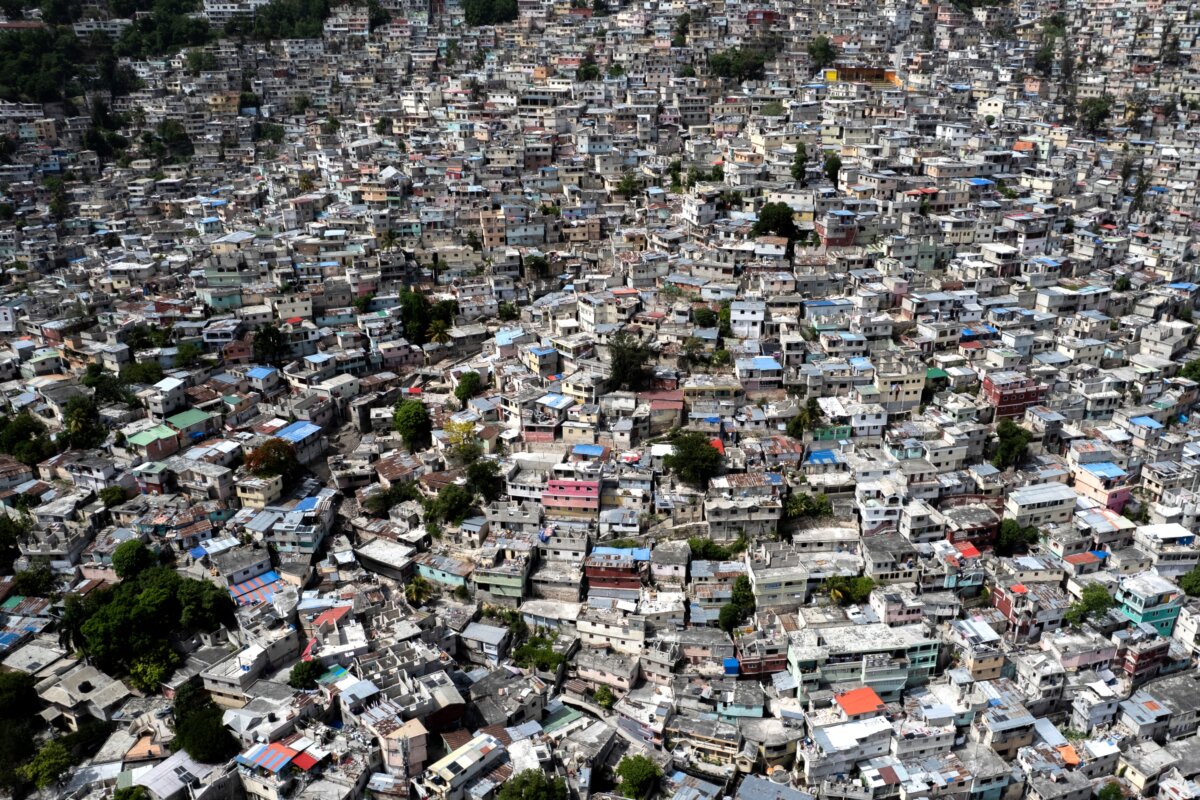
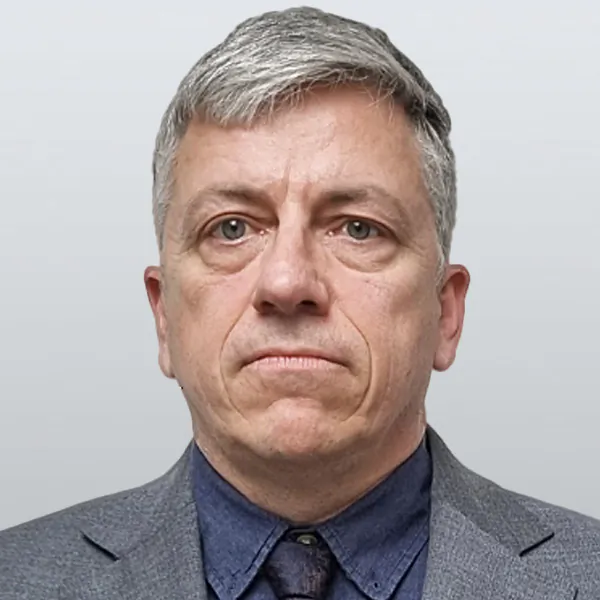
The U.S. State Department has taken steps to revoke the visas of two members of Haiti’s Transitional Presidential Council and their immediate families because of their alleged involvement in gangs.
“These actions are being taken due to the TPC members’ involvement in the operation of gangs and other criminal organizations in Haiti, including through interference with the Government of Haiti’s efforts to counter gangs designated as Foreign Terrorist Organizations (FTO) by the United States,” the State Department said in a statement published on Jan. 25.
The statement—which did not identify the two TPC members whose visas are being revoked—said: “The Haitian people have had enough with gang violence, destruction, and political infighting. The Trump Administration will promote accountability for those who continue to destabilize Haiti and the region.”
The nine-member council was appointed in April 2024, but it has been marked by allegations of corruption and a declining security situation in Haiti.
On Jan. 23, Haitian Prime Minister Alix Didier Fils-Aimé, who was appointed by the TPC, spoke to U.S. Secretary of State Marco Rubio, who “reaffirmed U.S. support for Haiti’s stability and security.”
A State Department spokesman said Fils-Aimé should remain in post.
‘Corrupt Actors’
“The current violence caused by gangs can only be stopped with consistent, strong leadership, with the full support of the Haitian people,” the State Department said. “The Secretary added the Transitional Presidential Council (TPC) must be dissolved by February 7 without corrupt actors seeking to interfere in Haiti’s path to elected governance for their own gains.
“The United States will ensure there is a steep cost for corrupt politicians who support vicious gangs and wreak terrorism on Haiti.”
On the same day, two members of the TPC—Leslie Voltaire and Edgard Leblanc Fils—called for Fils-Aimé to be removed from his post and said a majority of the council supported his removal.
“We are the ones who appointed Didier Fils-Aimé in November 2024. We are the ones who worked with him for a year, and it is up to us to issue a new decree naming a new prime minister, a new government, and a new presidency,” Voltaire said during a press conference.
Haiti has not had a presidential election since November 2016, when Jovenel Moïse was elected.
The country has been mired in political and economic turmoil since July 2021, when Moïse was assassinated at his home in the Haitian capital, Port-au-Prince, by a group of mercenaries, most of whom were Colombian nationals.
A number of people have been arrested in connection with the assassination, and in February 2024, a former U.S. government informant, Joseph Vincent, a Haitian American national, was sentenced to life in prison by a court in Miami.
In recent years, gangs have proliferated and begun to dominate large parts of Haiti.
Gangs Designated as Terrorist Organizations
In May 2025, Rubio designated two of the biggest gangs, Viv Ansanm and Gran Grif, as foreign terrorist organizations.
“Haitian gangs, including the Viv Ansanm coalition and Gran Grif, are the primary source of instability and violence in Haiti,” Rubio said. “They are a direct threat to U.S. national security interests in our region.”
Viv Ansanm, which means “Live Together” in Haitian Creole, was formed in September 2023 and is led by 48-year-old Jimmy Cherizier, who is known as “Barbecue.”
It is a coalition of the two main gang factions operating in Port-au-Prince, G-9 and G-Pép, according to the State Department.
Cherizier was sanctioned in December 2020 and is the subject of a $5 million reward offered by the FBI.
The State Department said Gran Grif is the largest gang in Haiti’s Artibonite department, a region in the north of the country, and that it was responsible for an attack in February 2025 on the U.N.-authorized Multinational Security Support mission, which killed a Kenyan police officer, Samuel Tompei Kaetuai.
Reuters contributed to this report.
 Friends Read Free
Copy
Facebook
Tweet
Friends Read Free
Copy
Facebook
Tweet