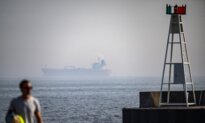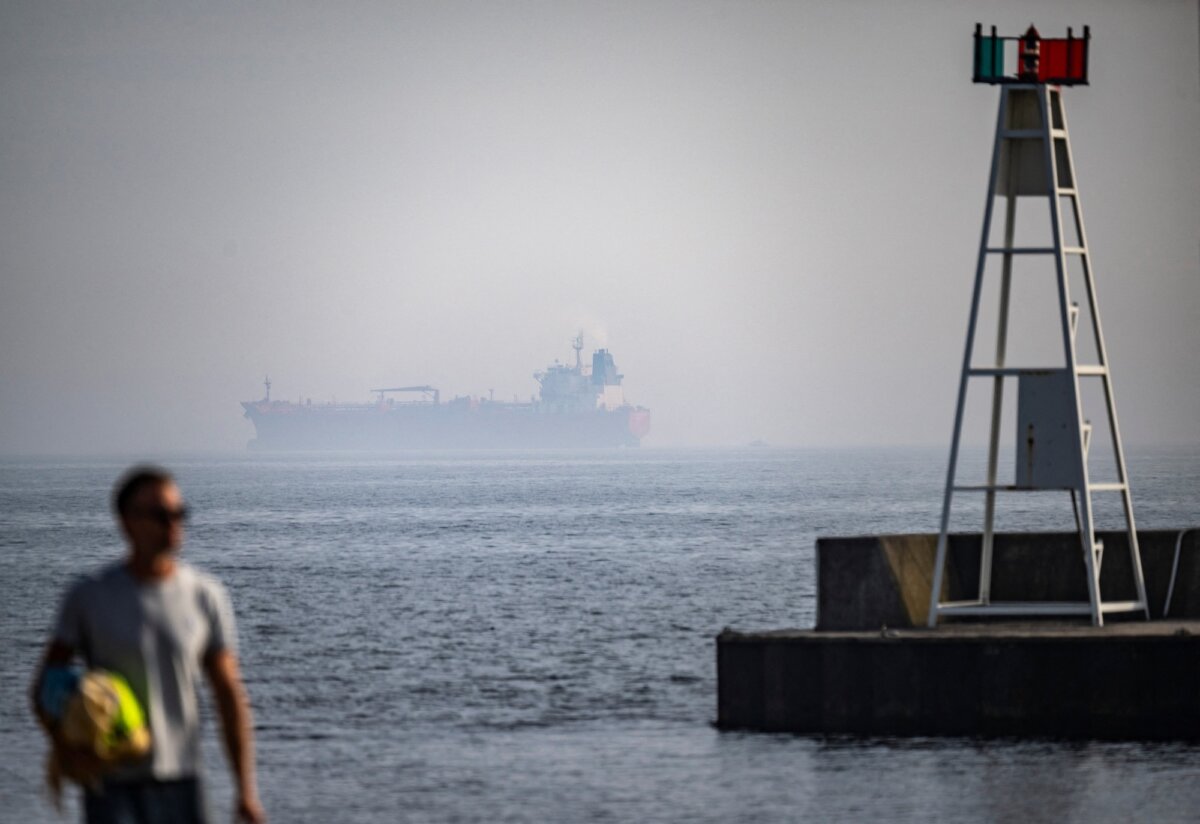

A Swedish prosecutor said on May 4 that he has placed the Chinese captain of an oil tanker suspected of being part of the Russian shadow fleet under arrest on suspicion of carrying false documents and violating laws on seaworthiness.
The Swedish Coast Guard and police boarded the Syrian-flagged Jin Hui in Swedish territorial waters on May 3.
Senior prosecutor Adrien Combier-Hogg, who is leading the preliminary investigation, said in a statement that the captain would be questioned on May 4 and said contacts with other authorities and countries have been initiated.
Swedish authorities said the Jin Hui was believed to belong to the shadow fleet, which Russia has allegedly used to evade Western sanctions imposed after Moscow invaded Ukraine in February 2022.
The seizure of the Jin Hui and detention of its captain is the fifth such action by Sweden this year.
The Swedish Coast Guard said the ship—which is believed to have been empty—is on the sanctions lists of the European Union and Great Britain.
Although the Jin Hui is flying the Syrian flag, it has previously flown the flags of Liberia, Panama, Singapore, and the Marshall Islands.
In the shipping industry, it’s common for ships to fly so-called flags of convenience that often bear little or no relevance to the ship’s ownership or main trading partners.
Although Russia is a vast country, it has a limited navigable coastline. Many of the ships heading to or from Russian ports have to pass through the Black Sea, the Bosphorus Strait, or the Baltic Sea.
The Copenhagen Convention, which went into effect in 1857, allows ships heading to or from Russian ports in the Baltic to pass through the narrow straits between Sweden and Denmark.
Sweden—which joined NATO in 2024—has become increasingly wary of Russian military vessels and commercial shipping involved in trade with Moscow.
Over the past two years, so-called shadow fleet vessels have allegedly tampered with or acted suspiciously near underwater cables in the Baltic.
In November 2024, two undersea fiber-optic cables in the Baltic were damaged within 24 hours, coinciding with the movements of a Chinese bulk carrier, the Yi Peng 3. The Chinese refused full access to the vessel sought by a Swedish prosecutor who was investigating the incidents.
In February 2026, Wan Wenguo, the Chinese captain of the container ship NewNew Polar Bear, pleaded not guilty in a Hong Kong court to a count of criminal damage. It involved an incident on Oct. 8, 2023, when a section of the 50-mile-long Balticconnector, which is a natural gas pipeline that supplies Finland, and a telecommunications cable linking Finland and Estonia were both damaged.
A U.S. Senate Foreign Relations Committee hearing on April 30 issued one of the strongest congressional warnings to date about China’s growing role in suspected undersea cable sabotage.
Ranking member Sen. Jeanne Shaheen (D‑N.H.) said that the vulnerabilities seen in the Baltic are “not unique to Europe,” noting that a bipartisan Senate delegation observed similar risks during an April visit to Taiwan.
Russia has not commented on the seizure of the Jin Hui, but it has previously accused NATO member states of piracy for their actions against vessels linked to Moscow.
Germany, the UK, and 10 other European countries agreed in December 2024 on measures to “disrupt and deter” Russia’s shadow fleet.
Neil Roberts, head of Marine and Aviation at Lloyd’s Market Association, told The Epoch Times in January 2025 that Russia may control about 1,100 ships—a mixture of oil tankers, container ships, and bulk carriers.
“Some of it is of a reasonable quality, but other vessels are older,” Roberts said.
Shadow fleet ships—which often have a confusing array of aliases—have been plying the world’s seas since long before Russia invaded Ukraine in 2022, Roberts said, but the conflict and the growing tension with NATO have drawn them into focus.
Reuters contributed to this report.
 Friends Read Free
Copy
Facebook
Tweet
Friends Read Free
Copy
Facebook
Tweet