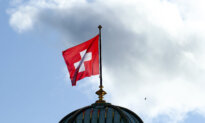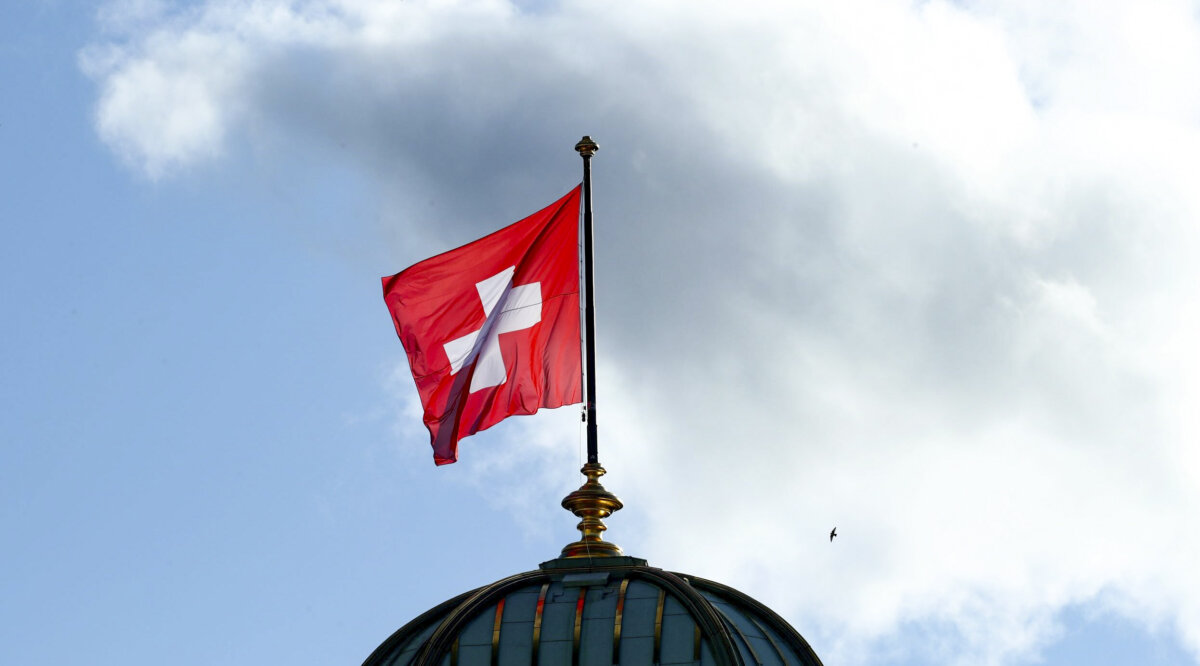

Swiss voters head to the polls on Sunday to decide whether to cap the country’s permanent resident population at 10 million, in what observers describe as the first binding national population ceiling anywhere in the world.
It has also emerged as one of Europe’s most closely watched tests of public sentiment on immigration and national identity.
The measure, titled “No to a 10-Million Switzerland (Sustainability Initiative),” is the most far-reaching attempt yet by the right-wing Swiss People’s Party (SVP), Switzerland’s biggest party, to rein in immigration.
The party presented the cap as a matter of sustainability, blaming what it calls uncontrolled mass immigration for a housing shortage, overcrowded trains and roads, overstretched schools and hospitals, rising crime, and what its literature describes as a “creeping Islamization.”
The goal of this initiative is “about protecting our culture and identity, our coexistence as a whole,” the party said in its campaigning materials, adding, “what unites us is our love for our country.”
Under the text of the initiative, the resident population must not exceed 10 million before 2050. If it passes 9.5 million, the government would be required to tighten asylum and family reunification rules, and should the population then breach 10 million for two years, Bern would potentially have to terminate its free movement agreement with the European Union.
Two Decades of Rapid Growth
According to Switzerland’s Federal Statistics Office, Switzerland counted about 9.1 million residents at the end of 2025, up from roughly 7.3 million in 2002, one of Europe’s fastest increases in this small, mountainous country.
Foreign nationals now make up 27 percent of the population. Italy, Germany, and Portugal are the three largest groups of foreign nationals.
Some leading opponents to the reform have agreed that something needs to be done about the scale of recent inflows, which have approached 100,000 a year since the COVID crisis. That’s equivalent to around 3.5 million a year for the United States.
Franz Grüter, a businessman and Swiss People’s Party Member of Parliament, traces the pressure to the free movement agreement with the EU that took effect in the 2000s.
In an interview with The Epoch Times, he said that before the 2000 vote on the free movement accord with the EU, the government had assured voters that only about 10,000 people would arrive each year. “Instead, net arrivals reached as high as 120,000 in some years, and the population has grown by nearly 2 million since then,” he said.
“If you set aside our mountains, where you cannot build houses or railways, Switzerland has now the highest population density of any country in Europe,” he said. “People feel it every day, and the infrastructure is at its limit. On the roads, rush hours have tripled over the past years. The trains are completely saturated. And housing prices have more than doubled.”
Many voters say they are concerned about rising healthcare costs, overcrowded trains, and expensive apartments.
Prices for homeownership have more than doubled over the last 20 years, rising continuously every year, according to a Houzy Real Estate Market Analysis.
Business Warnings Over Competitiveness
Business groups warn that a population cap would damage prosperity and competitiveness. Rudolf Minsch, chief economist at the employers’ federation economiesuisse, said rigid immigration caps are not a good idea and stressed Switzerland’s reliance on highly qualified foreign workers in pharmaceuticals, technology, and healthcare.
To counter the accusation that the SVP initiative seeks a rigid cap on immigration, the party also says that, should voters adopt it, around 40,000 people could still be added annually until 2050.
Grüter also rejected Minsch’s argument, saying only about half of the new arrivals come for work, and only some of those in specialized fields, with the rest arriving through family reunification, or as students or asylum seekers.
He argued that the additional tens of thousands of net arrivals also require new apartments, along with more hospitals, energy, and transport, in a country where infrastructure has reached its limits.
The Swiss Enterprise Federation has also warned that this measure would exacerbate labor shortages.
In response, Grüter said: “I do not trust these arguments.”
“For instance, we have newcomers coming to work in the construction industry, while thousands of construction workers are paid unemployment benefits. How can the country add nearly 2 million people in 25 years and keep reporting shortages in some fields? Something is wrong here,” he said.
“I am sure that, if the will is there, we can find smart solutions by training our own people. We still have enough people in our country, and immigration will remain possible anyway.”
The Swiss government takes the opposite view, saying that immigration broadly tracks the labor market and that companies and some industries cannot meet their needs from the domestic workforce alone.
Grüter attributes support for the status quo to two forces. Large companies, he said, want unfettered access to a European labor pool, while many politicians are reluctant to upset Brussels and want to maintain a good relationship with the EU.
Swiss Justice Minister Beat Jans warned that the vote could amount to a Swiss version of Brexit, saying the country “would find ourselves isolated” if it passes.
Grüter said he considers multiculturalist ideology to be a driving force behind migration. Critics on the left have called the initiative xenophobic.
Pressure on the Asylum System
The Swiss People’s Party also wants to pressure the government on immigration through the asylum system.
According to the European Council on Refugees and Exiles, 27,740 people applied for asylum in Switzerland in 2024, compared with 30,223 in 2023. The main countries of origin were Afghanistan, Turkey, Algeria, Eritrea, and Syria.
In January 2025, Claudia Kratochvil, the director of the Swiss Association of Municipalities, the national umbrella organization representing local governments at the federal level, stated that “the Swiss asylum system is in danger of collapsing.”
“Many municipalities, as well as cities and cantons, simply don’t know where to house all the people anymore,” she said.
The SVP also wants to curb illegal immigration, accusing the government of failing to address the issue. It says that over recent decades, hundreds of thousands of men from Muslim-majority countries have entered Switzerland through the asylum process, and that many remain in the country even after their applications have been rejected.
According to Unia, Switzerland’s largest trade union, 150,000 illegal immigrants live on Swiss territory.
“Many people are living here illegally, and this is contributing to a range of issues, including crime, while the government continues to overlook the problem,” Grüter said.
Official data put the foreign share of the prison population at about 72 percent, among the highest in Europe.
“Overall, if this laissez-faire is not stopped, we will end up in a serious mess”, Grüter said.
Polling points to a tight contest. A late-April survey for public broadcaster SRG found voters split 47 percent each way, and by late May opposition had risen to 52 percent against 45 percent in favor, according to gfs.bern, a pollster.
 Friends Read Free
Copy
Facebook
Tweet
Friends Read Free
Copy
Facebook
Tweet