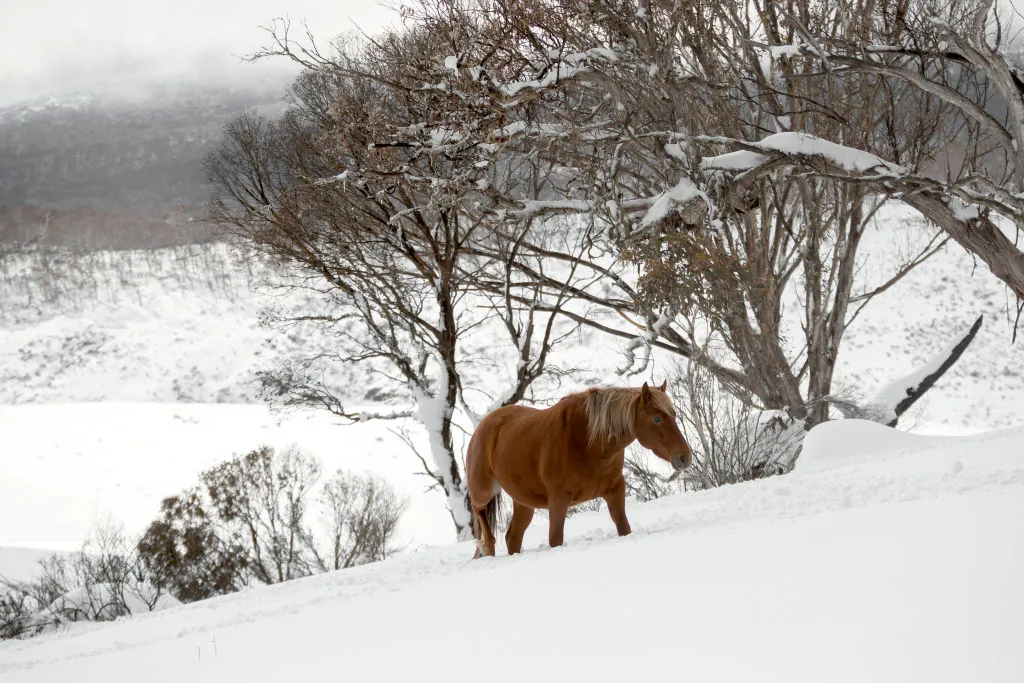

The Indigenous ambassador of the Invasive Species Council says the “country can breathe again” now that wild brumbies in New South Wales’ (NSW) Kosciuszko National Park can be legally culled.
In 2018, protections were put in place to protect the region’s brumbies due to their cultural significance and heritage.
But those protections were reversed when independent Wagga Wagga MP Joe McGirr, who introduced the Kosciuszko Wild Horse Heritage Repeal Bill 2025, which has now passed the NSW Parliament with support from Labor, Liberals, the Greens, the Legalise Cannabis party, and several independent MPs.
In a statement, Snowy River guide Richard Swain said allowing brumbies to be treated as pests was “a victory for truth over mythology.”
“For years, we’ve watched the alpine wetlands dry out, the snow-grass trampled, the frogs and fish vanish,” the Reclaim Kosci co-founder and Invasive Species Council Indigenous ambassador said.
“To finally see our parliament stand with country and the people who have fought for it—that’s something to be proud of.
“It shows that courage and compassion can walk together.”
Invasive Species CEO Jack Gough also celebrated the law change, saying truth had come before fear.
“No one likes to see animals killed,” he said.
“But the sad reality is that we have a choice to make between urgently reducing the numbers of feral horses or accepting the destruction of sensitive alpine ecosystems and habitats, and the decline and extinction of native animals.”
NSW Heritage Minister Penny Sharpe said she saw firsthand that controlling the wild horses would see the ecosystem restored.
“This bill will ensure that horses are treated the same way as other invasive species in NSW national parks,” she said.
MP McGirr said the reform had “corrected a serious mistake.”
Support for Brumbies
However, Brumby Action Group’s Marilyn Nuske says the Kosciuszko National Park horses are victims of misinformation, and that feral pigs and deer cause far greater damage.
Nuske said the horses hold cultural and heritage significance for Australia, sharing blood lineage with the nation’s renowned war horses and descending from animals that arrived with the First Fleet.
“Brumbies have, over time, become a political tool,” she told The Epoch Times.
Nuske said brumbies had lived in the region successfully for more than 200 years.
“It’s like our flag,” she said. “An animal can have heritage and cultural value.”
Nuske says brumbies help with re-wilding and have harmonised with the environment by distributing seeds, eating dry grasses that contribute to wildfires, and creating trails that are then used by kangaroos.
“[Advocates] want brumbies out because they represent the colonial history of Australia,” she said.
Nuske is also concerned about culling, which she says can take up to 15 bullets, and could see some animals die slow deaths anyway.
Australian Brumby Alliance President Nikki Alberts said there was concern community members were denied a place at the table.
“Overall, we have witnessed a debate where population numbers were grossly exaggerated, animal welfare standards were lowered, and a false urgency was used to justify cruelty,” she said.
Alberts believes only around 3,000 brumbies remain in the area, and is calling for them to be rehomed as a humane alternative to culling.
NSW Animal Justice Party MP Emma Hurst said aerial culls had been performed in the past, which she termed a “bloodbath.”
“The concern is that the aerial shooting will start up again … and every remaining survivor will be killed,” she said.
 Friends Read Free
Copy
Facebook
Tweet
Friends Read Free
Copy
Facebook
Tweet