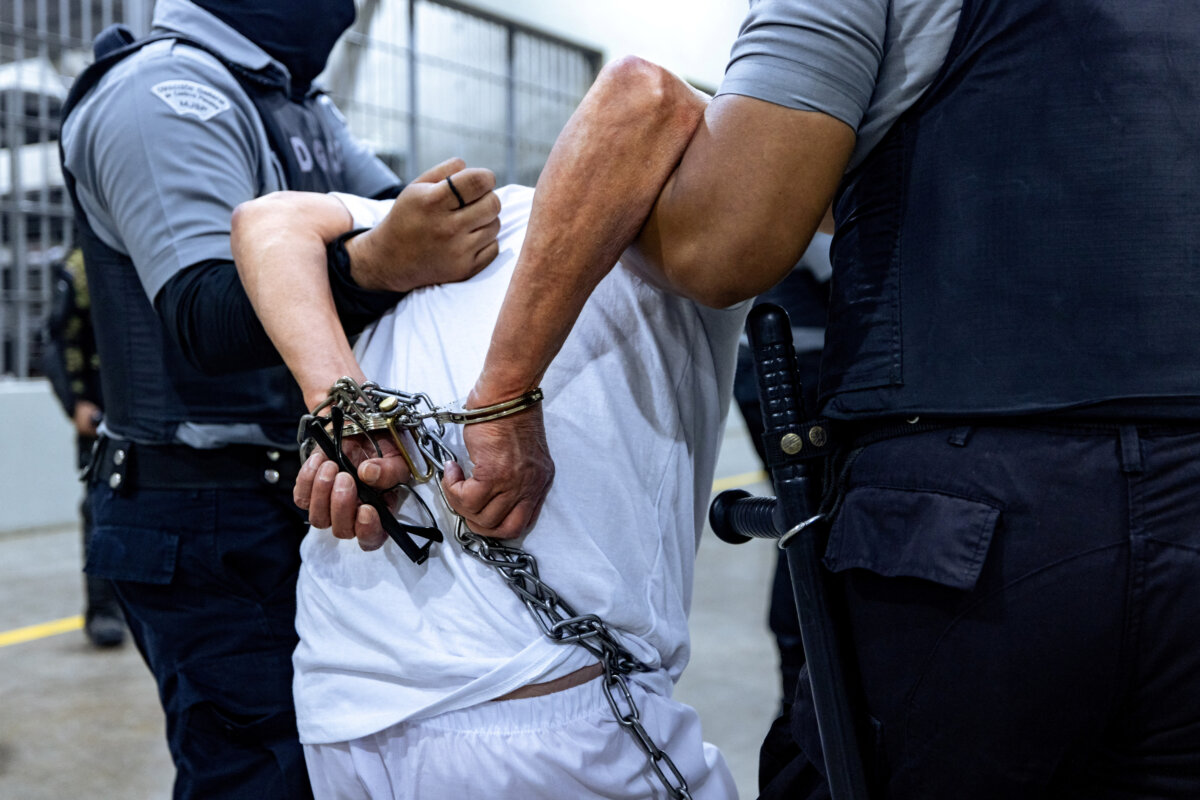
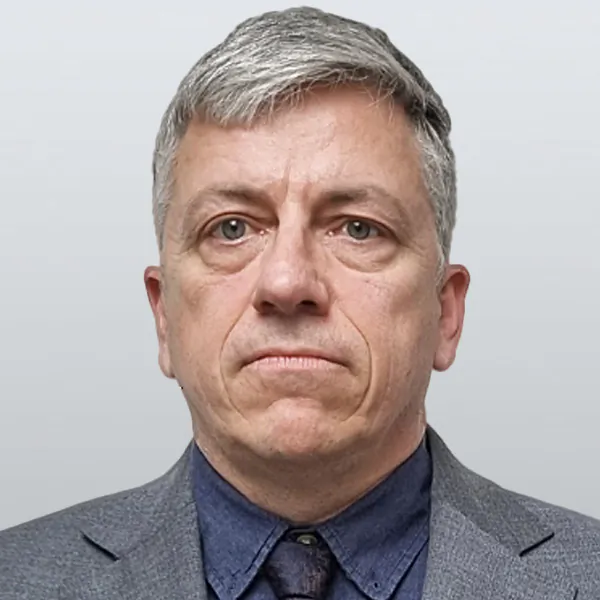
When deposed Venezuelan leader Nicolás Maduro appeared in court on Jan. 5, an indictment accused him and his wife, Cilia Flores, of a string of charges, including conspiracy to import cocaine into the United States and narcoterrorism.
One of his co-accused named in the indictment was Hector Rusthenford Guerrero Flores, aka “Niño Guerrero,” one of the founders of the Tren de Aragua (TdA) drug cartel.
In July 2024, the U.S. State Department offered a $12 million reward for information leading to the capture of Guerrero; co-founder Yohan Jose Romero, also known as Johan Petrica; and Giovanny San Vicente, also known as El Viejo.
But TdA may have grown so large that it can survive the capture of Maduro—which was carried out on the orders of U.S. President Donald Trump on Jan. 3—and even the fall of the entire socialist regime in Caracas, experts said.
“Tren de Aragua was highly dependent on Maduro’s existence for its proliferation. That’s not debatable at this stage,” Pedro Rojas Arroyo, a Venezuelan-born entrepreneur and founder of Vivy Tech, told The Epoch Times.
“That being said, with the current power order in Venezuela … and the actual field of play is not changing, corruption still there, I think Tren de Aragua has a good chance of surviving,” said Rojas Arroyo, whose family fled Venezuela in 2024 after they were subject to persistent kidnapping.
The removal of Maduro will be a blow to Tren de Aragua, but a lot depends on how swiftly the United States acts to rebuild democratic governance, Fergus Hodgson, author of “The Latin America Red Pill,” told The Epoch Times.
“TdA is so dispersed and decentralized now—the horses have bolted—that reining it in will be incredibly difficult,” said Hodgson, who also publishes Impunity Observer, which provides research and analyses on Latin America’s politics and economy.
He said the mention of Guerrero in the Maduro indictment suggests U.S. law enforcement is aware that TdA is a “monumental problem.”
The capture of Maduro is one of the most lethal geopolitical strikes that TdA has received from Trump, François Cavard, a human rights activist who has spent years investigating the drug trade in Central and South America, told The Epoch Times.
He said the PSUV (United Socialist Party of Venezuela) regime may be living on borrowed time, but TdA still has “criminal possibilities” in Colombia, which is led by leftist President Gustavo Petro. He said, “That is something Washington and the world must do something about.”
“Although the danger of Tren de Aragua spreading its criminal, violent, predatory and destructive tentacles far beyond Venezuela is already true and painfully real, no transnational criminal organization, not even the Tren de Aragua, will grow too big to be dismantled and destroyed by determined, honest, committed and incorruptible authorities,” said Cavard, who pointed to Salvadoran President Nayib Bukele’s success in taking on MS-13.
Roots in Train Project
TdA’s name translates as the “train of Aragua” and refers to a failed railway project funded by a large loan from China.
“Between 2007 and 2010, eight years after [Venezuelan leader Hugo] Chavez took power, one of his biggest promises of infrastructure was a train, a very beautiful train project linking the state of Aragua to the rest of the country,” Cavard said.
“The workers, noticing there was a lot of corruption, started controlling who was getting hired and asking for bribes. They started this criminal activity, like extortion, and helping corrupt army officers carry their drugs, and that’s how they started growing.”
‘Extremely Profitable’ Kidnapping Industry
TdA also became heavily involved in extortion and kidnapping in recent years, Cavard said.
Rojas Arroyo said he and his father, a banker, had both been kidnapped for ransom, and they paid in cash, in dollars.
“It was extremely profitable because Tren de Aragua members were actually either themselves [police] or highly connected with the police,” Rojas Arroyo said.
“They were printing money doing kidnaps, knowing that they were not going to be caught, because it was the same people.”
Rojas Arroyo said it cost a “fortune in cash” to free his father, and he said a year later, the kidnappers called and demanded $7,000 a month in protection money to avoid a second abduction.
The family refused to pay and later fled Venezuela.
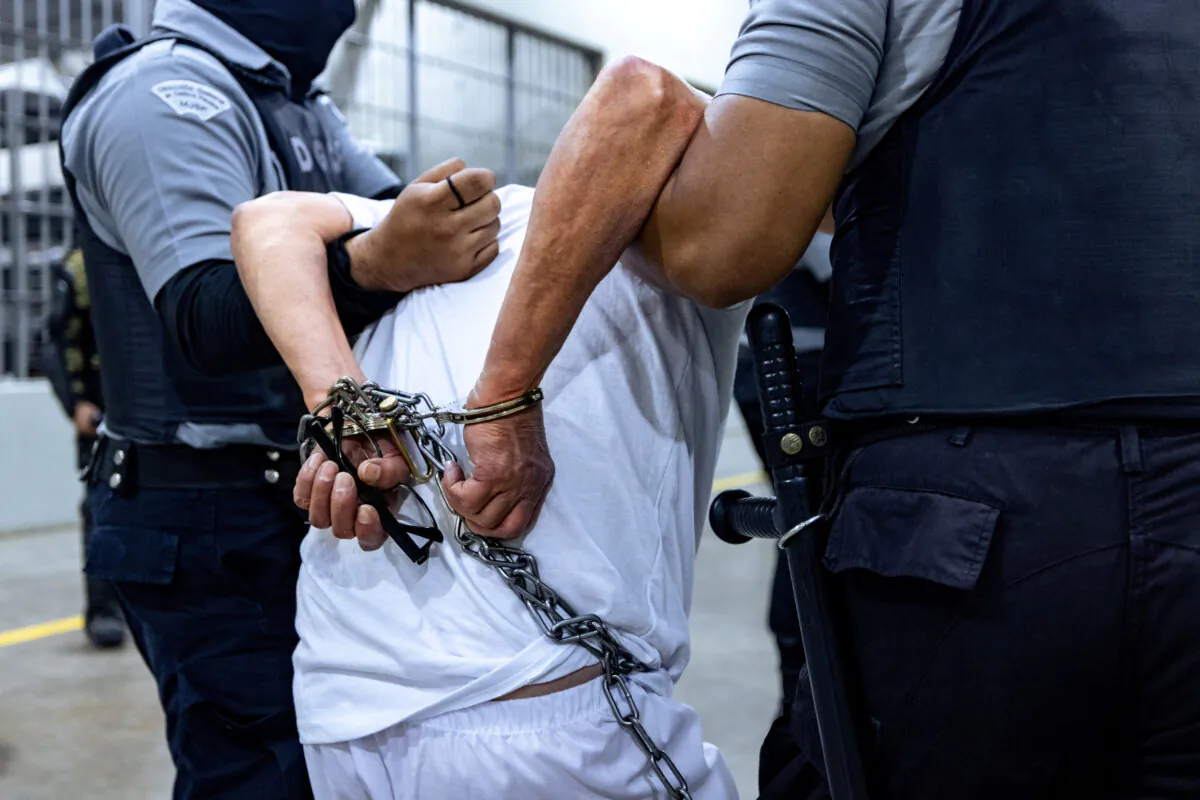
The Maduro indictment alleges that Guerrero was the leader or co-leader of TdA during a period when it “engaged in a wide range of crimes, including extortions, kidnappings, murders, drug trafficking, gun trafficking, prostitution, sex trafficking, robberies, bank burglaries, and money laundering in Venezuela, the United States, and elsewhere.”
Other Key Figures
Also named in the indictment is Venezuelan Interior Minister Diosdado Cabello Rondon.
He is alleged, along with the other defendants, to have “partnered with narcotics traffickers and narco-terrorist groups, who dispatched processed cocaine from Venezuela to the United States via transshipment points in the Caribbean and Central America, such as Honduras, Guatemala, and Mexico.”
“Diosdado is the most dangerous guy out there, to be honest. He has been up there with Chavez since the first coup back in 1992,” Rojas Arroyo said.
“Diosdado Cabello appears to be one of the key figures who has partnered with the Chavista regime and cultivated the TdA organized crime network, but no doubt there are many others,” Hodgson said.
Cavard said TdA started growing under the auspices of Tareck Zaidan el-Aissami Maddah—a senior figure in the ruling PSUV—who was part of Maduro’s inner circle, before falling from grace in 2023.
“He was an extremely important and strategic member of Chavez’s inner circle of power and of corruption,” Cavard said.
El-Assaimi—whose parents were of Lebanese and Syrian origin—was governor of Aragua state between 2012 and 2017, and then became the country’s vice president until replaced by Delcy Rodriguez, who was sworn in as the interim leader of Venezuela on Jan. 5 after Maduro’s ouster.
“Once El-Assaimi starts getting power, and becomes governor of Aragua, and vice president of Venezuela, he starts not only finding associates within Venezuela, like the Tren de Aragua, and makes them stronger,” Cavard said, “but also linking them internationally to the criminal purposes of Cuba, Iran, and Syria.”
In 2019, el-Assaimi was charged in absentia by U.S. Immigration and Customs Enforcement for violations of the Foreign Narcotics Kingpin Designation Act.
Rojas Arroyo confirmed the importance of el-Assaimi but said he was brought down due to tensions among various factions or “clans” within the regime.
Rojas Arroyo said Delcy Rodriguez and her brother Jorge led one faction, Maduro and his wife led two, and Diosdado and army chief Vladimir Padrino Lopez both controlled separate factions.
Cartel of the Suns
Maduro has also been accused of heading Cartel de los Soles (Cartel of the Suns), which was sanctioned by the U.S. government in July 2025.
The cartel’s name was derived from the sun insignia found on Venezuelan military uniforms.
“The Cartel de los Soles supports Tren de Aragua in carrying out its objective of using the flood of illegal narcotics as a weapon against the United States,” the U.S. Department of the Treasury’s Office of Foreign Assets Control said. “Additionally, the Cartel de los Soles has provided support to the [Mexico-based] Sinaloa Cartel.”
Rojas Arroyo said there was a big overlap between TdA and the Cartel of the Suns.
“Cartel de los Soles is actually the one that’s in charge of sending the drugs out and distributing those drugs out,” Rojas Arroyo said, “and it’s the one that is actually connected with other countries on a macro level for business.”
Hodgson said the Cartel of the Suns was more a moniker referring to the graft network among top Chavista officials, especially in the military, rather than an actual separate organization.
Cavard said TdA has spawned offshoots among the Venezuelan diaspora in North, Central, and South America.
“The criminals said wherever our Venezuelan migrants go, we can go with them,” said Cavard, “and we can use them to carry whatever we want, we can take advantage of them, things like prostitution because they said ‘you do it or you die.'”
“TdA has shown a knack for splintering and reforming in a more dispersed and even more dangerous form,” Hodgson said, most notably when its headquarters in Tocorón prison was taken over in 2023 by the Venezuelan military.
“On the surface, this appeared to be a crackdown. In fact, it was a catalyst for expansion beyond the prison epicenter,” Hodgson said.
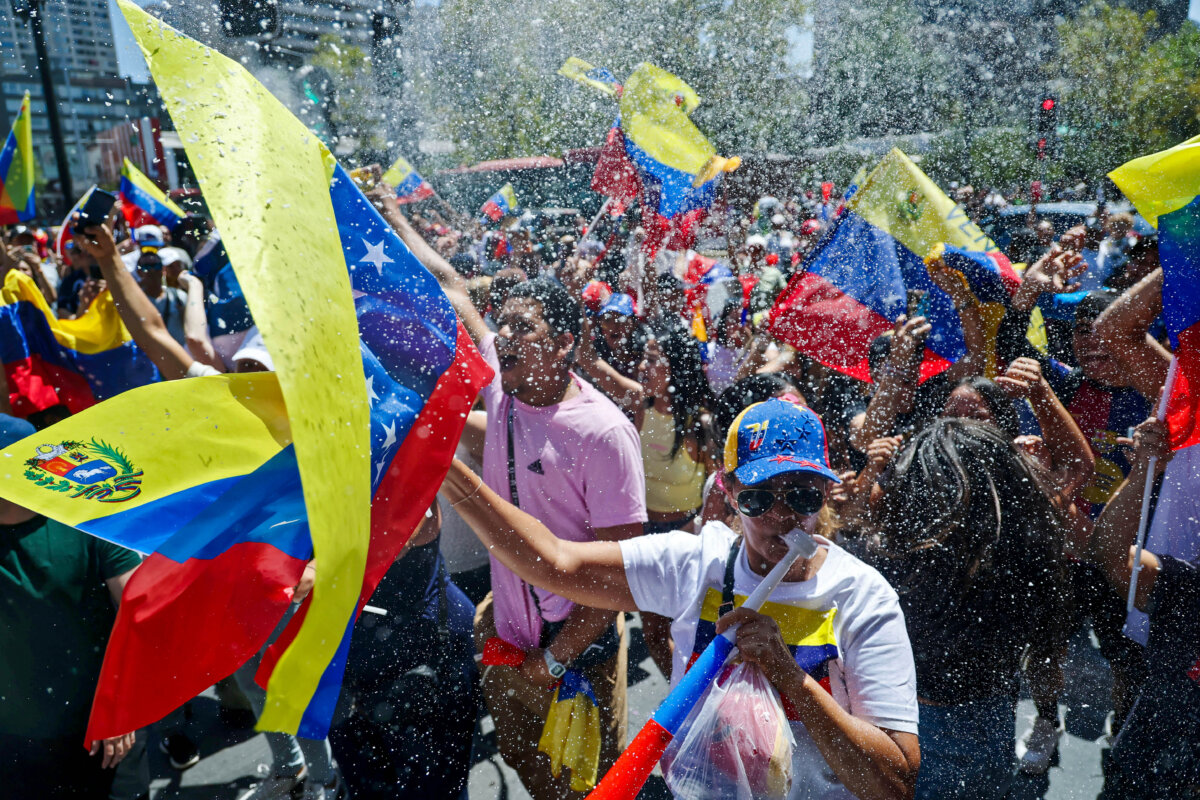
The police in Colombia, Chile, and Peru—all of which have large Venezuelan migrant communities—have accused TdA of being behind an explosion of violent crime.
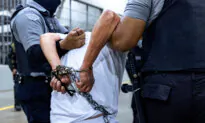
In November 2025, the United States extradited to Chile Edgar Javier Benitez Rubio, 37, a Venezuelan national and TdA member, who is accused of playing a key role in the February 2024 kidnapping and murder of Ronald Ojeda, a former Venezuelan army lieutenant accused of plotting treason against Maduro’s regime.
Ojeda, 27, was kidnapped from his home in the Chilean capital, Santiago, and his remains were found 10 days later, buried under a cement block in a suburb.
Chile’s ‘Disaster Train’ Offshoot
Also extradited with him was Jesus Alberto Golding Escalona, 34, who the Chileans allege is associated with Tren de Desastre (Disaster Train), a Chile-based TdA affiliate.
Chilean newspaper El Mercurio reported that Mauricio Valdivia Devia, a lieutenant colonel in Chile’s carabinero police force, has warned of the negative consequences of Maduro’s capture.
“The capture of Maduro and the American pressure on Venezuela could lead to the expansion of Tren de Aragua southward,” Valdivia Devia said, according to the news outlet.
“Chile must adopt special control measures, given that the most affected would be countries where they operate.”
Cavard said the new Chilean president, José Antonio Kast, and several other right-wing leaders of other Latin American nations are believed to be in close cooperation with the Trump administration, which he said was bad news for TdA.
“They are being confronted and will be crushed,” he said.
 Friends Read Free
Copy
Facebook
Tweet
Friends Read Free
Copy
Facebook
Tweet