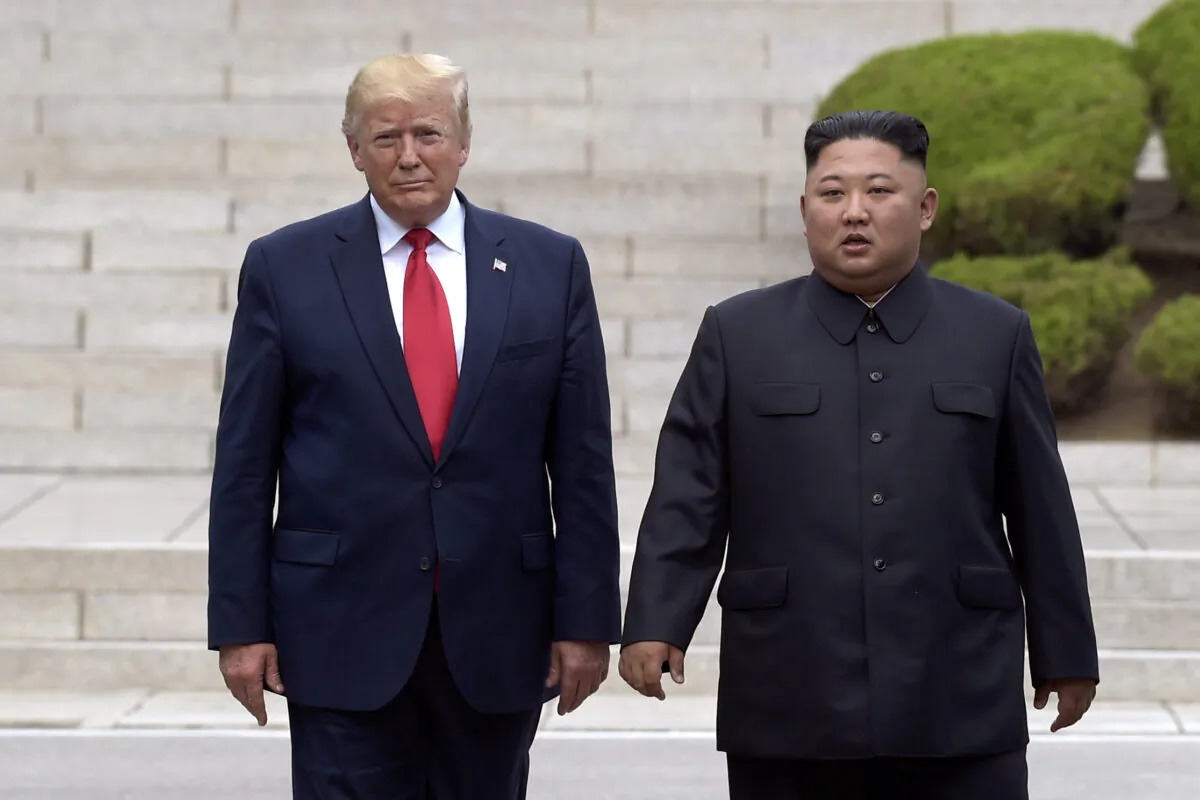

U.S. President Donald Trump remains willing to engage in talks with North Korean leader Kim Jong Un without preconditions, a White House official said on Feb. 27, after Pyongyang indicated that relations with Washington could improve if U.S. policy were to shift.
In a Feb. 27 emailed statement to The Epoch Times, a White House official said: “President Trump in his first term held three historic summits with North Korean Leader Kim Jong Un that stabilized the Korean Peninsula. U.S. policy on North Korea has not changed. President Trump remains open to talking with Kim Jong Un, without any preconditions.”
The statement followed remarks by Kim, reported on Feb. 26 by North Korean state media outlet KCNA, after the close of the country’s Ninth Congress of the ruling Workers’ Party.
According to KCNA, Kim said the future of relations with the United States “depends entirely on the attitude of the U.S. side.”
Kim said there is “no reason why [North Korea] cannot get on well with the U.S.” if Washington changes its approach, but he made it clear that Pyongyang would respond proportionally to what it sees as hostility.
At the same time, he reaffirmed Pyongyang’s commitment to strengthening its nuclear deterrent and warned that the country is prepared for continued confrontation if U.S. pressure persists.
Trump met Kim in 2018 and 2019 during his first term, including during high-profile summits in Singapore; in Hanoi, Vietnam; and at the inter-Korean border before negotiations over Pyongyang’s nuclear arsenal collapsed.
In September 2025, Kim indicated that he could meet the U.S. president again if Washington were to abandon demands for denuclearization. However, he rejected talks with Seoul, underscoring deteriorating inter-Korean ties.
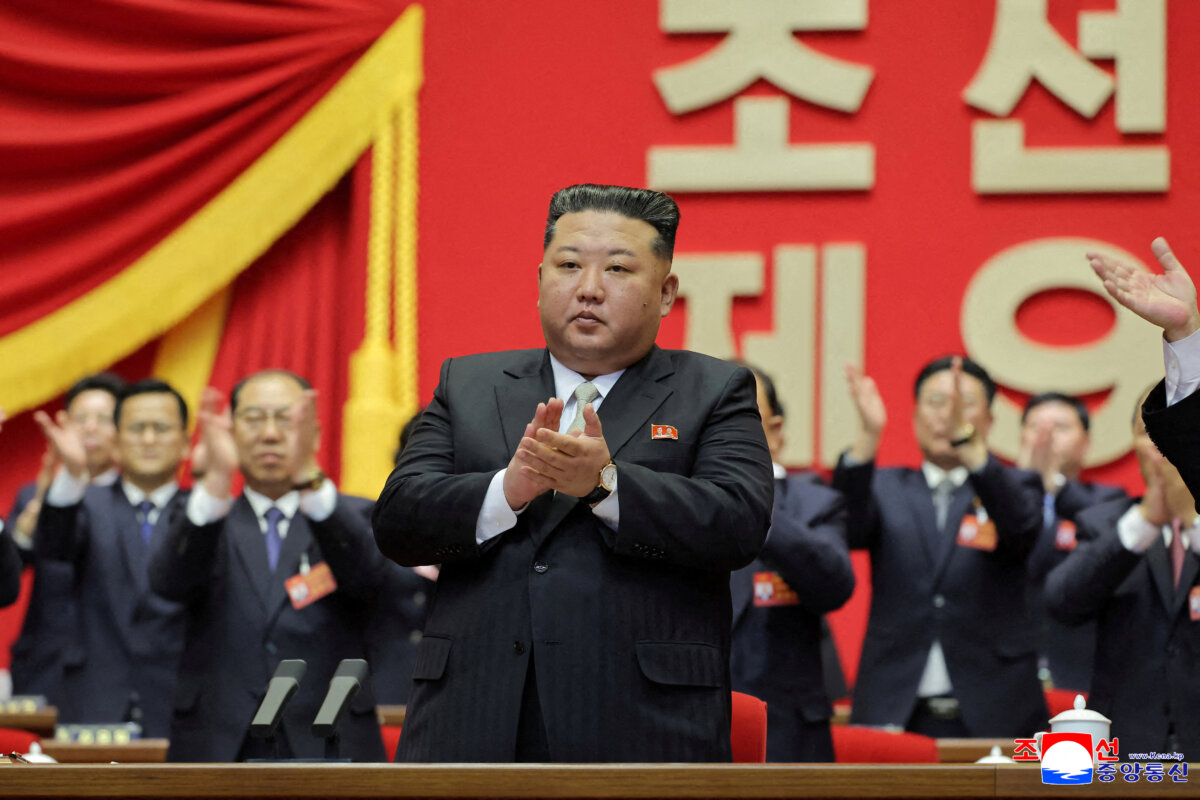 North Korean leader Kim Jong Un applauds as he attends the Ninth Congress of the Workers’ Party of Korea, where he was reelected as general secretary, in Pyongyang, North Korea, on Feb. 22, 2026. (KCNA via Reuters)
At the recent congress, Kim sharpened his rhetoric toward South Korea, formally known as the Republic of Korea (ROK).
“Our position on the ROK is clear,” Kim said, according to KCNA. He said North Korea has “nothing to discuss with the ROK, the most hostile entity, and will exclude the ROK from the category of compatriots forever.”
South Korean Envoy’s Washington Visit
The developments coincided with a visit to Washington by South Korea’s top nuclear envoy, Jeong Yeon-doo, who met with senior U.S. officials to coordinate policy on North Korea and other issues, according to a Feb. 27 report by South Korean Yonhap News Agency.
During his stay in the U.S. capital, Jeong met Undersecretary of State for Political Affairs Allison Hooker, Undersecretary of State for Arms Control and International Security Thomas DiNanno, and Assistant Secretary of State for East Asian and Pacific Affairs Michael DeSombre, Yonhap reported.
DiNanno said in a Feb. 25 post on X that he had “a good discussion” with Jeong, and he said that the U.S.–ROK alliance “remains the linchpin of peace, security, and prosperity for Northeast Asia, supported by … ironclad extended nuclear deterrence.”
Speaking to South Korean reporters in Washington, Jeong said, according to Yonhap News Agency, that the U.S. position had not changed and that it remained open to talks with North Korea without preconditions.
He said that in his discussions with U.S. officials, he had explained that Seoul, as a “pacemaker,” would continue supporting efforts to resume dialogue between Washington and Pyongyang.
Jeong said South Korea would seek to reduce inter-Korean tensions and build trust with the North “with a long-term perspective.”
Reinforcing Regional Deterrence
The U.S. commitment to extended deterrence has been reiterated in other forums. On Sept. 22, U.S. Secretary of State Marco Rubio met in New York City with then-Japanese Foreign Minister Iwaya Takeshi and South Korean Foreign Minister Cho Hyun.
According to a joint statement released on the same day by the State Department, the United States “reiterated its ironclad commitments to the defense of Japan and the ROK, backed by America’s unmatched military strength, including its nuclear capabilities.”
The three countries reaffirmed their resolve to bolster defense and deterrence, including through regular trilateral exercises such as “Freedom Edge,” the statement reads.
Tensions have persisted despite intermittent diplomatic signals.
In October 2025, North Korea said it tested a new cruise missile in waters to its west, hours before Trump arrived in South Korea on Oct. 29 for the Asia-Pacific Economic Cooperation summit.
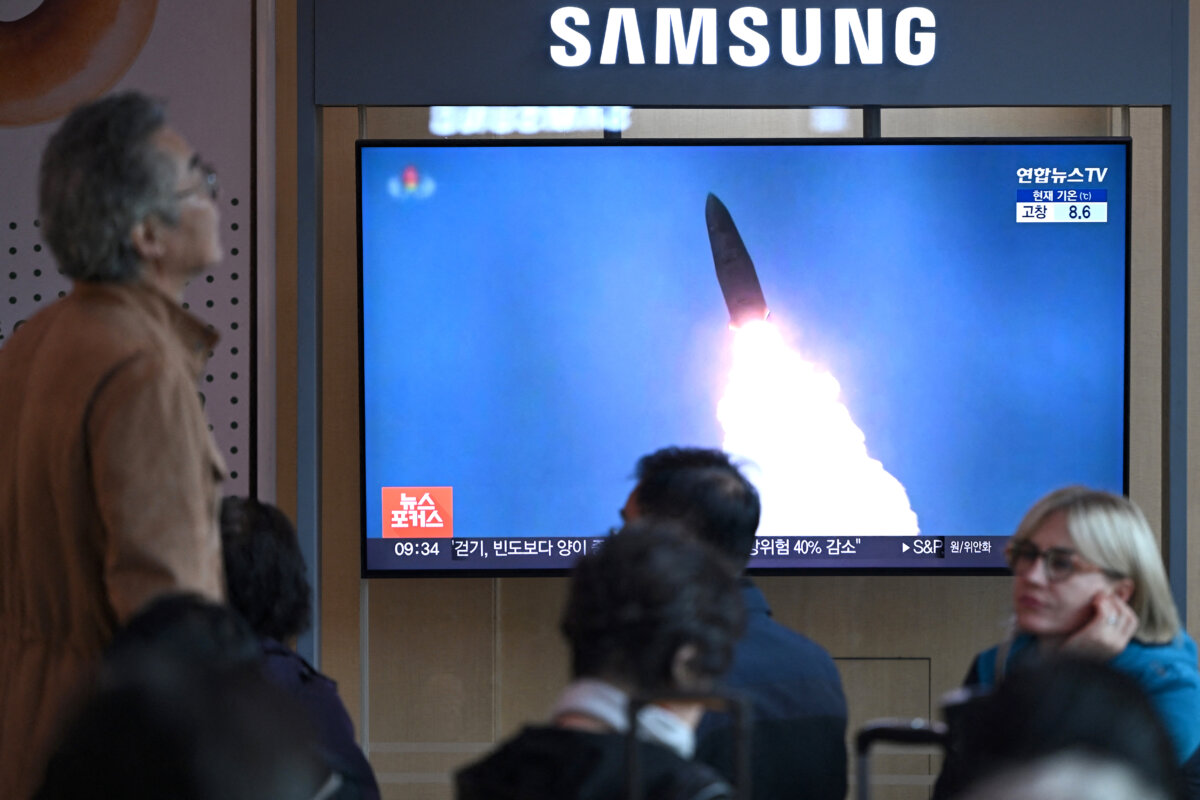
The test violated U.N. Security Council resolutions banning Pyongyang from using ballistic missile technology and marked the first such launch since South Korean President Lee Jae Myung took office in June 2025, pledging dialogue.
In November 2025, U.S. Secretary of War Pete Hegseth visited South Korea for talks with his counterpart, Ahn Gyu-back. During the visit, Hegseth said Washington remained focused on deterring North Korea and ensuring that it does not threaten South Korea.
 Friends Read Free
Copy
Facebook
Tweet
Friends Read Free
Copy
Facebook
Tweet