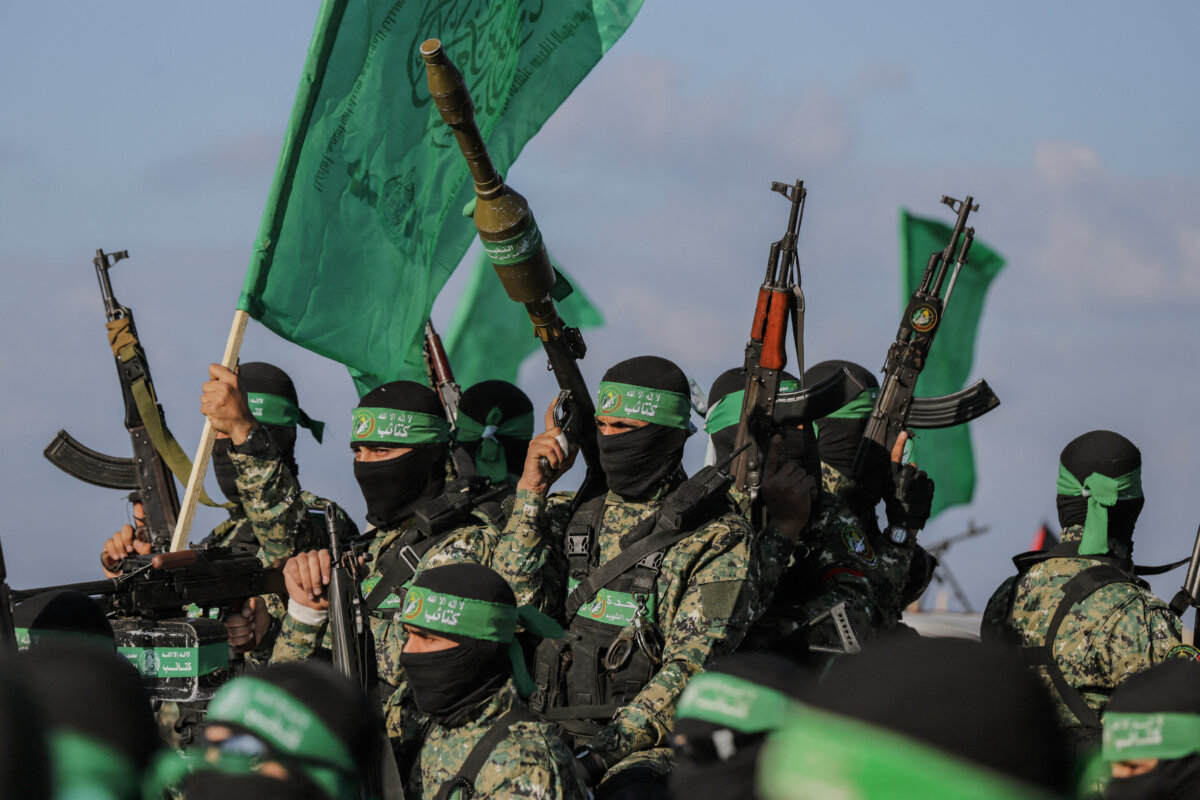

President Donald Trump said on Jan. 22 that terrorist group Hamas must fully disarm under a U.S.-backed peace plan for Gaza or face destruction.
Speaking on the second and final day of his visit to the World Economic Forum in Davos, Switzerland, Trump released the charter for what he called the Board of Peace, a mechanism designed to oversee security, governance, and reconstruction in Gaza following a cease-fire between Israel and Hamas.
The war in Gaza is coming to an end, Trump said, adding, “We have little fires that we’ll put out, but they’re little.”
As part of the peace process, Hamas has agreed to disarm, and Trump said that the terrorist group has to honor its commitment to demilitarize.
“They have to give up their weapons, and if they don’t do that, it’s going to be the end of them,” he said.
Trump’s son-in-law Jared Kushner, part of the U.S. team that negotiated the current cease-fire and a member of the Board of Peace, gave a slide deck presentation at the launch in Davos.
He said humanitarian access had expanded sharply since the October 2025 cease-fire.
“100% of the food needs are met, and that’s been overabundance,” Kushner said, citing the entry of more than 55,000 trucks and 1.4 million pallets of aid.
Kushner credited cooperation among Israel, Arab states, and international partners for what he called the largest humanitarian operation ever mounted in a war zone. He said a new, technocratic and apolitical Palestinian committee would oversee Gaza’s administration, with support from Arab governments.
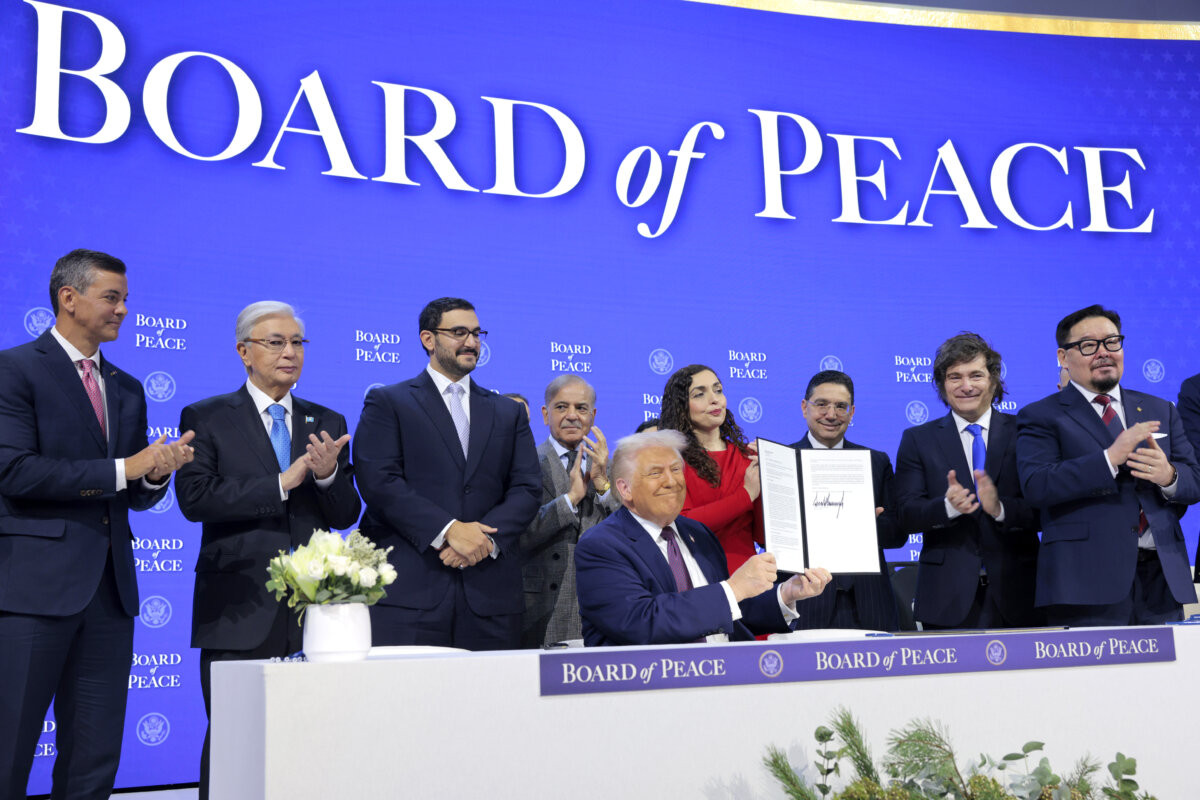
He contrasted the committee’s stated goals with Hamas’s founding charter.
Hamas’s mission, he said, to destroy Israel “has not worked well for the people as we’ve seen.” The group’s mission statement now, he added, is to restore electricity, water, health care, and education, and to build a society “rooted in peace, democracy, and justice.”
Trump told the Davos audience: “Hamas signed a deal demilitarized. That is what we are going to enforce. People ask us what our plan B is. We do not have a plan B. We have a plan. We signed an agreement. We are all committed to making that agreement work.”
Kushner said a master plan for rebuilding Gaza was already underway, with phased construction that could deliver large-scale housing within two to three years. He said rubble removal had begun and that the long-term vision included turning Gaza into a regional hub with full employment.
The new government in Gaza, according to Kushner, will work with Hamas on demilitarization.
“Without that, we can’t rebuild. So if Hamas does not demilitarize, that will be what holds back Gaza and the people of Gaza from achieving their aspiration, and that’s very important,” he said.
Rafah Crossing to Reopen
A key early step in the transition came with the announcement that Gaza’s Rafah border crossing with Egypt would reopen next week.
Ali Abdel Hamid Shaath, a former Palestinian Authority deputy minister and the leader of the National Committee for the Administration of Gaza (NCAG), part of the Board of Peace, made the announcement via video link during the Davos event.
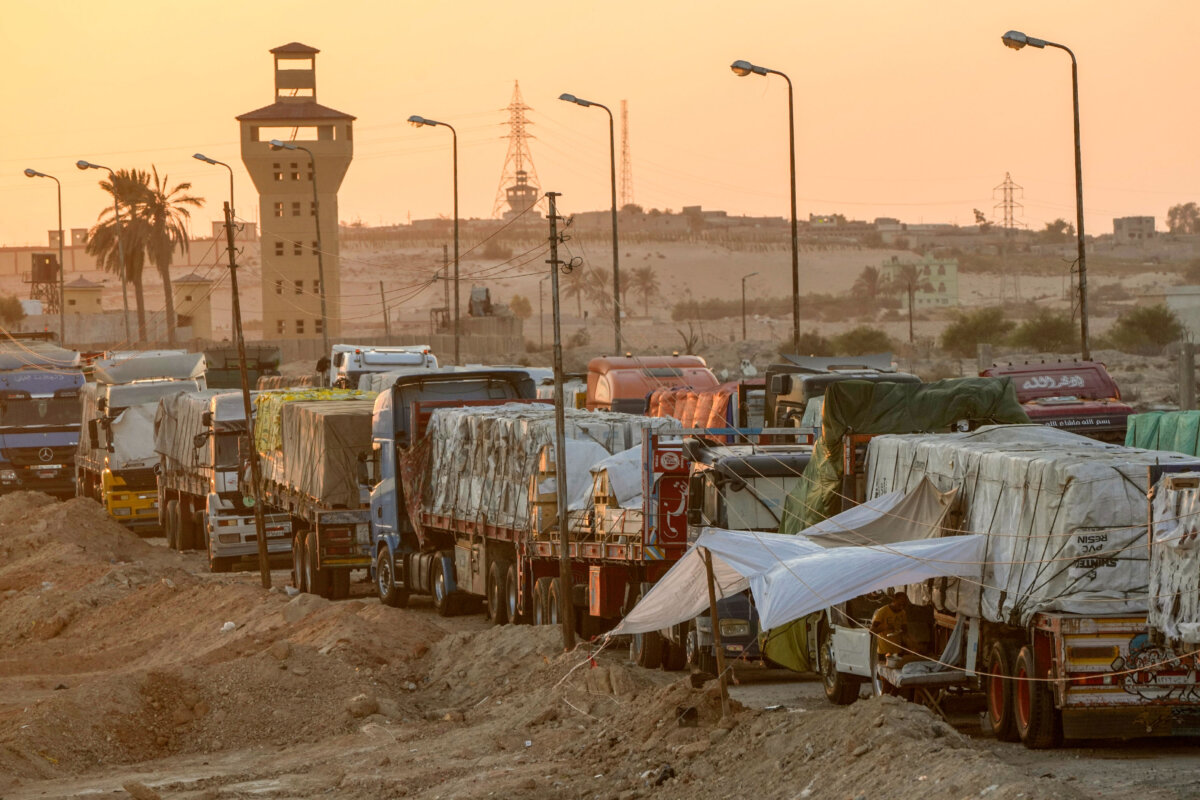
“I am pleased to announce the Rafah crossing will open next week in both directions,” Shaath said. “For Palestinians in Gaza, Rafah is more than a gate. It is a lifeline and symbol of opportunity.”
Shaath said reopening the crossing would signal that Gaza was “no longer closed to the future and to the war.”
He thanked Trump’s administration, Egypt, Qatar, and Turkey for mediating the peace plan and said the real test would be whether daily life for Gazans improved.
Board Membership, Operation
The White House announced on Jan. 16 that Trump would chair the Board of Peace and appointed a founding executive board made up of senior U.S. officials and international figures.
According to the White House statement, the board includes Secretary of State Marco Rubio, U.S. envoy Steve Witkoff, Kushner, former British prime minister Sir Tony Blair, financier Marc Rowan, World Bank president Ajay Banga, and investor Robert Gabriel.
The White House also announced that former Bulgarian diplomat and minister Nickolay Mladenov will serve as the High Representative for Gaza and act as the on-the-ground link between the Board of Peace and the NCAG.
Israeli Prime Minister Benjamin Netanyahu said on Jan. 21 that he will join the board.
Israel, the UAE, Bahrain, Albania, Hungary, Kazakhstan, Pakistan, Egypt, Jordan, Indonesia, Turkey, Saudi Arabia, Qatar, Morocco, Belarus, and Vietnam are among the nations that have accepted Trump’s invitation to join the Board of Peace.
Russian President Vladimir Putin said on Jan. 22 that Russia was ready to provide $1 billion from frozen Russian assets to the Board of Peace.
Kushner said a conference would be held in Washington in the coming weeks, where a range of private-sector contributions would be announced.
 Friends Read Free
Copy
Facebook
Tweet
Friends Read Free
Copy
Facebook
Tweet