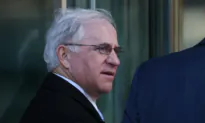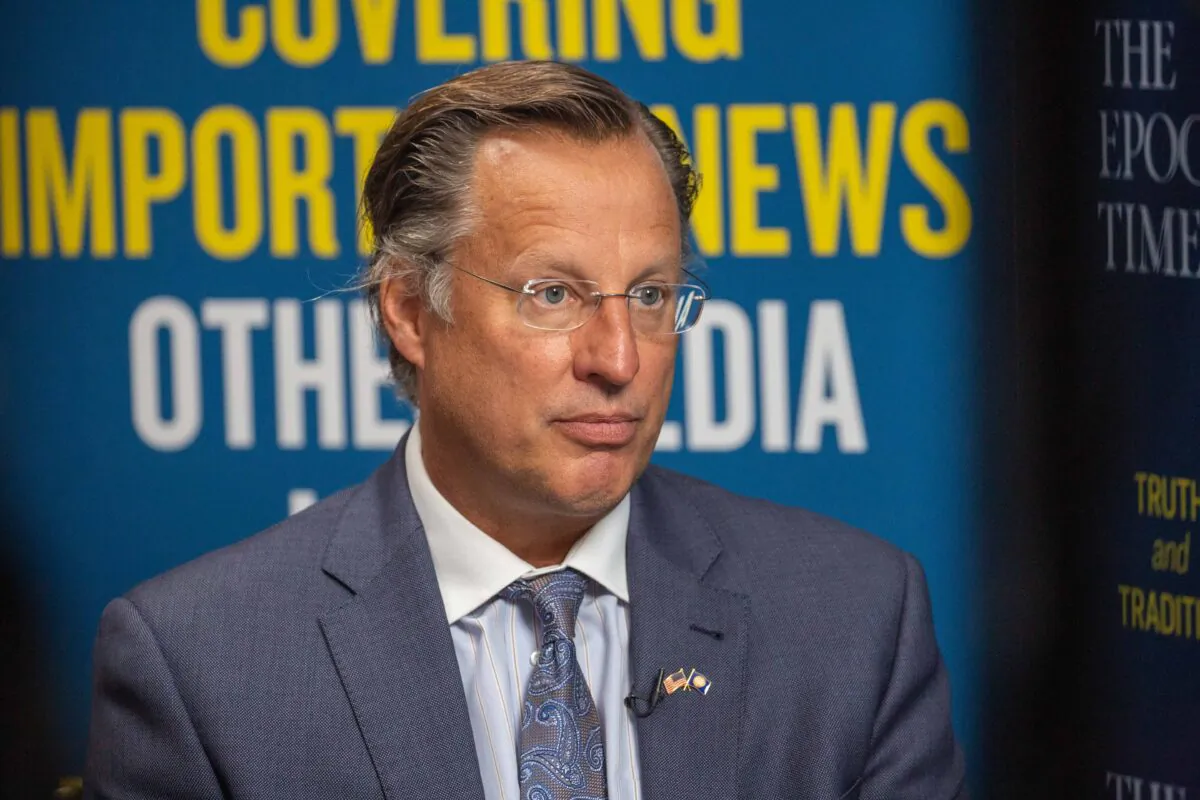

Defense cooperation, Indo-Pacific ties, and critical minerals will be the three primary areas of focus for the Trump administration’s nominee for ambassador to Australia, David Brat.
Appearing at his confirmation hearing before the U.S. Senate Committee on Foreign Relations, Brat said the partnership between the two countries “makes America safer, stronger, and more prosperous.”
“The U.S.–Australia alliance is an essential pillar of regional stability and deterrence,” he told the committee. “And as the president has instructed, I would ensure the mission moves full steam ahead, including AUKUS.”
AUKUS is a trilateral security pact between Australia, the UK, and the United States aimed at strengthening defense and strategic cooperation in the Indo-Pacific.
As part of the agreement, Australia will acquire nuclear-powered attack submarines, along with greater collaboration on advanced technologies, including cybercapabilities, artificial intelligence, quantum computing, and undersea systems.
Brat pledged to strengthen defense cooperation, including by working with Congress to further streamline defense trade controls amid what he called “China’s unprecedented military buildup.”
Previously, there were concerns that America’s International Trade in Arms Regulations and Export Administration Regulations would hamper the transfer of technology to Australia under pillar two of the AUKUS agreement.
Brat said he would also expand the two countries’ partnership across the Indo-Pacific, particularly in the Pacific Islands, as this would “bolster the resilience of … regional partners to help to fight against the malign influence of [the two countries’] adversaries.”
Sen. James E. Risch (R-Idaho), committee chairman, said he would encourage Brat to advocate for Australia to fully implement new investment screening and foreign influence laws to counter what he called “malign Chinese influence.”
“We think we have a China problem here, they got a real China problem there,” he later said.
Brat agreed with Risch’s view, saying, “Right now we’re having maritime challenges across the board throughout the islands all the way through the Marianas, up through South Korea, [and] the Philippines.”
He also acknowledged that Australia is vital to the United States’ efforts to counter China’s dominance in rare earths.
“They’re mining experts, they’re processing experts, they’re refining experts, they have engineers to get that skill base going over here and invest in that kind of engineering and the processing of the rare earths,” he said.
“I think it’s important to convey that to the American people … how important Australia is to us.”
On trade, Brat said Australia remains a promising market for U.S. companies.
“Building on the administration’s recent success in securing access for beef, I would work to ensure a level playing field for all U.S. companies,” he said.
“I’d also be a steadfast champion of Australian investment in the States, partnering with Australia’s superannuation funds, which will go over a trillion dollars in the next 10 years to execute on plans to invest in the United States.”
Brat is anticipated to take over from former Ambassador Caroline Kennedy, who left the role in 2024.
Before entering politics, Brat was an economics professor. He later defeated then-House Majority Leader Eric Cantor (R-Va.) in a Republican primary and served two terms in the House of Representatives from 2014 to 2019.
Brat has long been known as a vocal critic of the Chinese Communist Party and has openly supported tougher measures against the regime, including tariffs and stricter trade policies, to counter what he views as unfair economic practices targeting the United States.
 Friends Read Free
Copy
Facebook
Tweet
Friends Read Free
Copy
Facebook
Tweet