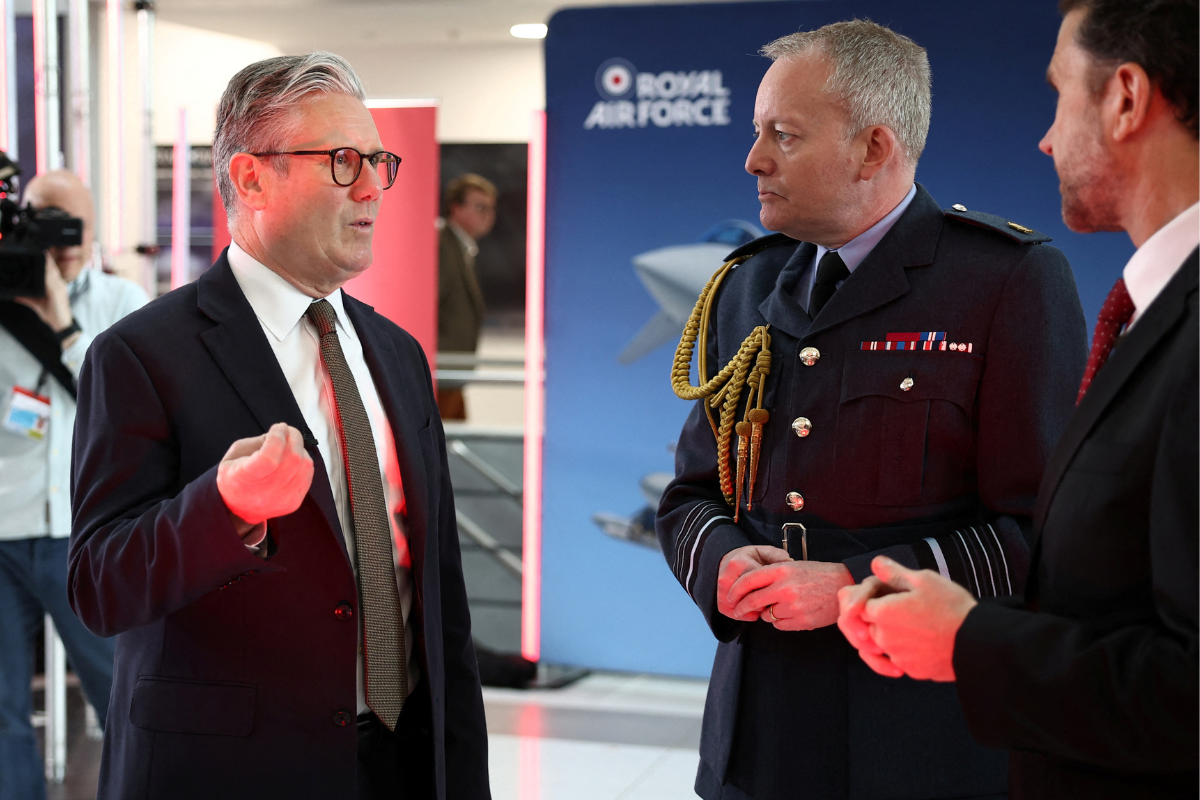

The chief of the British Armed Forces said on June 5 that the UK must boost defense spending to prepare for greater conflicts.
Chief of the Defence Staff Air Chief Marshal Richard Knighton said on June 5 that Russian long-range activity has prompted NATO to scramble allied forces 700 times.
“So we’re seeing Russia probing, challenging, testing defenses,” Knighton told BBC Radio 4’s “Today” program. “So, Russia is definitely raising the stakes.”
Knighton said that while the British Armed Forces are ready for conflict, the military must be able to adapt to these threats.
“Over the last two decades we have been preparing for shorter wars and for conflicts that are confined and limited,” he said. “What we need to ready ourselves for is potentially much greater, longer conflicts, as we’ve seen in Ukraine.”
The British military chief said that in his 35-year career, “this is the most dangerous period that I have known.”
He said that as a consequence, it was necessary to increase the capacity and readiness of the British Armed Forces.
Speaking in Astana, Kazakhstan, on May 29, Russian President Vladimir Putin rejected claims that Russia poses a threat to Europe, adding that the claims were “nonsense.”
“This is supposedly being done in connection with Russia’s aggressive plans against Western European countries. This is a lie. It’s a crude, brazen lie. And as Goebbels once said, the more unbelievable the lie, the more likely it will be believed,” Putin said.
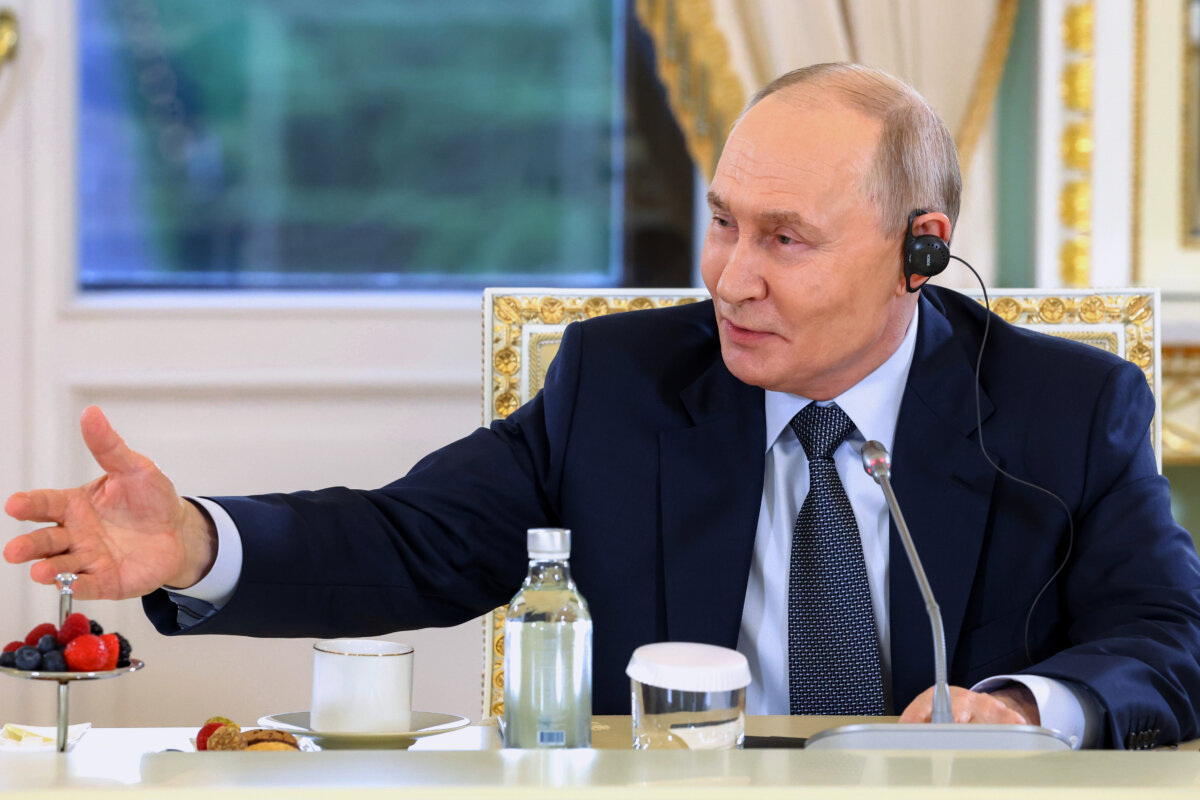
“These are precisely the standards Western politicians and media are implementing in their daily practice. Russia has never had any aggressive intentions against European countries. … Everything they do is merely to continue the confrontation with Russia and justify exorbitant spending from their own national budgets, while plundering the pockets of European taxpayers.”
UK’s Spending Pledges
In March 2025, British Prime Minister Keir Starmer pledged the largest sustained increase in defense spending since the Cold War, aiming to lift it to 3 percent of gross domestic product in the next parliament.
The UK, along with most of the allies in NATO, committed in June 2025 to spending a total of 5 percent of gross domestic product on defense by 2035, with 3.5 percent spent on core defense, such as troops, arms, and equipment, and the remainder on other related areas such as security and infrastructure.
The UK government’s Defence Investment Plan will outline the funding for the military to ensure the armed forces’ move to a state of warfighting readiness.
Starmer confirmed on a visit to a drone factory on June 5 that the plan would be published before the next NATO summit, which commences on July 7 in Ankara, Turkey.
“It is no exaggeration to say that we’re living in more dangerous and volatile times than at any time in my life,” he said.
Knighton acknowledged the pledges to increase defense spending, saying that “as the prime minister says, we need to spend more on defense and do it faster.”
“That’s why it is important that we deliver on enhancements in our efficiency and deliver more capability and put it in the hands of our war fighters,” he said. “That is why we have seen increases in defense spending, and I think why successive prime ministers have committed to increase defense spending.”
NATO Summit
U.S. President Donald Trump has repeatedly called on the UK and other European countries to spend more on defense and become less reliant on the United States for the continent’s security.
The push for NATO allies to do more to secure their own defenses came as the United States reoriented its defense and security priorities.
The Pentagon, on Jan. 23, released its National Defense Strategy, which outlines the U.S. plan to prioritize homeland defense, including by “defending America’s interests throughout the Western Hemisphere.”
It also stated that the United States would encourage partners in other parts of the world, including Europe, to take primary responsibility for their own defense “with critical but limited support from U.S. forces.”
Trump is due to attend the upcoming NATO summit, which U.S. Secretary of State Marco Rubio said earlier this week “is probably the most important meeting in NATO’s history,” because of the issues that have developed over the previous months.
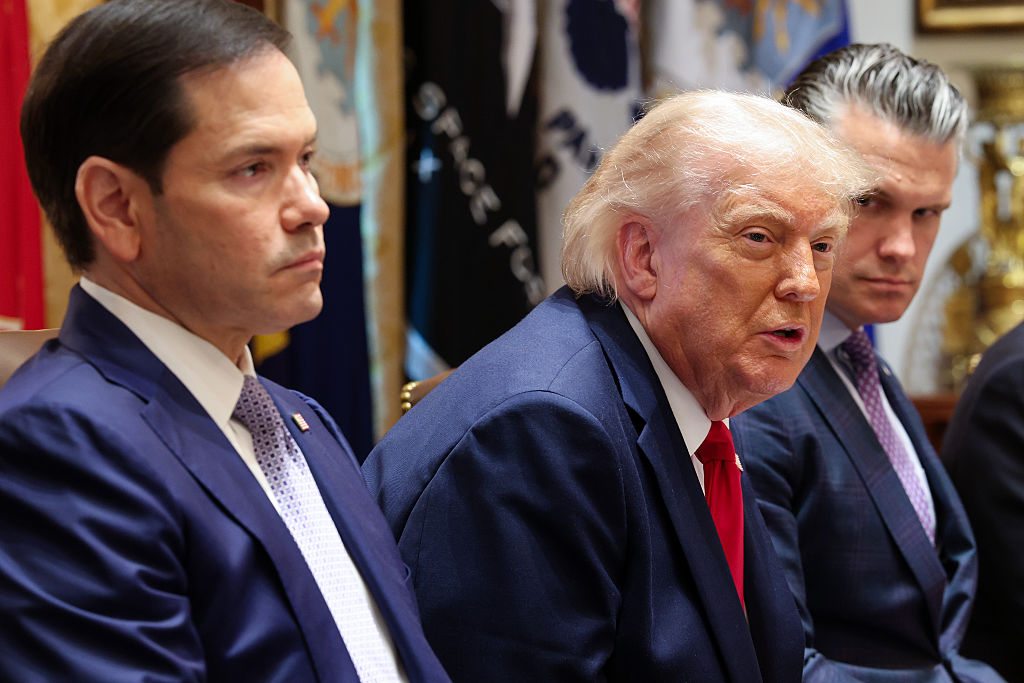
The U.S. president has become increasingly frustrated with NATO because of some members’ resistance to supporting the United States’ campaign against the Iranian regime, causing the Trump administration to reexamine the defense alliance’s merit.
In comments on June 3 before the House Foreign Affairs Committee, Rubio said he remains a “strong supporter” of NATO, but criticized Europe for refusing to assist the United States during the Iran conflict.
He said that a problem with NATO is that the United States is being asked to be drawn into issues in Europe, while NATO allies are not always prepared to reciprocate when the United States needs support.
“I think the president’s irritation with NATO is that in a time of conflict and crisis where the United States had a need, you had members of this alliance—who are constantly asking us to get to get involved in European matters, like Ukraine and things of this nature—who, in our time, were actually telling us: ‘No, your tankers can’t use our air base. No, you can’t use it to refuel. No, you can’t use it for logistical support,’” Rubio said. “What kind of alliance is that?”
On June 3, the United States announced that it would cut its contributions to NATO, citing the “potential reality” of fighting multiple wars at once.
Officials from the Department of War notified allies that Washington would “rightsize” its contributions to the NATO Force Model, “consistent with the burden sharing direction in the 2026 National Defense Strategy and the Department’s vision for a ‘NATO 3.0,’” according to a statement from the U.S. European Command.
In February, Russian Foreign Minister Sergey Lavrov said Moscow is not interested in launching a military assault on Europe but will retaliate if European forces attack Russia.
“And if Europe were to carry out its threats to prepare for war against us and launch an attack on the Russian Federation, the president said that this would not be a special military operation on our part, but a full-scale military response using all available military means, in accordance with the relevant doctrinal documents,” Lavrov said at the time, according to comments reported by Russian state-owned news agency TASS.
Reuters contributed to this report.
 Friends Read Free
Copy
Facebook
Tweet
Friends Read Free
Copy
Facebook
Tweet