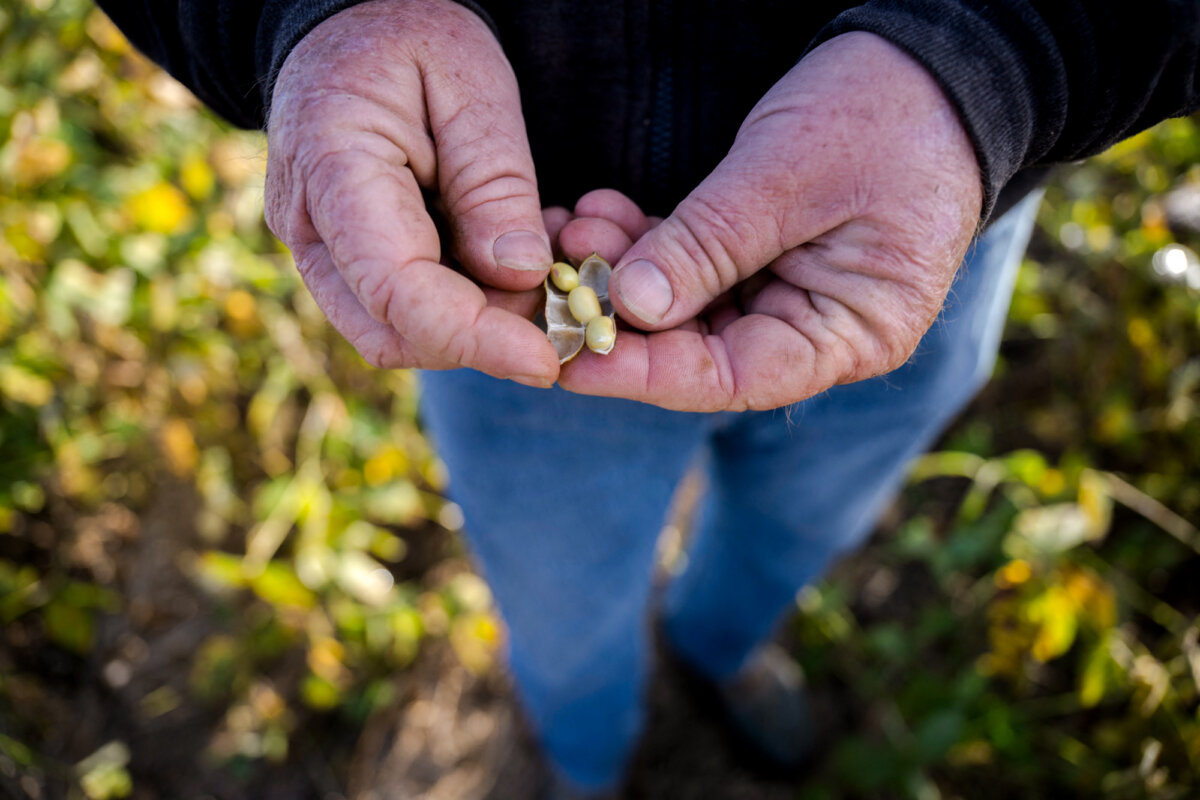

United Nations officials have warned that shipping disruptions in the Strait of Hormuz threaten one-third of the global fertilizer trade at a critical moment for spring planting in many regions and could trigger a broader food crisis unless shipments resume quickly.
The waterway’s effective closure in the aftermath of the Iran war has sent shockwaves through agricultural supply chains, energy markets, and food security planning worldwide.
“If we don’t get some solution immediately, the crisis will be very significant and severe, particularly for the poorest countries and for the poorest citizens,” Jorge Moreira da Silva, executive director of the U.N. Office for Project Services, told UN News in an interview published on April 21.
Moreira da Silva is heading a U.N. task force to facilitate the safe passage of fertilizers and related raw materials, such as urea, sulfur, and ammonia, through the Strait of Hormuz for humanitarian purposes, while broader negotiations continue.
“We can’t wait until everything has been fixed,” he said.
He said that the U.N. could make a “one stop platform” operational within seven days if parties to the conflict permit passage.
The Strait of Hormuz, between Iran and the Arabian Peninsula, is one of the world’s most important shipping routes. In ordinary conditions, roughly one-third of global fertilizer trade, 35 percent of crude oil shipments, and one-fifth of liquefied natural gas move through the corridor.
U.N. officials and economists say prolonged disruption could push fertilizer prices higher, lower crop yields, and intensify hunger in fragile regions.
The World Food Programme has estimated the disruption could push 45 million additional people into hunger and starvation, Moreira da Silva said.
He pointed to countries such as Sudan, Somalia, Mozambique, Kenya, and Sri Lanka as particularly exposed because of their heavy dependence on fertilizer imports and existing humanitarian pressures.
“The planting season has already started,” he said, noting that in much of Africa the window closes in May.
The U.N. proposal, he said, would not challenge freedom of navigation but serve as a time-limited emergency channel focused solely on fertilizer shipments.
Economic Shock
The warning was made as financial policymakers increasingly frame the Hormuz disruption as both an inflation and growth risk.
Speaking in Berlin on April 20, European Central Bank President Christine Lagarde said the closure of “the world’s most important energy choke point” had introduced fresh uncertainty into an already fragile economy.
“A similar share of seaborne trade in fertilizers passes through the Strait, affecting global food prices,” Lagarde said in a keynote speech published by the European Central Bank.
She said higher energy costs remain the immediate concern, but she warned that prolonged shortages of critical inputs could shift the shock from inflation into broader output losses.
“If the disruption persists long enough, the adjustment shifts from prices to rationing,” she said.
Talks With White House
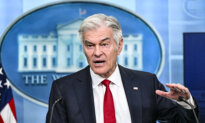
U.S. Agriculture Secretary Brooke Rollins told a Senate Appropriations subcommittee on April 22 that federal agencies are coordinating daily with the White House and multiple departments to pursue an all-government approach to fertilizer.
She described U.S. dependence on foreign fertilizer supply as “a national security issue.”
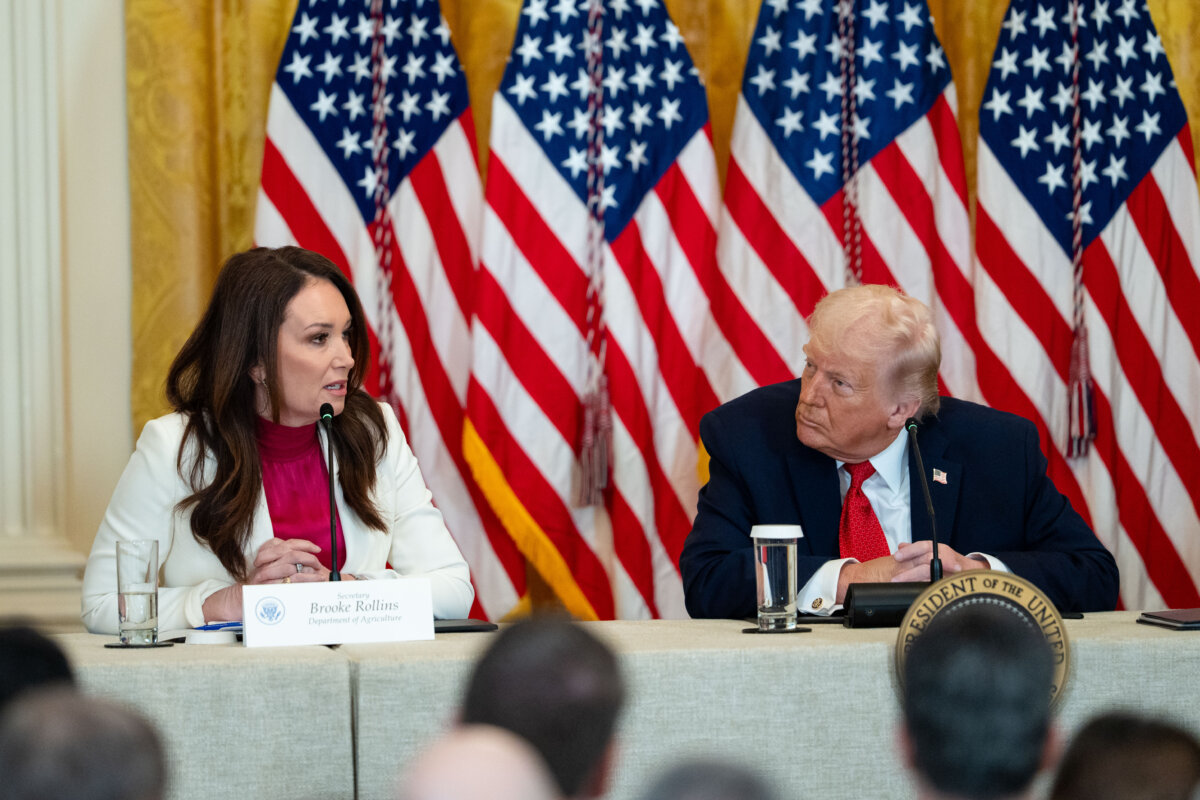
“The fact that we have offshored so much of our fertilizer over the last decade or so is astounding to me,” she said. “It is a national security issue when we’re relying on Russia and China for our fertilizer.”
Rollins said that President Donald Trump is “fixing” the issue.
In an April 20 post on X, Rollins said that farmers had already faced a 40 percent increase in fertilizer costs between 2020 and 2024.
“American farmers must not be left vulnerable to volatile global markets or unpredictable input prices,” she said.
The U.S. administration has pointed to steps including shipping waivers, support for domestic production, and regulatory adjustments intended to ease costs.
Russia Announces Quotas
Meanwhile, Russia moved this week to extend export quotas on mineral fertilizers, starting from June 1 to Nov. 30.
The Russian government said in an April 22 statement that exports outside the Eurasian Economic Union will be capped at 20 million tons during that period.
This includes more than 8.7 million tons of nitrogen fertilizers and more than 4.2 million tons of ammonium nitrate.
Officials said the policy is intended to preserve sufficient supply for domestic agriculture and food producers. The quotas are higher than the nearly 18.7 million-ton quota currently in place through May.
In Europe, the European Union will present its fertilizer action plan on May 19, according to the bloc’s agenda of policy announcements. The plan, according to a European Commission spokesperson, aims to address market imbalances and increase domestic production of fertilizer.
Reuters contributed to this report.
 Friends Read Free
Copy
Facebook
Tweet
Friends Read Free
Copy
Facebook
Tweet