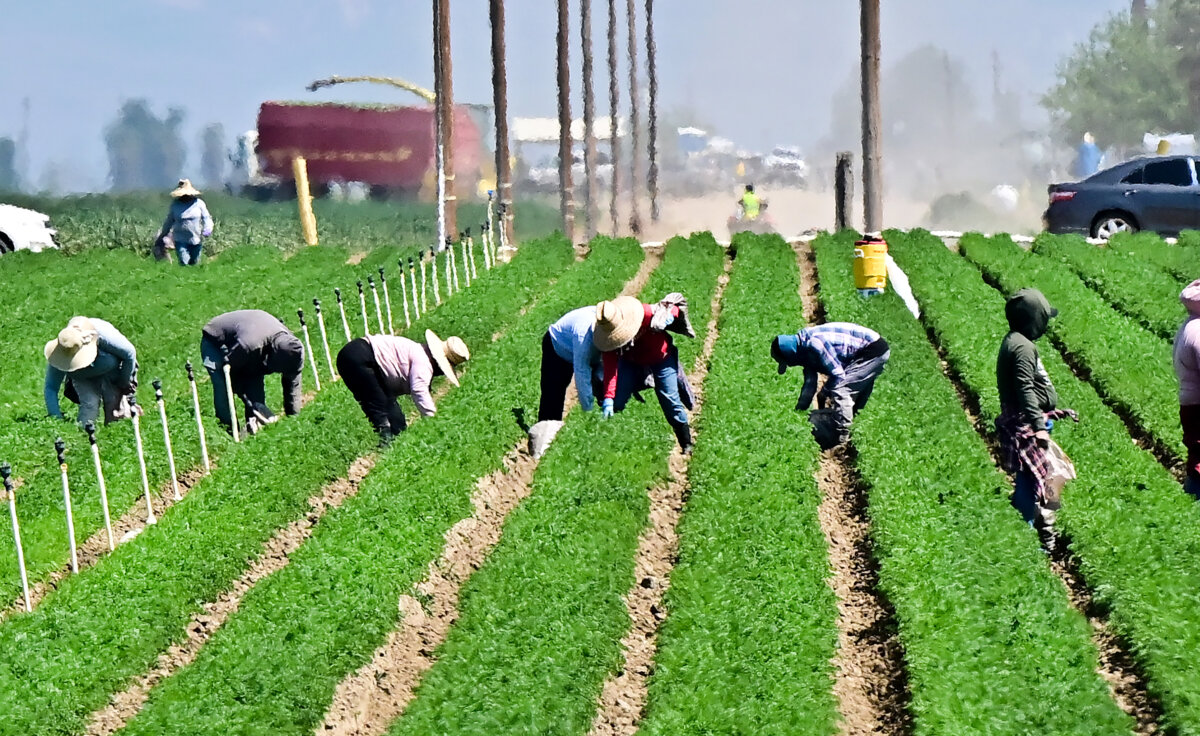

The U.S. Department of Agriculture (USDA) has entered into a $300 million agreement with Palantir Technologies to modernize farm programs and strengthen agricultural security.
The deal, announced on April 22, is meant to improve efficiency, reduce administrative burdens and provide greater oversight of risks to the nation’s food supply.
At its center is the USDA’s “One Farmer, One File” initiative, launched in February and aimed at reducing waste and duplication.
Under the partnership, Palantir will provide software tools designed to help both farmers and USDA staff work more efficiently.
Field staff will have access to mobile tools aimed at reducing administrative tasks and speeding up program delivery.
The system is designed to give farmers flexibility, allowing them to choose between in-person assistance and digital services depending on their needs.
The initiative builds on the USDA’s existing Landmark platform, powered by Palantir, which has already been used to distribute billions in aid.
According to the agency, the system supported the rollout of the $11 billion Farmer Bridge Assistance Program earlier this year, enabling rapid enrollment and payments.
“America depends on its farmers, and USDA is moving fast to give them the technology they need,” Ali Monfre, Palantir’s federal engineering lead, said in a statement. “They are raising the bar for what government can deliver for farmers, and we are honored to partner in that work.”
USDA Chief Information Officer Sam Berry said the agreement with Palantir is not only about efficiency but also about protecting the country’s agricultural system.
“Our farmers sustain this nation, and modern tools help us support them with greater precision,” Berry said in a statement.
Growing Pressure on Farmers
Palantir described farm security as a “national security imperative,” citing risks ranging from supply chain disruptions to fraud and foreign influence.
In December 2025, President Donald Trump announced a $12 billion assistance package to support farmers affected by trade tensions with China. The trade dispute has reduced demand for key U.S. exports such as soybeans, forcing producers to seek alternative markets.
More recently, global instability has added new cost pressures. Rising fuel prices linked to conflict in the Middle East have increased transportation and fertilizer costs, further squeezing farmers’ margins.
U.S. Agriculture Secretary Brooke Rollins said in an April 20 post on X that fertilizer prices remain a major challenge.
“Even before the conflict that has caused additional volatility, our farmers faced a 40 percent increase in fertilizer costs between 2020 and 2024,” she said.
Rollins added that the Trump administration has taken steps to ease the burden, including issuing a temporary waiver of shipping restrictions, expanding fertilizer production, and reducing regulatory barriers.
“American farmers must not be left vulnerable to volatile global markets or unpredictable input prices,” she said.
The partnership also comes amid heightened scrutiny of foreign investment in U.S. farmland, particularly by China.
A January analysis by the Foundation for Defense of Democracies recommended strengthening reporting requirements under the Agricultural Foreign Investment Disclosure Act.
The report warned that adversarial nations could exploit land purchases to gain strategic advantages.
“China’s purchase of American farmland, particularly near U.S. military installations, poses a potent threat to national security,” the report said.
The USDA’s new data capabilities are expected to improve visibility into such risks, allowing officials to better monitor ownership patterns and potential vulnerabilities in the agricultural sector.
 Friends Read Free
Copy
Facebook
Tweet
Friends Read Free
Copy
Facebook
Tweet