



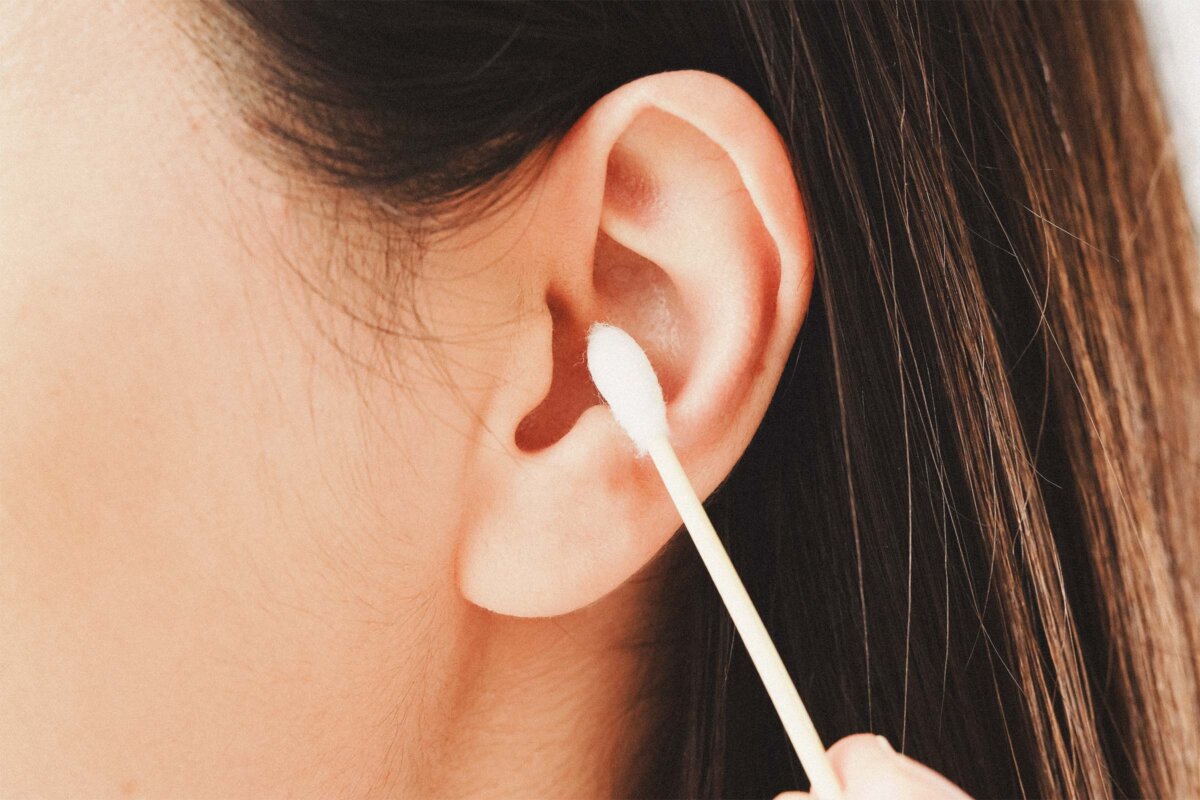
Earwax is sticky and a little gross—most of us reach for a cotton swab the second we spot it. However, doctors say that this instinct is backward. Earwax isn’t a hygiene failure; it’s your ear’s built-in security system.
Earwax—medically called cerumen—isn’t just leftover gunk. It has a job to do.
“It’s actually there to be protective,” Dr. John Seibert, a head and neck surgery otolaryngologist in Tennessee, told The Epoch Times. An otolaryngologist is also called an ear, nose, and throat specialist (ENT).
One of the least known things about earwax, he said, is that it’s bacteriostatic—meaning that it makes it harder for bacteria to grow.
Earwax is also slightly acidic, helping protect against infections in the ear canal, Lt. Col. Dr. Andria Caruso, an otolaryngologist at Womack Army Medical Center, told The Epoch Times via email.
Earwax has a pH that ranges from about 5.0 to 7.0. The acidity helps prevent bacterial and fungal infections, keeps the skin inside the ear healthy, and maintains the delicate balance between beneficial and harmful microbes.
In addition, earwax keeps things that shouldn’t be in our ears out—such as dirt, bugs, and other objects that don’t belong there.
So, you may wonder: With all the benefits of earwax, do we need to clean our ears?
The answer is mostly no. Our ears are designed to clean themselves.
“I tell people a lot of times that ears should be like ovens—self-cleaning,” Seibert said.
Earwax is secreted by glands in the skin of the outer third of our ear canals, where it mixes with skin, dust, and hair.
Tiny hairs in your ear canal, combined with the natural movement of your jaw as you talk and chew, slowly shuffle old wax, skin, and debris toward the exit—like a conveyor belt you never have to switch on.
“The earwax in our ears should fall out on its own—but unfortunately, that doesn’t always happen,” he said.
The self-cleaning process doesn’t always keep up, and wax can build up faster than it can be cleared out. Most of us don’t need extra help keeping our ears clean, but some factors affect how well our ears can clean themselves.
Earwax Type and Color
Earwax varies among people. Seibert said it can accumulate in different ways.
“Some earwax is kind of gummy, some is kind of crispy, and some is kind of chewy,” he said.
He added that consistency matters and that thicker, stickier wax doesn’t come out of our ears as easily.
There are different types of earwax, too—wet and dry—and they vary by ethnicity. The wet type is prevalent among those of European and African descent, while the dry type is common among those from East Asia.
Earwax also varies in color, and sometimes a darker color can make you think that something is wrong. However, Seibert said this is not the case: The color is not diagnostic; it varies among people, and everybody’s will be a little different—so you can rest easy.
Size Matters
The size of our ears also plays a role.
Some people have much smaller ear canals than others, and, combined with the type of wax they have, it affects how well they may clean themselves and the tendency for wax to build up.
Seibert said that if your ear canal is the size of a cotton swab, then you are likely just pushing the wax in deeper; however, if your canal is a little bigger, and you want to clean it out—which he says most ENTs don’t recommend—he suggests being extremely careful so you don’t bump into anything that could cause it to go too deep into your ear.
“Make a perimeter around you. It’s almost like putting orange cones around you, saying: ‘I’m having something in my ear to clean this out. Don’t come near me,’” he said.
He noted that having someone else do it for you can be helpful, as he can see what he is doing better than you can.
What to Avoid and What to Use if Necessary
Cotton swabs usually do the opposite of what people intend, Caruso said. They push earwax deeper into the ear, where it’s harder to remove and more likely to cause pain.
However, if you are overcome with the urge to clean your ears, she shared some safer methods.
“Earwax softening drops are available at the local pharmacy—an oil such as jojoba oil can help remove the wax as well if needed,” she said.
Hydrogen peroxide in a dropper can also safely clean excess earwax and help prevent infection, she said.
Some over-the-counter washes and rinses can clear out earwax—and when they work, it’s not an issue, as the ears will make more wax, Seibert said. However, problems arise when earwax and rinses get trapped in the ear and mix with the ear’s moisture. When combined with wet wax, it can become a dangerous mix, as trapped moisture, along with the removal of protective earwax, can allow bacteria to grow.
“That can create a significant infection and can bring a grown person to their knees pretty significantly,” he said.
Dirty water from swimming in lakes and the ocean can also contribute to infections, but drying your ears with a hairdryer on low can prevent fungus and bacteria from growing, Caruso said.
Even the way you sleep can affect how wax accumulates in your ear.
“We find that earwax is more commonly obstructed in the ear that you sleep on,” Seibert said.
Physical pressure, along with the ear’s contact with the pillow, traps heat and moisture and can gently compress the ear canal, compacting earwax and impeding the ear’s self-cleaning process.
Hearing aids, earbuds, and earplugs used to protect your ears from loud noise can also push earwax deeper into the ear. If you regularly use such devices and have hearing problems or other ear issues, see your physician to make sure your ear canals are clear.
Earwax and Its Diagnostic Potential
Beyond keeping your ears clean, scientists are learning that earwax has diagnostic capabilities, especially for cancer.
In a 2019 study, Brazilian researchers compared earwax from people with and without cancer and identified 27 biological markers that could distinguish the two groups—with 100 percent accuracy in those tested. Follow-up work, including an analysis of more than 1,000 samples, suggested that the method could detect cancer at any stage, distinguish benign tumors from malignant ones, and even flag when a cancer had gone into remission.
When to See a Doctor
If you’re wondering when to see a doctor, Seibert said that if you feel fullness and pressure in your ears that doesn’t improve, you might want to see your primary care provider so he can have a look. If there are problems, he can refer you to an ENT.
Fullness and pressure in the ears can have many causes, including ear canal blockage, fluid accumulation, sinus congestion, altitude changes, or inflammation in the middle or inner ear. Other symptoms a physician should investigate, according to Caruso, are severe, unyielding ear pain and severe ear ringing or hearing loss with no clear cause—both of which can be emergencies. Sudden hearing loss can be caused by sudden sensorineural hearing loss—a condition with a very short window of a few days to a couple of weeks—during which prompt treatment is vital, as waiting too long can cause permanent deafness.
“Luckily, oral steroid treatments can be helpful if provided early,” she said.
Treatment for sensorineural hearing loss involves immediate corticosteroid therapy to reduce inflammation, but it must be started within about two weeks for the best chance of reversing any damage.
Final Thoughts
Earwax can seem like a nuisance, but it does an important job and—for the most part—should be left alone to do its work without our interference. Essentially, when our ears work properly, they clean themselves without needing help. However, there are times when you may have problems your ears can’t solve on their own—which is when you want to seek out an ENT. A specialist can help diagnose what’s happening—and if your ears do need cleaning, he has the tools and expertise to do it safely.