



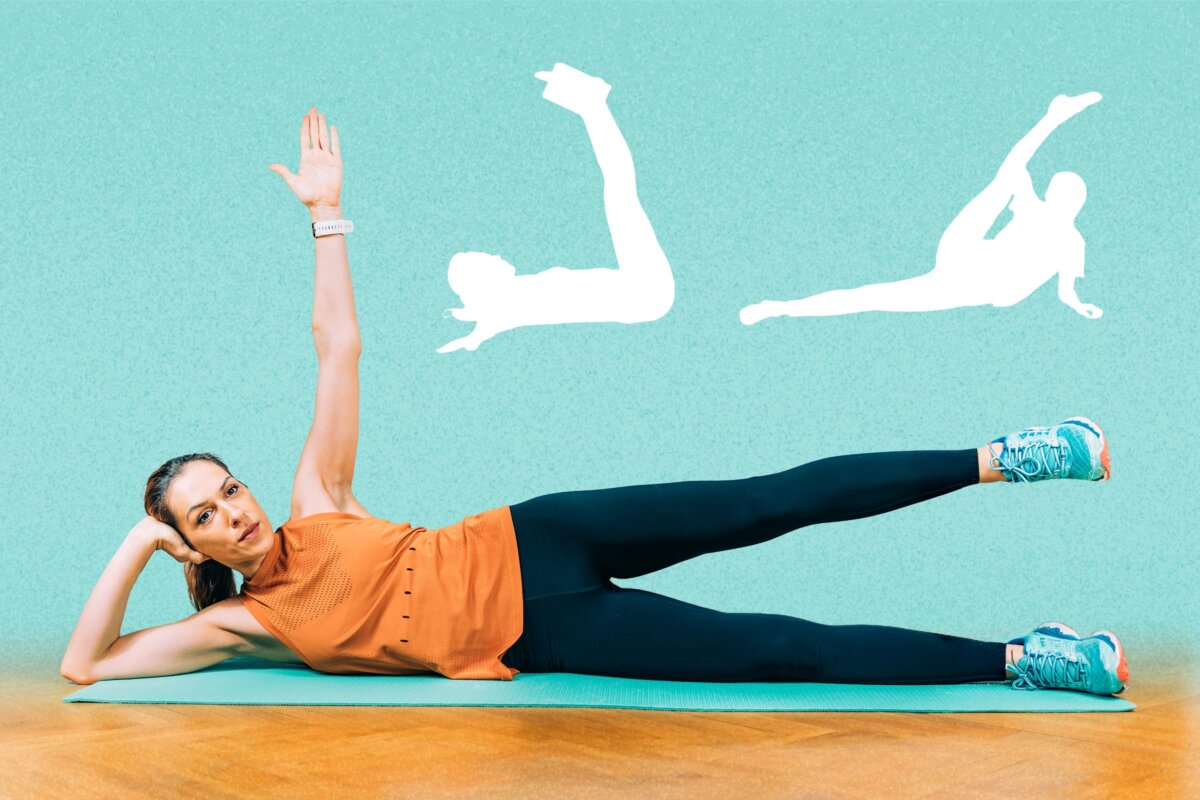
After a week of sitting, a sudden run or sprint can expose an often-overlooked weak link: the inner-thigh muscles that help control the leg as it slows and changes direction.
These muscles, known as the hip adductors, work with the core and outer hips to stabilize the pelvis and control the legs. Training this entire system may improve movement control and help the body handle sudden athletic demands more safely.
Why Sudden Exercise Can Strain the Groin
Groin strains are common in sports that involve rapid acceleration, kicking, abrupt stops, or changes of direction, such as soccer, basketball, and tennis.
During these movements, the adductors do more than pull the legs inward. They also act as brakes, lengthening under tension to slow the leg, stabilize the pelvis, and help the body change direction smoothly. If the demand suddenly exceeds the muscles’ strength or readiness, pain, tightness, swelling, or bruising can result.
People who are relatively inactive during the week and then exercise intensely on weekends may be unprepared for these sudden loads. Previous injuries can further increase vulnerability if strength and movement control have not fully recovered.
A 2015 systematic review published in the British Journal of Sports Medicine found that previous groin injury, reduced hip-adductor strength, higher levels of competition, and insufficient sport-specific training were associated with an increased risk of groin injury.
Although this does not prove that strengthening alone prevents injuries, it helps explain why gradually developing adductor strength, hip stability, and movement control may better prepare the body for sudden athletic demands.
10 Moves to Build Hip Strength and Mobility
The following routine takes a whole-hip approach. Some movements engage the inner-thigh muscles, while others strengthen the outer hips and core or improve flexibility. Together, these areas help stabilize the pelvis and control the legs during running, stopping, and changing direction.
The routine includes both introductory and advanced movements. Move slowly, avoid using momentum, and remain within a comfortable, pain-free range.
1. Single-Leg Raise–Right
Step 1: Sit with both legs extended straight in front of you. Loop a resistance band around the sole of your right foot and hold one end of the band in each hand.
Step 2: Exhale as you lean your upper body backward, using the resistance band to lift your right leg and draw it closer to your body. Inhale as you use the swinging motion of your right leg to bring your upper body back to a seated position. Repeat.
2. Single-Leg Raise–Left
Step 1: Sit with both legs extended straight in front of you. Loop a resistance band around the sole of your left foot and hold one end of the band in each hand.
Step 2: Exhale as you lean your upper body backward, using the resistance band to lift your left leg and draw it closer to your body. Inhale as you use the swinging motion of your left leg to bring your upper body back to a seated position. Repeat.
3. Straight-Leg Rotations
Step 1: Lie on your back. Hold a yoga block between your feet, raise both legs straight up to a 90-degree angle, and place your arms at your sides.
Step 2: Exhale as you slowly lower both legs to the right without letting them touch the floor. Inhale as you slowly return them to the center.
Step 3: Exhale as you slowly lower both legs to the left without letting them touch the floor. Inhale as you slowly return them to the center. Alternate between the left and right sides.
4. Advanced Leg Raise
Step 1: Lie on your back, with your arms above your head and a yoga block in your hands.
Step 2: Raise both arms and legs off the floor and transfer the block from your hands to your feet, then lower your legs and arms back down.
Step 3: Continue passing the block between your hands and feet.
5. Side Leg Raise–Left
Step 1: Lie on your right side, supporting your body with your right forearm. Keep both legs together and extended straight.
Step 2: Lift your left leg as high as possible, then slowly lower it. Repeat.
6. Side Leg Raise–Right
Step 1: Lie on your left side, supporting your body with your left forearm. Keep both legs together and extended straight.
Step 2: Lift your right leg as high as possible, then slowly lower it. Repeat.
7. Side Leg Raise to Plank–Left
Step 1: Lie on your right side, supporting your body with your right forearm. Keep both legs together and extended straight.
Step 2: Lift your left leg as high as possible, then slowly lower it. Complete a total of three repetitions.
Step 3: Rotate your body into a forearm plank and hold for three to five seconds, then return to the side-lying position. Repeat Steps 2 and 3.
8. Side Leg Raise to Plank–Right
Step 1: Lie on your left side, supporting your body with your left forearm. Keep both legs together and extended straight.
Step 2: Lift your right leg as high as possible, then slowly lower it. Complete a total of three repetitions.
Step 3: Rotate your body into a forearm plank and hold for three to five seconds, then return to the side-lying position. Repeat Steps 2 and 3.
9. Leg Sweep–Left
Step 1: Lie on your right side, supporting your body with your right forearm. Keep both legs together and extended straight.
Step 2: Bend your left knee upward, bringing your toes to the level of your right knee. Then straighten the leg and kick it upward as high as possible, aiming for a 90-degree angle with your body. Slowly lower the straight leg back to the starting position. Repeat.
10. Leg Sweep–Right
Step 1: Lie on your left side, supporting your body with your left forearm. Keep both legs together and extended straight.
Step 2: Bend your right knee upward, bringing your toes to the level of your left knee. Then straighten the leg and kick it upward as high as possible, aiming for a 90-degree angle with your body. Slowly lower the straight leg back to the starting position. Repeat.
Build Capacity Before Testing It
Groin protection is not simply about stretching the inner thighs. The adductors must be strong enough to slow the leg, while the core and outer hips keep the pelvis stable.
Consistent, progressive training prepares these muscles more effectively than occasional bursts of intense exercise. Start with movements you can control, increase the difficulty gradually, and let pain—not ambition—set the limit.