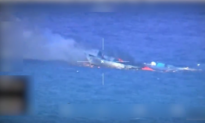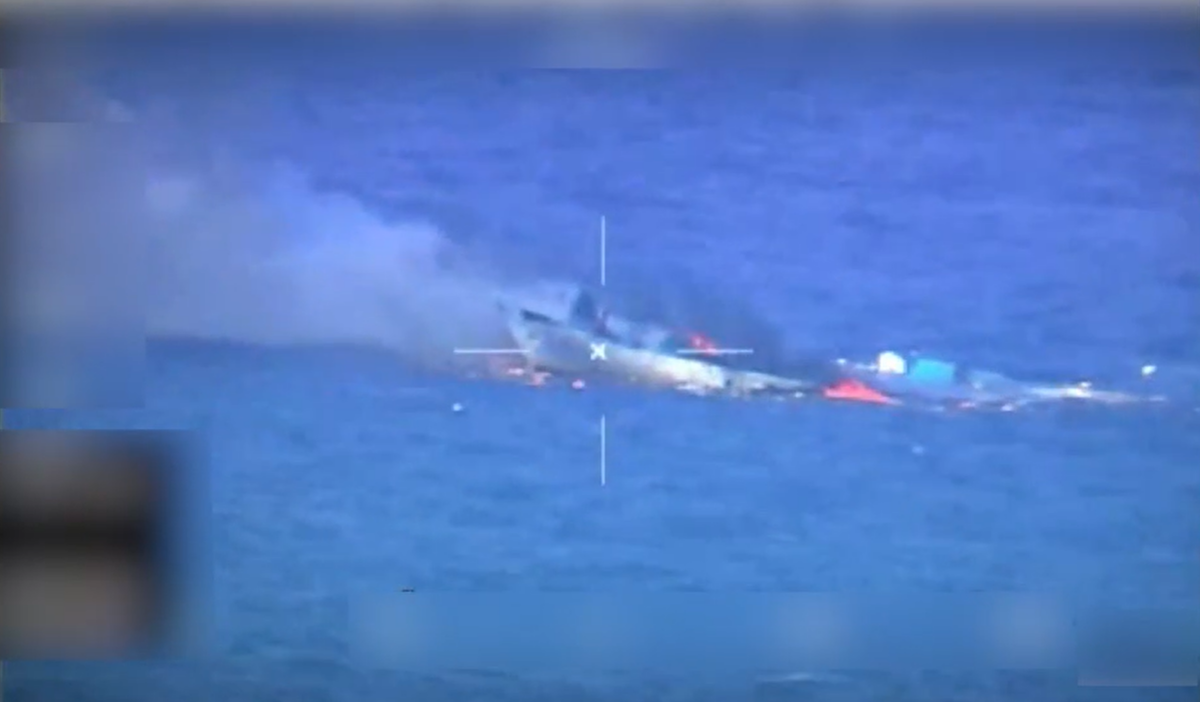

U.S. forces, on Aug. 28, sank a vessel in the eastern Pacific that the U.S. Southern Command (SOUTHCOM) said was serving as an at-sea refueling point for drug-trafficking boats.
SOUTHCOM, which oversees military operations in and around Central and South America, said U.S. forces worked in coordination with the government of Ecuador to track down the vessel.
“Intelligence confirmed the vessel, previously identified and targeted under Department of the Treasury sanctions, was operating in support of the Los Choneros violent narco-terrorist organization,” SOUTHCOM said in a press statement.
Los Choneros is one of more than a dozen Latin American transnational criminal enterprises that the U.S. government has designated as a foreign terrorist organization since the start of President Donald Trump’s second term.
According to SOUTHCOM, U.S. Marines and sailors launched from the amphibious transport dock ship USS San Antonio to board and search the vessel, and did so without incident.
“Individuals removed from the vessel were safely escorted to Ecuador. Once cleared, U.S. forces sank the vessel,” SOUTHCOM said.
SOUTHCOM has since published footage purporting to show U.S. forces boarding the suspect vessel, as well as footage of the boat being destroyed in a fiery blast.
“Today’s operation is a stark example of the Americas Counter Cartel Coalition’s power to dismantle the sophisticated, clandestine narco-terrorist tactics and capabilities that have enabled the trafficking of dangerous drugs destined for American communities,” SOUTHCOM commander Gen. Francis L. Donovan said of the operation.
The Americas Counter Cartel Coalition, formed in March of this year, is a military partnership between the United States and other Western Hemisphere nations to disrupt cartel operations.
The U.S. military had been taking a more forceful approach to disrupt cartel operations even before recruiting regional partners through the Americas Counter Cartel Coalition.
On Sept. 2, 2025, U.S. forces bombed a boat in the Caribbean Sea, which officials said was transporting narcotics, killing 11. It was the first in an ongoing series of strikes on drug boats.
U.S. forces have struck dozens more vessels in the Caribbean and eastern Pacific in the past year. Most recently, SOUTHCOM claimed responsibility for a strike in the Caribbean on Aug. 25 that killed four people it identified as members of a drug-trafficking network.
The campaign of lethal strikes on boats has met with scrutiny and criticism.
Sen. Tim Kaine (D-Va.), in an Aug. 3 letter to the president, said: “A careful review of the available evidence suggests that the United States has killed individuals who are not involved in narcotrafficking.”
A December report by Human Rights Watch described the campaign of boat strikes as a series of “extrajudicial killings.”
The family members of two Trinidadian nationals who have been missing since October filed a wrongful death lawsuit against the United States in January. The plaintiffs claimed that the two missing men had been working as migrant laborers in neighboring Venezuela, and had arranged a boat ride home to Trinidad and Tobago, but were likely killed in an Oct. 14 strike by U.S. forces.
The U.S. government has not publicly identified any of the individuals they believe to have killed in these boat strikes.
 Friends Read Free
Copy
Facebook
Tweet
Friends Read Free
Copy
Facebook
Tweet