
The State Department updated its travel advisories for five Middle Eastern nations—Kuwait, Saudi Arabia, the United Arab Emirates (UAE), Qatar, and Bahrain—and continues to warn about security risks primarily posed by Iran in the region.
Kuwait
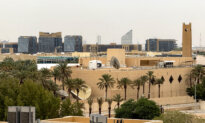
Kuwait is classified as “Level 3: Reconsider Travel,” with the department warning about the threat of armed conflict, crime, and landmines in the country. The U.S. government has “limited ability to offer services to U.S. citizens in Kuwait due to safety risks,” the Aug. 28 travel advisory update said.
“Due to safety risks, U.S. government employees need special authorization to travel to Kuwait. Only family members 18 years of age or older may join U.S. government employees working in Kuwait,” according to the update.
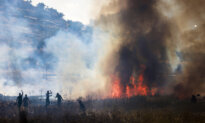
After hostilities between the United States and Iran broke out in late February, Kuwait faces an ongoing threat of drone and missile attacks, the department said, adding that commercial aviation in Kuwait has been “seriously disrupted.”
Iran has attacked Kuwait multiple times over the past months. For instance, in June, the Kuwait International Airport was attacked with drones, which ended up killing at least one individual and forcing the suspension of commercial flights.
In July, Iran attacked power stations and water desalination plants in Kuwait for multiple days, damaging facilities.
The latest advisory said that the U.S. Federal Aviation Administration has issued a notice due to risks to civil aviation operating in or near the Gulf of Oman and the Persian Gulf, including in Kuwait.
“Do not travel to areas that are ‘off the beaten path’. Do not touch or move objects in those areas as they could explode,” the department said.
Saudi Arabia
The Aug. 29 advisory update for Saudi Arabia warns that Iran’s drones and missiles can target American interests. Attacks from Iran have targeted cities, airports, infrastructure, military bases, and diplomatic and energy facilities nationwide. The country is designated Level 3: Reconsider Travel.
“Falling debris from intercepted drones and missiles are also a risk. U.S. citizens living and working near energy infrastructure and military bases may be at increased risk, especially closer to the Yemen border,” the State Department said.
According to the update, U.S. government employees working in Saudi Arabia can now bring family members into the country. Earlier this month, Houthis, an Iran-backed terror group, said they attacked an oil refinery in Saudi Arabia.
UAE
As for the UAE, which is also a Level 3 nation, Iran attacks and terrorism are listed as ongoing risks. The Aug. 29 update states that family members of U.S. government employees working in the UAE are now allowed to join them. However, aviation safety, like in other nations in the region, is an issue.
On Aug. 15, the UAE accused Iran of attacking an Abu Dhabi National Oil Co. vessel in the Strait of Hormuz waterway.
In 2025, 1.4 million people from the Americas visited Dubai, a key city in the UAE, according to a Feb. 9 statement from the Dubai Department of Economy and Tourism.
Qatar
The Aug. 28 advisory update for Qatar, classified as Level 3, said that family members can now join U.S. government employees stationed there. However, people planning on visiting Qatar must reconsider travel due to the risk of armed conflict, the State Department said, citing the threat of missile and drone attacks from Tehran.
The advisory asked people planning to go to Qatar to be prepared to shelter in place if the situation deteriorates.
In 2025, around 5.1 million international visitors arrived in Qatar, with the Americas region representing 7 percent, or around 357,000 of these visitors, according to data from the Qatari government.
Bahrain
As for Bahrain, the Aug. 27 advisory update said that family members of U.S. government employees working in Bahrain can join them. However, this is restricted to individuals aged 18 or older. Like Qatar, Bahrain, classified as Level 3, is facing major risks of attacks from Iran.
In addition, there is a risk of terrorist violence in the country. “Terrorist groups continue plotting possible attacks in Bahrain. Terrorists may attack with little or no warning,” the State Department said.
Targets for attacks can include tourist sites, shopping malls, markets, religious sites, government facilities, and transportation hubs.
Other Middle Eastern Countries
The State Department has also warned about the risks of traveling to other Middle East nations.
Lebanon and Yemen are classified as “Level 4—Do not travel,” the most severe of the State Department’s four travel advisory levels.
In an Aug. 21 advisory update, the department asked Americans to avoid visiting Lebanon due to the risk of crime, unrest, kidnapping, armed conflict, and terrorism.
“Drone and missile strikes can occur throughout Lebanon, including in Beirut,” the capital city, the advisory said. “Hostilities can disrupt commercial flights, including the infrastructure for accessing the international airport.”
Regarding Yemen, the State Department asked Americans to never go to the country “for any reason.” Americans, especially dual U.S.–Yemeni citizens, are at “high risk of kidnapping and detention,” the Dec. 19 advisory update said. The Houthis have control of the capital city of Sana’a and have detained U.S. citizens.
Oman is classified as a “Level 3” nation. The June 27 advisory update for Oman asks Americans to reconsider travel, citing the risk of armed conflict and terrorism.
In addition to the threat of Iranian attacks, there is a risk of terrorist violence in Oman. Potential targets of such attacks include places visited by Americans and other foreigners, tourist locations, and important political or religious locations, the department said.
The tense environment in the Middle East shows no sign of easing amid escalating hostilities between the United States and Iran.
This week, the Trump administration announced Operation Economic Outcast, under which the United States can sanction any person or entity operating in Iran’s tech, digital asset, aviation, gold, and shipping sectors.
On Friday, Iran warned all countries not to implement U.S. sanctions.
 Friends Read Free
Copy
Facebook
Tweet
Friends Read Free
Copy
Facebook
Tweet