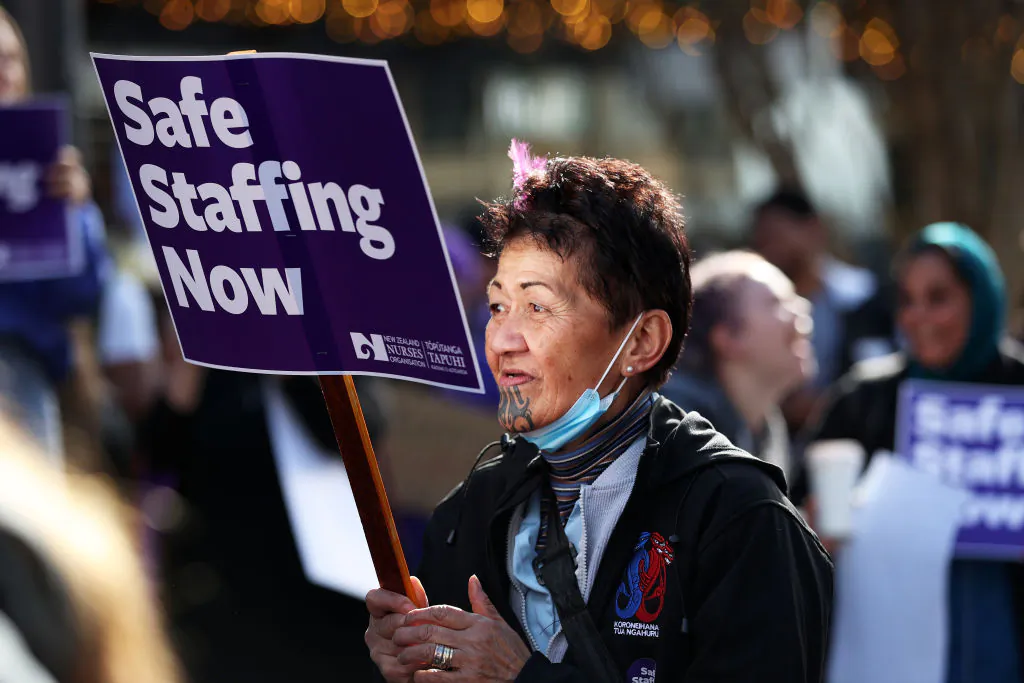

New Zealand is preparing for what is likely to be the largest industrial action in 40 years, with around 100,000 crucial workers, mostly in health and education, planning to walk off the job on Oct. 23.
It’s been confirmed that more than 36,000 nurses will strike, along with around 11,500 other healthcare workers, including senior doctors, dentists, social workers and others. An estimated 40,000 teachers will also stop work.
Secondary teachers are already involved in industrial action, refusing to teach certain class levels on certain days of the week, banning all extracurricular activity on Oct. 29, and taking part in a two-hour strike on Nov. 5. Their actions are taking place as students prepare to sit exams, which run from Nov. 4 to 28.
Marches and rallies are planned across the country on Thursday, including a march in Wellington to Parliament and one down Queen Street in Auckland. Some schools and hospitals will also be picketed.
Many schools will be closed, and hospitals will be forced to cancel non-emergency medical procedures.
Police said planning was well underway to ensure safety.
Offer Ignores Staffing Concerns, Union Says
The New Zealand Nurses Organisation (NZNO) has been negotiating pay and seeking an increase in staffing levels since last year.
Health NZ is offering a 3 percent pay rise over 27 months, plus two lump sum payments of $325.
NZNO is seeking a 5 percent pay rise over two years, along with $2,000 flat rate increases for senior positions, and wants the restoration of a Tikanga Māori (“appropriate and culturally correct conduct”) allowance.
The average salary for both senior and registered nurses, including overtime, PDRP allowance, and penal rates, is $125,662, according to Health NZ’s offer (pdf).
“We believe the offer we have made to the union is a fair one given our current financial constraints,” Health NZ said.
However, NZNO Chief Executive Paul Goulter said the current offer was below the rate of inflation, and his members needed a wage offer that met the rising cost of living.
The latest offer also ignores nurses’ concerns about staffing levels, he said. The union has obtained data from Health New Zealand, which showed surgical wards were short-staffed more than half of all day shifts last year.
“Patients are at risk because of short staffing. Nurses, midwives, and healthcare assistants are stretched too thin and can’t give patients the care they need. This is heartbreaking for our exhausted members, who became healthcare workers because they want to help people,” Goulter said.
According to the Ministry of Education, the average salary for all secondary teachers last year was $100,933 (US$57,900), and their average starting salary was $78,300.
The current pay offer by the government would increase rates by 1 percent a year for the next three years, well below the 14.5 percent over three years won through arbitration in 2023 and the average 10 percent over three years that union members accepted in 2019.
Both of those settlements also included lump sum payments.
The country has recorded at least 22 official work stoppages this year, with many more rolling strikes that have disrupted public services.
“The mood for working people is frustration with a government that is out of touch and doesn’t seem to value them or their work – especially in the public sector,” said Council of Trade Unions (CTU) President Richard Wagstaff.
Prime Minister Christopher Luxon described the planned national strike “a shame,” and said he believed “people are getting sick of unions prioritising the politics over patients, or kids in education and parents being mucked around.”
 Friends Read Free
Copy
Facebook
Tweet
Friends Read Free
Copy
Facebook
Tweet