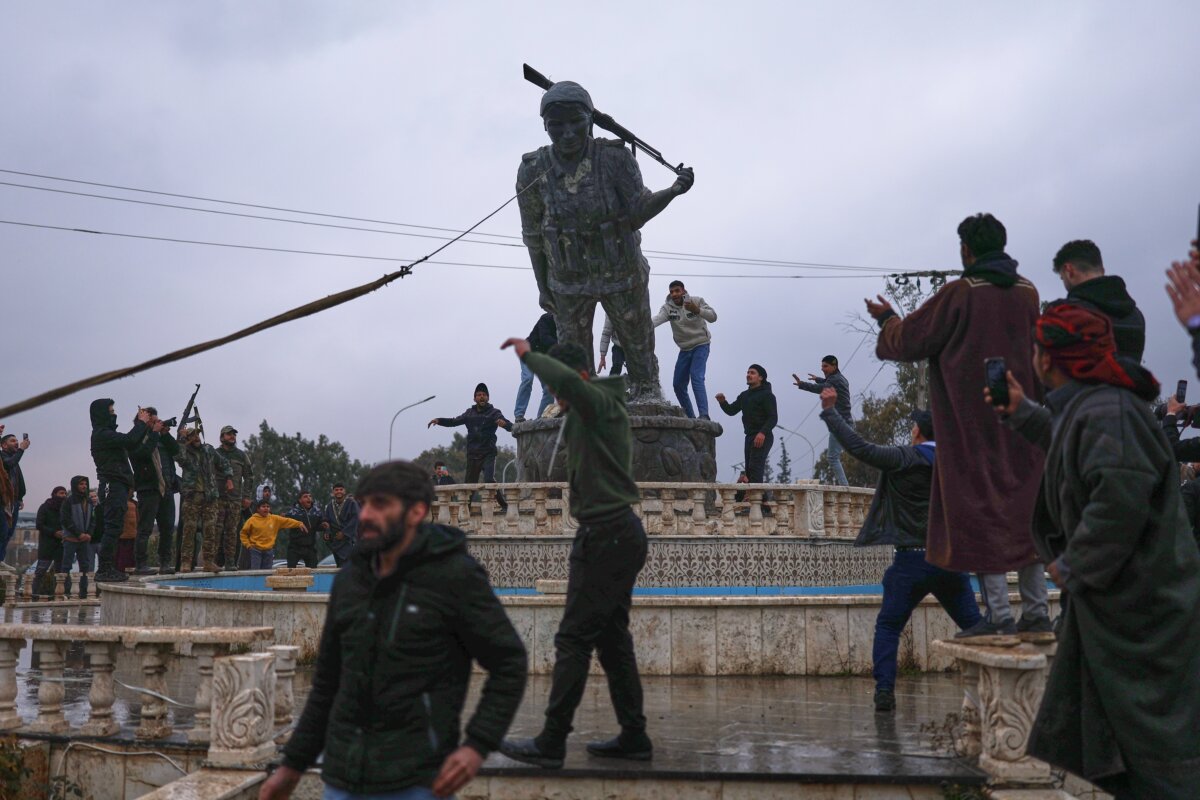

U.S. Special Envoy to Syria Tom Barrack on Jan. 20 urged the Syrian Democratic Forces (SDF) to integrate with the country’s current de facto interim government.
The United States has historically supported the predominantly Kurdish SDF throughout the Syrian civil war and concurrent fight against the ISIS terrorist group.
Since Syrian leader Bashar al-Assad fled Damascus in December 2024, the U.S. government has made diplomatic inroads with the post-Assad interim government, currently led by Ahmad al-Sharaa.
In a statement on Jan. 20, Barrack said the need for the U.S.–SDF partnership has lessened since Assad’s ouster. As such, he said the SDF should support broader Syrian unity efforts.
“While risks remain … the United States is pushing for safeguards on Kurdish rights and counter-ISIS cooperation. The alternative—prolonged separation—could invite instability or ISIS resurgence,” Barrack wrote.
“This integration, backed by U.S. diplomacy, represents the strongest chance yet for Kurds to secure enduring rights and security within a recognized Syrian nation-state.”
Barrack’s calls for integration come amid continuing clashes between the SDF and the interim government in Damascus under Sharaa.
Sharaa—who has gone by the nom de guerre Abu Mohammad al-Jolani—seized power in Damascus at the head of an army composed largely of Hayat Tahrir al-Sham (HTS) fighters. HTS, which began as a Syrian offshoot of the al-Qaeda terrorist group, had been labeled as a foreign terrorist organization by the United States, but President Donald Trump’s administration retracted the designation in July.
The Damascus government and the SDF announced they had reached a cease-fire agreement on Jan. 18, but fighting has continued in the days since.
Clashes Risk ISIS Prison Breaks
Throughout Syria’s civil war period, the SDF guarded several camps housing suspected ISIS members and their families.
In his Jan. 20 statement, Barrack said managing these ISIS detainees formed a key part of the basis for the U.S.–SDF partnership but that this rationale had faded.
“Damascus is now both willing and positioned to take over security responsibilities, including control of ISIS detention facilities and camps,” he wrote.
Barrack said the Jan. 18 cease-fire, and other recent U.S. government efforts, are meant to facilitate the transfer of the prison camps and other key infrastructure from SDF control over to the Damascus government. Continued fighting now appears to threaten plans for a stable transfer of control over those prison camps.
On Jan. 19, the SDF reported attacks near the Shaddadi prison camp in Syria’s northeastern Hasakah Governorate. On Jan. 20, the SDF reported additional attacks near the Hol prison camp in Hasakah and the Aqtan prison camp in the Raqqa Governorate.
The SDF has attributed the attacks on the various prison camps to “Damascus-affiliated factions,” referring to forces aligned with Sharaa.
ISIS suspects have already escaped from the prison camps, according to the interior ministry for the de facto Syrian government.
The de facto Syrian interior ministry on Jan. 19 reported that about 120 ISIS suspects had left the Shaddadi prison facility. Following a search of the area, the interior ministry said government forces had located and arrested 81 of the escapees.
The interior ministry said more ISIS suspects escaped the Hol prison camp on Jan. 20, this time blaming the SDF directly for their release.
“Today, [SDF] forces tasked with guarding al-Hol camp east of al-Hasakah withdrew without any coordination with the Syrian government or the international coalition, in a move aimed at pressuring the government on the issue of counterterrorism,” the interior ministry said.
The SDF acknowledged withdrawing its forces from the Hol prison camp following the recent clashes.
“Due to the international indifference toward the issue of the ISIS terrorist organization and the failure of the international community to assume its responsibilities in addressing this serious matter, our forces were compelled to withdraw from Al-Hol Camp and redeploy in the vicinity of cities in northern Syria that are facing increasing risks and threats,” the SDF’s press center said in a statement on X.
On the evening of Jan. 20, the Syrian interior ministry reported that government forces had begun to restore control at the Hol prison camp. At about the same time, the SDF reported that skirmishes were still ongoing near the Aqtan prison camp.
The Epoch Times reached out to the U.S. Central Command, which oversees operations in the Middle East, for comment on the status of the ISIS prison camps but received no response.
 Friends Read Free
Copy
Facebook
Tweet
Friends Read Free
Copy
Facebook
Tweet