U.S. forces are now focused on wiping out Iran’s drone and missile factories, Adm. Brad Cooper, the head of the U.S. Central Command (CENTCOM), said on Monday, noting that the U.S. has achieved air superiority.
More than 6,000 combat flights were flown in connection with the operation, Cooper said in an update on X.
Currently, “Operation Epic Fury” is focused on Iran’s “defense-industrial base,” which produces weapons such as attack drones and missiles, Cooper added. Multiple drone production factories, military depots, and missile factories across the country have been taken out, he said, displaying before-and-after photos of destroyed targets.
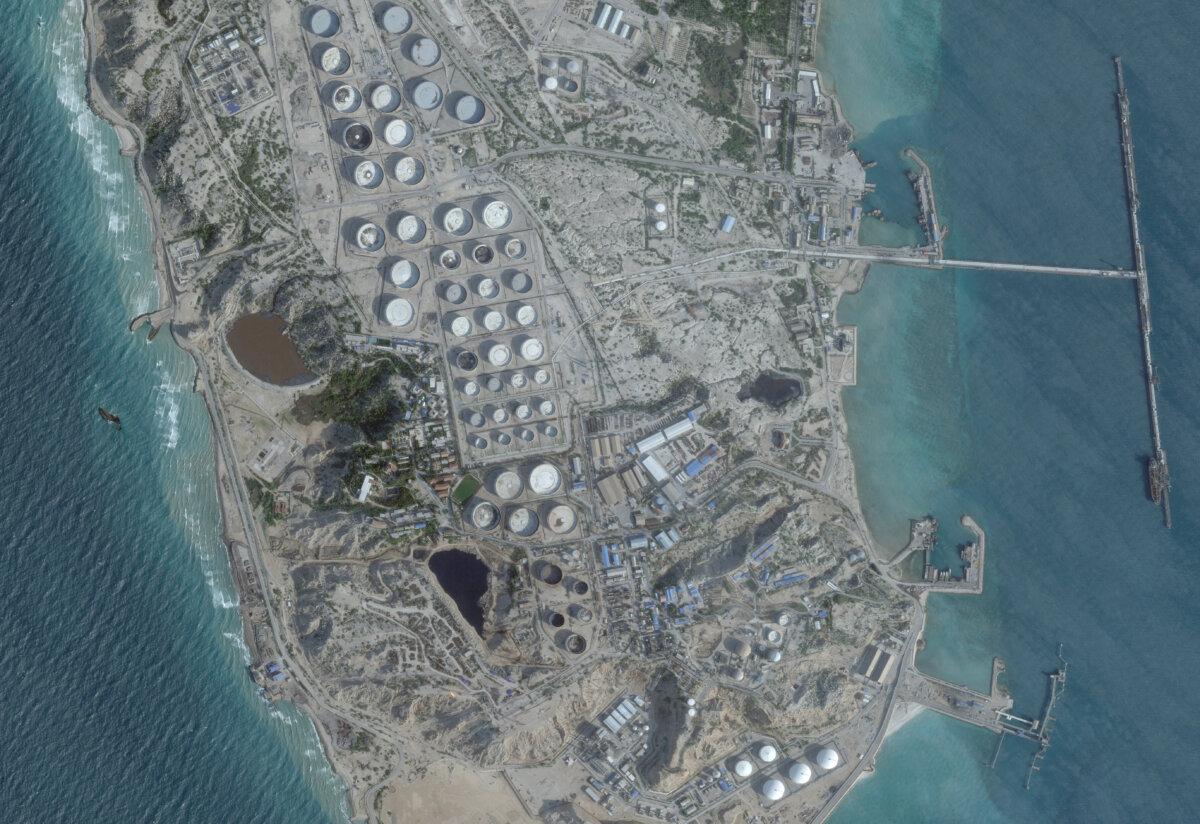
He added that the campaign this past week in Kharg Island, a critically important location for Iran’s oil industry, destroyed more than 90 Iranian military targets, including storage bunkers for mines.
Commercial shipping traffic through the strategically important Strait of Hormuz, which carries around 20 percent of the world’s oil, has dropped significantly as Iranian forces have launched attacks on commercial vessels. The Trump administration has warned that oil-producing infrastructure on Kharg Island could be targeted next if the attacks continue.
“We have successfully destroyed more than 100 Iranian naval vessels, and we aren’t done,” Cooper said, adding that the U.S. military is moving to stop Tehran from impeding “the freedom of navigation” in the strait.
Gulf Arab states, including the United Arab Emirates, Saudi Arabia, Kuwait, and Bahrain, reported new missile or drone attacks on them after Iran called for the evacuation of three major ports in the United Arab Emirates.
Cooper criticized the Iranian regime for launching attacks targeting civilians but stressed that the country’s military “capabilities are declining” as the U.S. campaign continues.
President Donald Trump on Sunday evening said he has asked other countries to send their warships to keep the Strait of Hormuz open, although no nation has publicly said it would.
“I’m demanding that these countries come in and protect their own territory, because it is their own territory,” Trump said about the strait. He said the shipping channel is not needed by the United States because America has its own access to oil. Trump spoke while answering reporters’ questions as he flew back to Washington from Florida aboard Air Force One.
Trump said China gets about 90 percent of its oil from the strait, while the U.S. gets a minimal amount. He declined to discuss whether the Chinese regime will join the coalition.
“It would be nice to have other countries police that with us, and we’ll help. We’ll work with them,” Trump said. Previously, he has appealed to China, France, Japan, South Korea, and Britain.
Meanwhile, Iranian Foreign Minister Abbas Araghchi told CBS that Tehran has been “approached by a number of countries” seeking safe passage for their vessels, “and this is up to our military to decide.” He said a group of vessels from “different countries” had been allowed to pass, without providing details.
This past week, a statement attributed to the country’s top leader, Mojtaba Khamenei, said Tehran would continue to keep the strait closed and would persist in attacking neighboring countries. In the CBS interview, Araghchi added that Iran should attack those countries because they house U.S. military assets.
The Associated Press contributed to this report.
 Friends Read Free
Copy
Facebook
Tweet
Friends Read Free
Copy
Facebook
Tweet