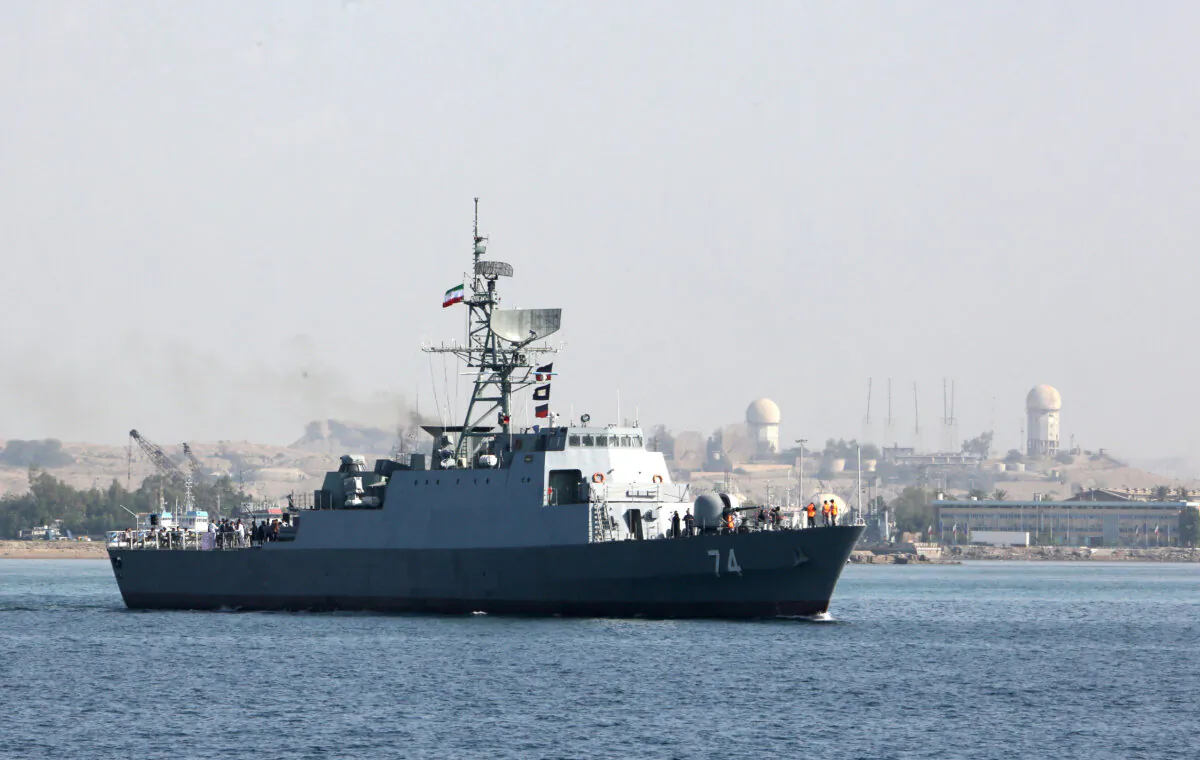

The United States on Feb. 9 issued updated guidance to commercial vessels transiting the Strait of Hormuz as tensions persist between Washington and Tehran over Iran’s nuclear ambitions.
The strait, partly within Iran’s territorial waters, is the world’s most vital oil export route, connecting the biggest Gulf oil producers, such as Saudi Arabia, Iran, Iraq, and the United Arab Emirates, with the Gulf of Oman and the Arabian Sea.
“Commercial vessels transiting the Strait of Hormuz and Gulf of Oman have long been at risk of being hailed, queried, boarded, detained, or seized by Iranian forces,” the U.S. Maritime Administration said in the advisory. “Iranian forces have historically utilized small boats and helicopters during boarding operations and have attempted to force commercial vessels into Iranian territorial waters.”
The Maritime Administration, part of the U.S. Department of Transportation, recommended that U.S.-flagged ships remain as far as possible from Iran’s territorial waters without compromising navigational safety.
“When transiting eastbound in the Strait of Hormuz, it is recommended that vessels transit close to Oman’s territorial sea,” the Maritime Administration added.
The advisory also instructs crews not to forcibly resist if a boarding occurs.
“Refraining from forcible resistance does not imply consent or agreement to that boarding,” the administration stated.
Iranian Foreign Minister Abbas Araghchi said on Feb. 6 that talks with the United States, mediated by Oman, had begun positively and would continue. Both sides express interest in reviving discussions on Tehran’s nuclear activities, though Washington seeks to include Iran’s ballistic missiles, regional proxy support, and human rights issues.
U.S. President Donald Trump increased pressure on Iran with a Feb. 6 executive order imposing a 25 percent tariff on imports from countries that directly or indirectly buy goods from Iran.
Last month, as part of his growing pressure campaign on Tehran, Trump announced he had directed an armada of U.S. warships to the Middle East.
On Feb. 5, Iran seized two vessels and captured 15 foreign nationals. The Islamic Revolutionary Guard Corps (IRGC) said the ships were taking part in a smuggling operation and were carrying around 1 million liters (264,000 gallons) of illicit fuel.
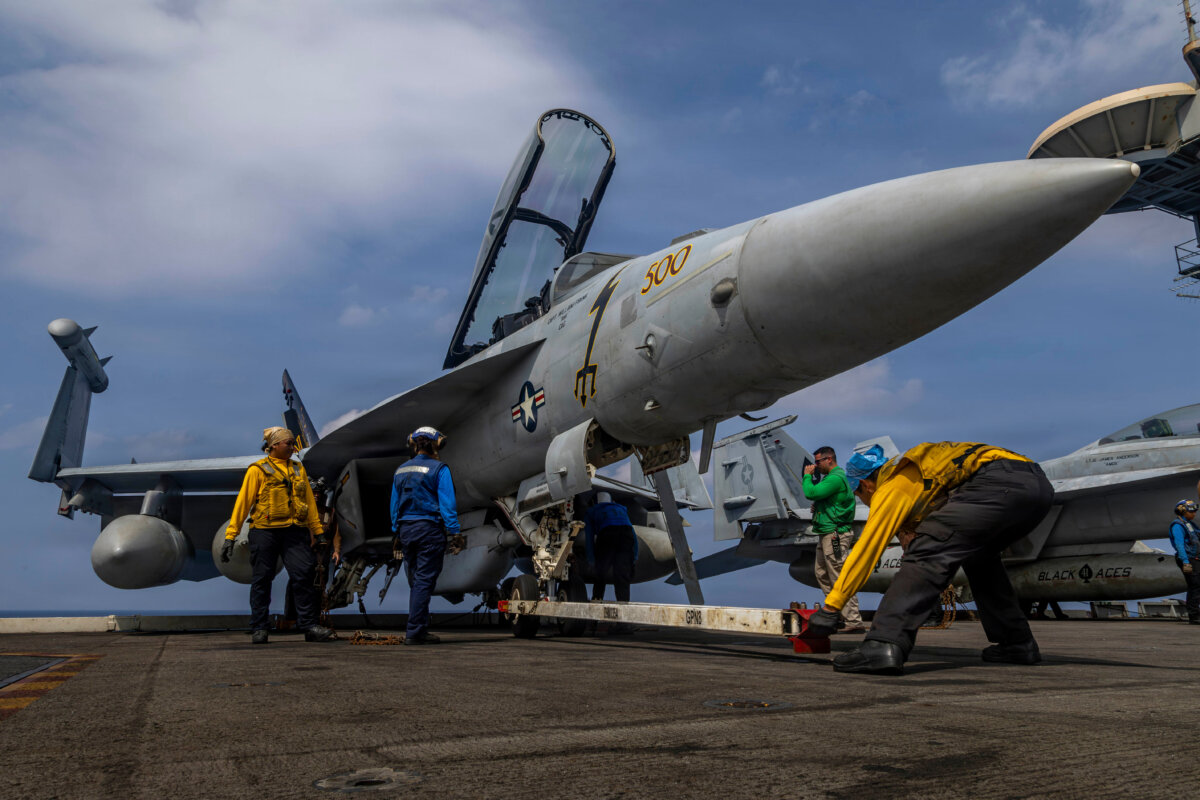
Earlier, on Feb. 3, U.S. forces shot down an Iranian drone over the Arabian Sea after it “unnecessarily maneuvered toward” the USS Abraham Lincoln carrier, according to the U.S. Central Command.
Hours later, two IRGC boats allegedly threatened to board the U.S. merchant vessel, but guided-missile destroyer USS McFaul arrived on the scene. The U.S. Air Force also intervened to provide defensive air support.
In an interview with NBC News on Feb. 4, Trump said Khamenei “should be very worried.”
“We want peace in the Middle East,” Trump said, adding that if the United States hadn’t taken out nuclear facilities in Iran last year, there would be no peace in the region.
In June 2025, the U.S. military and Israel launched air strikes on Iran’s nuclear facilities during a 12-day aerial war. Iran retaliated by firing missiles and drones at Israeli and U.S. assets in the region.
“Those beautiful B-2 bombers went in, and they hit their target … and obliterated it,” Trump said, referring to Iran’s nuclear program.
Ryan Morgan and Reuters contributed to this report.
 Friends Read Free
Copy
Facebook
Tweet
Friends Read Free
Copy
Facebook
Tweet