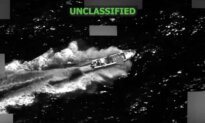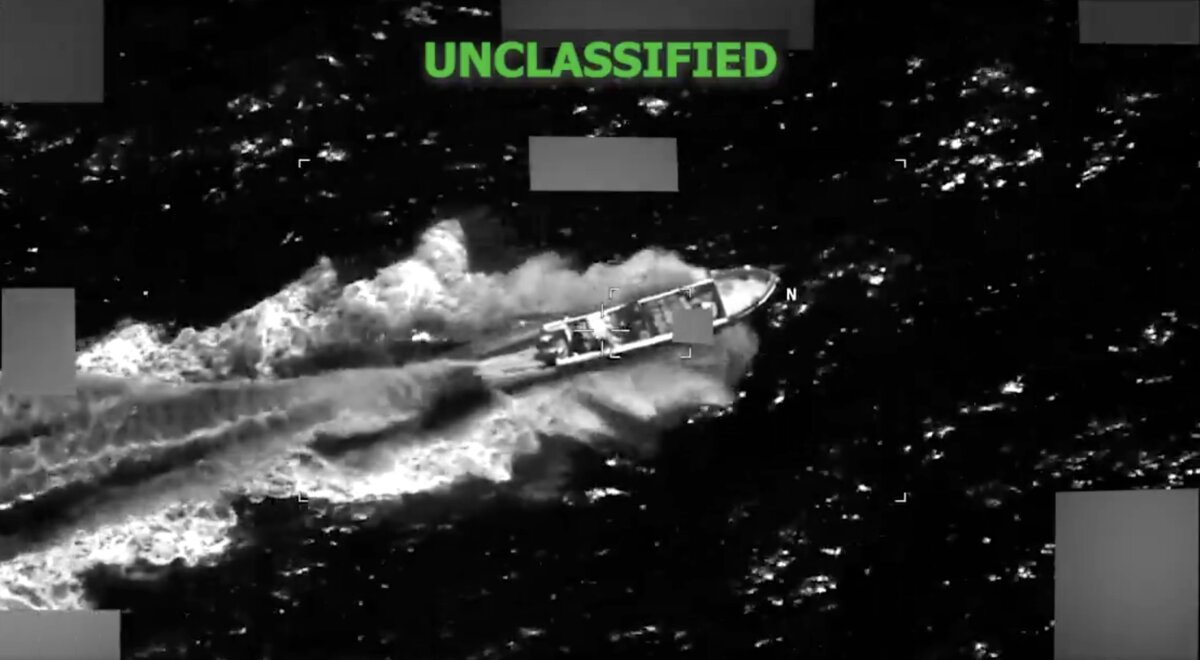

The U.S. military said on June 3 that it struck a vessel in the eastern Pacific operated by designated terrorist organizations, killing two people.
Part of Operation Southern Spear, the operation is the U.S. Southern Command’s latest strike against alleged cartel vessels trafficking drugs into the United States after the Trump administration designated the drug trafficking groups as terrorist organizations.
The Southern Command said in a post on X: “Intelligence confirmed the vessel was transiting along known narco-trafficking routes in the Eastern Pacific and was engaged in narco-trafficking operations. Two male narco-terrorists were killed during this action.”
No U.S. service members were injured in the operation, it said.
According to a New York University School of Law tracker and Epoch Times reporting on Operation Southern Spear, which began on Sept. 2, 2025, to date, 207 alleged narco-terrorists have been killed in such strikes as part of the operation.
To date, three people are known to have survived strikes and then been rescued. Two were rescued from a semi-submersible ship accused of carrying drugs in October 2025 and later returned to their home countries of Ecuador and Colombia.
In March, the U.S. Coast Guard said it recovered a survivor of a strike that killed two others and transferred the survivor to Costa Rican authorities.
The Trump administration has come under fire from Democrats who questioned the legality of the strikes, including over an alleged double-tap strike on Sept. 2, 2025, and their effectiveness.
In addition to these targeted strikes, the Southern Command’s Joint Interagency Task Force South (JIATF South) has been working with multiple U.S. agency partners, as well as international partners, to crack down on drug trafficking.
The partner agencies include the U.S. Coast Guard (USCG), U.S. Customs and Border Protection, Immigration and Customs Enforcement, the Drug Enforcement Administration, the FBI, the CIA, and other intelligence partners.
JIATF South said on June 2 that a joint operation with Colombia, Mexico, and Guatemala resulted in the successful seizure from a vessel of 51 bales, or about 3,940 pounds, of cocaine recovered by Guatemalan forces. The Guatemalan partners also detained six drug traffickers.
The interagency task force reports multinational drug busts on the high seas almost every other day.
In the last few days of May, it reported capturing multiple vessels laden with illicit drugs with the assistance of forces in Panama, Costa Rica, and Colombia. Thousands of pounds of cocaine and marijuana have been seized in these nonlethal operations under the Southern Command.
JIATF South said in a May post on X that it partnered with Mexico, Guatemala, Costa Rica, and Panama to disrupt an air-trafficking operation. Mexican forces seized 1,402 pounds of cocaine from an aircraft thanks to constant surveillance as it crossed Central America.
“Proud of what teamwork with USCG is accomplishing to apply total systemic friction to narco-terrorist networks,” the task force said of another operation on May 8, in which a USCG helicopter interdiction tactical squadron deployed off the Coast Guard Cutter Tahoma interdicted 6,085 pounds just 90 miles off the coast of Colombia.
The USCG operates there under bilateral maritime counternarcotics agreements with Colombia, allowing it to monitor, board, and interdict drug trafficking vessels in Colombian waters.
“One vessel was non-compliant and required aerial use of force tactics, including precision sniper fire directed at the engines, to compel the vessel to stop resulting in the suspected smugglers on the vessel jumping overboard,” the USCG said. “The aircrew released multiple personal flotation devices, and the people were rescued with no reported injuries. The other two vessels stopped when directed by Coast Guard crews.”
That drug bust is estimated to have stopped 2.3 million potentially lethal doses of cocaine from reaching American streets, according to the USCG.
 Friends Read Free
Copy
Facebook
Tweet
Friends Read Free
Copy
Facebook
Tweet