
The U.S. military on July 19 said that an American service member was killed in Iraq in an attempt to detonate an Iranian drone, the third service member to die in recent days.
In an X post, the U.S. Central Command (CENTCOM) said that a U.S. service member in northern Iraq was killed on July 18 “during a controlled detonation of unexploded ordnance from a downed Iranian one-way attack drone.” A second service member was wounded with a minor injury, the command said.
It reiterated that two other U.S. service members died and confirmed the missing status of another in Jordan following an Iranian attack that was launched on July 17.
“After a thorough search, U.S. military personnel found unidentified remains at the location earlier today. An examination process to verify the remains is ongoing,” CENTCOM said in a statement.
More details about the service members who died or went missing are being withheld pending their families being notified, CENTCOM said.
The last recorded death of a U.S. service member was a helicopter pilot who crashed in the Arabian Sea earlier in July, the U.S. Navy said. A search of more than 100 hours for the missing service member was ended on July 5, it said.
An Iranian strike on a command center in Kuwait killed six American soldiers earlier in the war, while another U.S. soldier died after an attack on a base in Saudi Arabia in March, officials said. Six soldiers were killed as a refueling aircraft crashed in Iraq in March, officials have said.
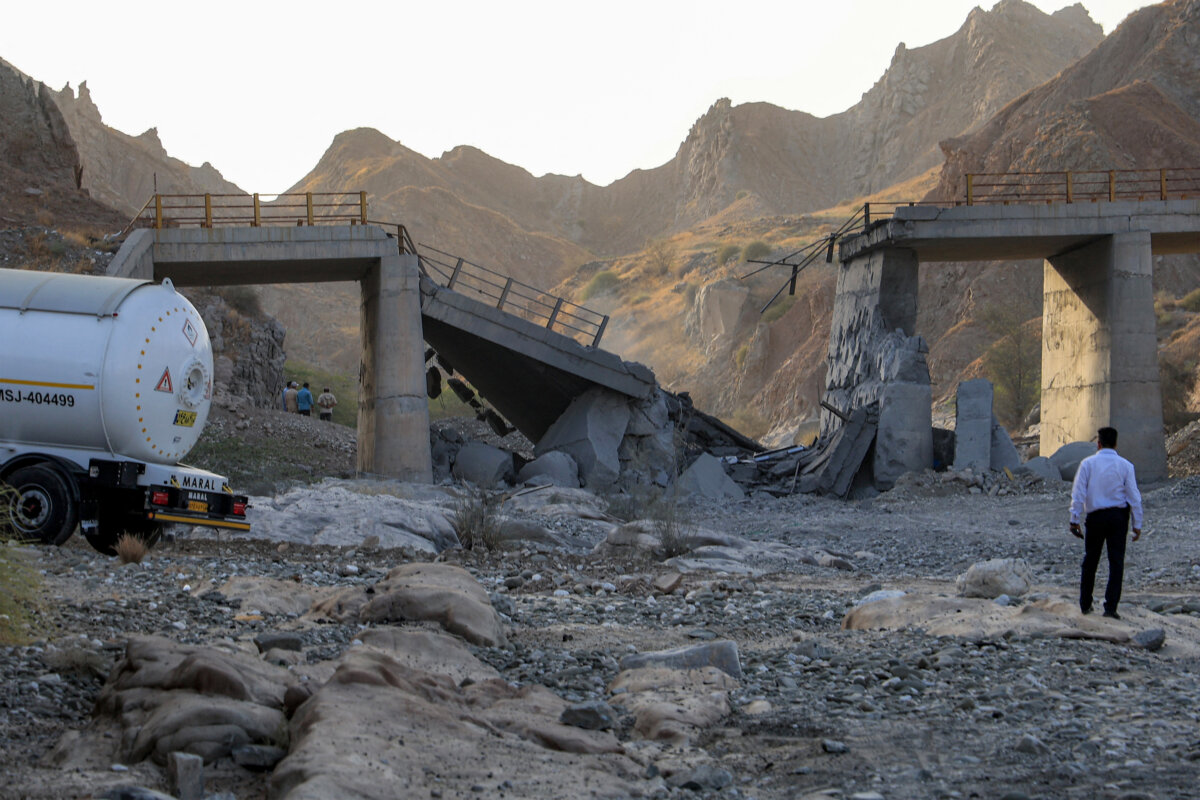
The update from CENTCOM comes amid escalating fighting between Iran and the United States, with the military announcing its latest round of strikes overnight against Iran’s paramilitary Islamic Revolutionary Guard Corps in retaliation for the killing of troops in Jordan. The campaign, now in its second week, has included the targeting of bridges, water plants, and power facilities in Iran.
Tehran has subsequently launched attacks on U.S.-allied countries throughout the Middle East. The recent round of U.S. strikes was triggered by Iran attacking commercial ships transiting the Strait of Hormuz earlier this month.
CENTCOM stated that it hit “Iranian military coastal surveillance and air defense facilities, maritime capabilities, and missile and drone storage sites.”
The attack was designed to knock out Iran’s ability to control the waterway and “swiftly punish Islamic Revolutionary Guard Corps forces,” it added.
On July 18, Iran’s top leader Mojtaba Khamenei said through state-run outlet PressTV that an agreement signed between the United States and Iran to end hostilities is “utterly worthless and invalid.”
“The enemy must not sense any sign of weakness from us,” Khamenei also said in the statement. “Whenever we fully observe these precautions, he will inevitably be forced into retreat and defeat.”
As for Khamenei, he has not been publicly seen since he was named to the position. His father, Ali Khamenei, was killed in U.S. and Israeli airstrikes on Feb. 28.
The war, which began when the United States and Israel launched strikes on Iran in a bid to disable the country’s nuclear and missile programs, has triggered a disruption in worldwide energy supplies.
The aforementioned memorandum, signed in June, would have set up a 60-day time period for both parties to come to an agreement on ending the war, allowing for investment into Iran, ending the country’s nuclear program, handing over or diluting highly enriched, near-weapons grade uranium, and other provisions.
Speaking to NewsNation on Saturday, U.S. President Donald Trump was asked about Iran’s claims that the United States was not adhering to the deal. He responded by saying, “I couldn’t care less.”
In April, Trump announced a ceasefire ending the initial war but set up a blockade of Iran’s ports. The blockade was suspended after the memorandum was signed, but it was reinstated as the new fighting was initiated.
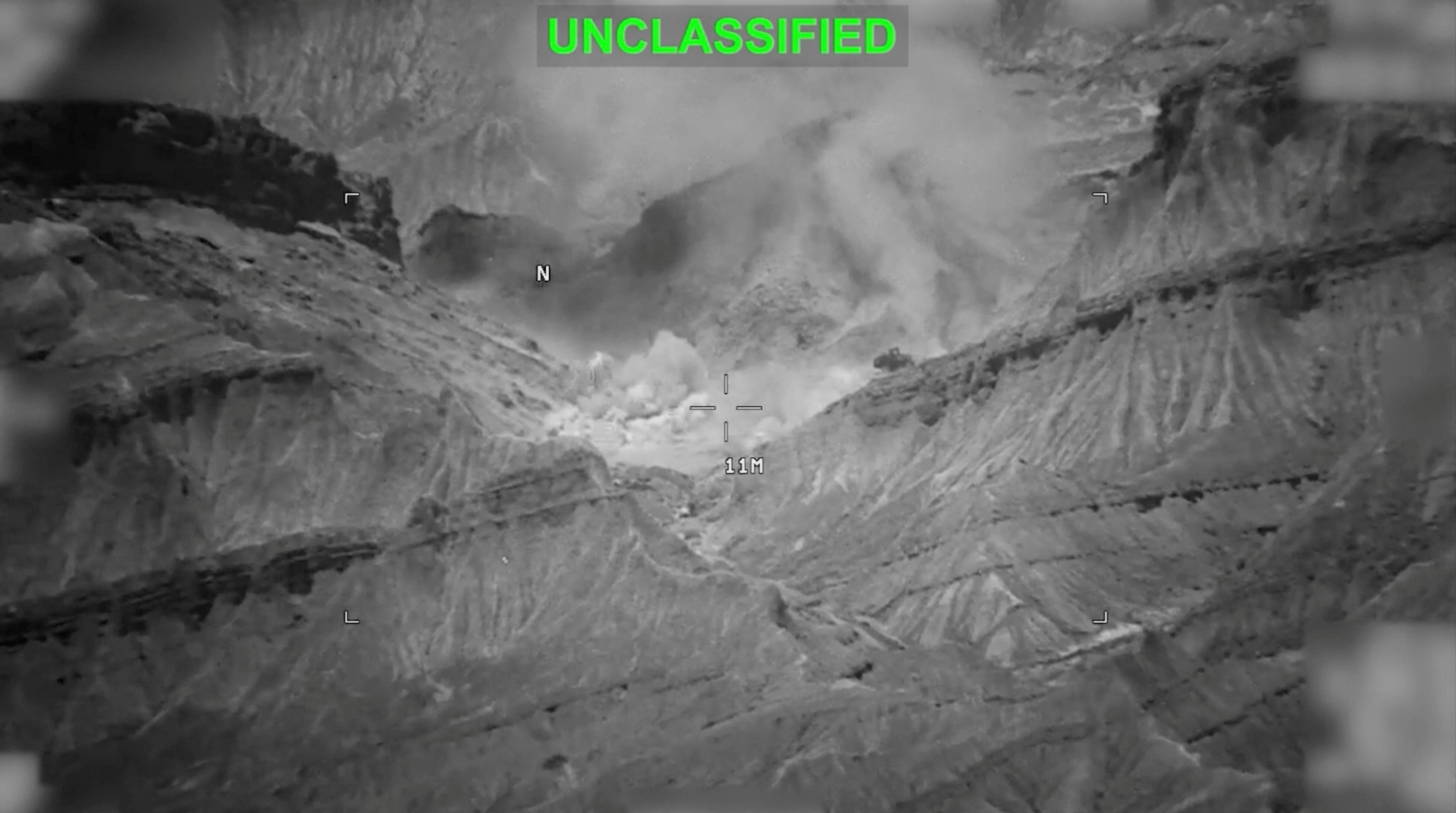 Smoke rises from an explosion at an unknown location, during what U.S. Central Command (CENTCOM) says are strikes on Iran, in this screen grab taken from a handout video released on July 18, 2026. (U.S. Central Command/Handout via Reuters)
“The facility is in the very early stages of construction and contained no nuclear material when last visited by the IAEA,” it said on X. “While the reported attack is not believed to pose any radiological risk … [the IAEA] reiterates call for military restraint in the vicinity of all nuclear-related sites.”
The IAEA added that it contacted Iran about reports of the action and “will provide further information as it becomes available.”
Through state-run media, Iran claimed that the United States attacked the nuclear power site. Last summer, the Trump administration and Israel launched attacks on other nuclear sites in the country under “Operation Midnight Hammer,” a separate attempt that Trump said was an attempt to degrade Tehran’s nuclear capabilities.
 Friends Read Free
Copy
Facebook
Tweet
Friends Read Free
Copy
Facebook
Tweet