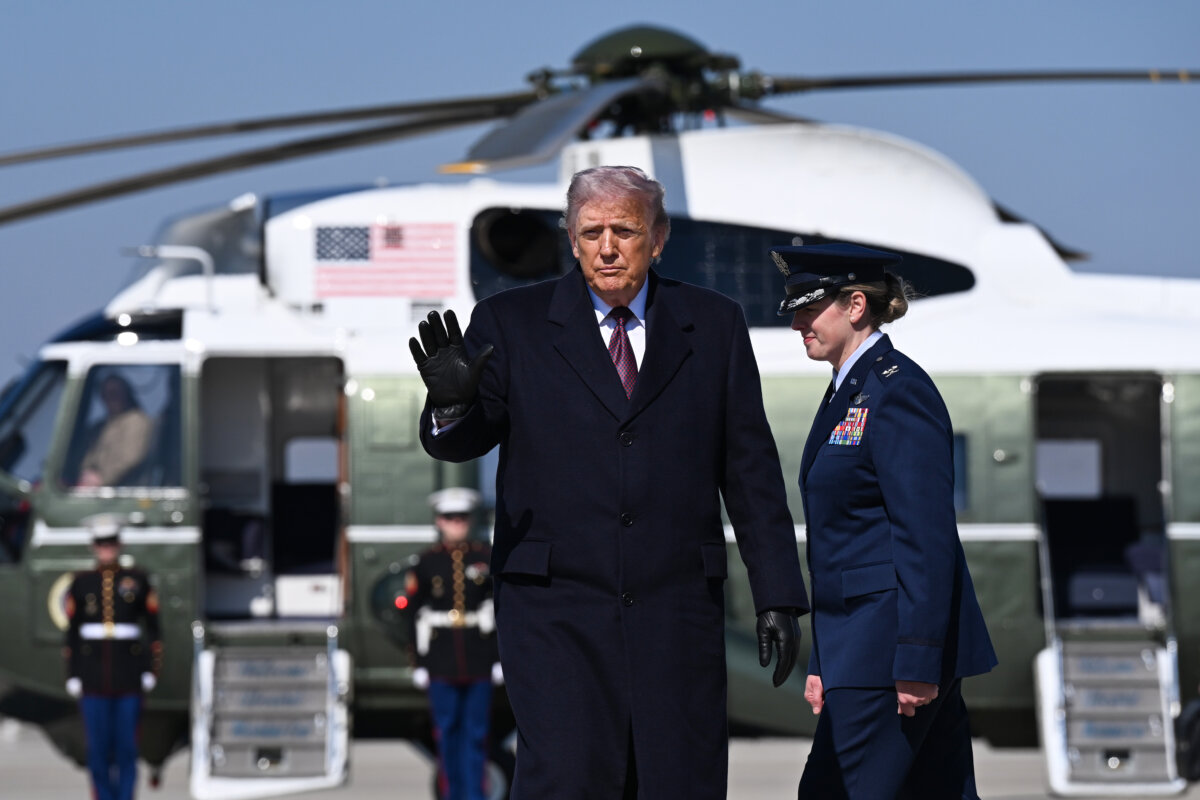

The United States signaled a broader global scope for its maritime security mission on May 4, as senior naval leadership said U.S. forces are prepared to defend shipping routes beyond the Strait of Hormuz amid rising tensions with Iran.
Acting Navy Secretary Hung Cao wrote in a May 4 post on X: “Mr. President, your U.S. Navy and U.S. Marines are ready. Any ocean. Any time.”
The post included a screenshot of President Donald Trump’s May 3 statement on Truth Social outlining the naval mission “Project Freedom,” effectively linking the Navy’s readiness message to the president’s directive.
The mission, which kicked off on May 4, aims to guide ships “safely out of … restricted Waterways” and provide humanitarian relief. Trump said that any interference with what he described as a “humanitarian process” would have to be met with force.
He also said that countries had asked the United States to assist ships “locked up in the Strait of Hormuz,” calling them “neutral and innocent bystanders.”
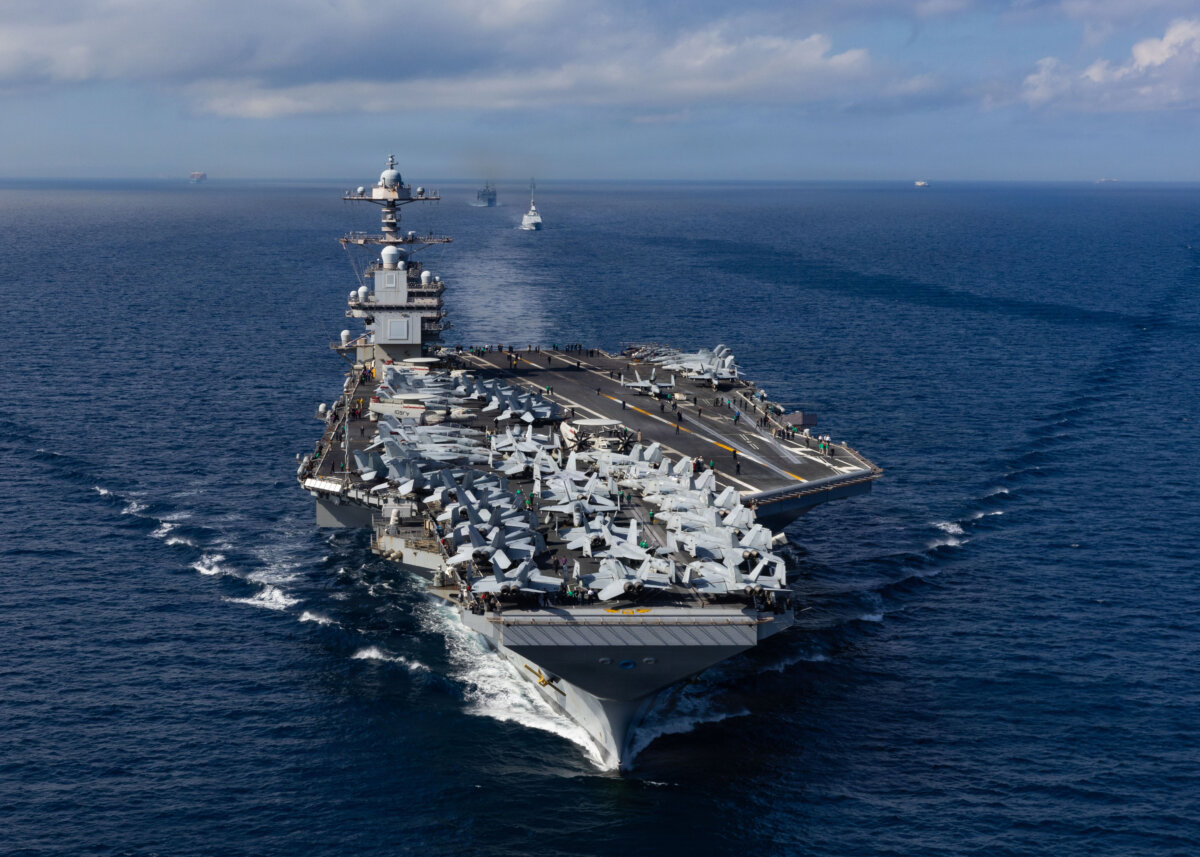
The U.S. Central Command (CENTCOM) confirmed the mission in a May 3 press release, saying it includes guided-missile destroyers, more than 100 land- and sea-based aircraft, multi-domain unmanned platforms, and 15,000 service members.
CENTCOM Commander Adm. Brad Cooper said the military command’s support for “Project Freedom” is crucial to regional security and the global economy, and he said that the United States is maintaining the naval blockade on Iran.
U.S. officials have also outlined a broader framework supporting the mission.
The May 3 CENTCOM release said the U.S. Department of State had introduced a “Maritime Freedom Construct” to coordinate international partners.
The initiative “aims to combine diplomatic action with military coordination,” according to the release, and is intended to support maritime security during Project Freedom.
The Trump administration is seeking to “enhance coordination and information sharing among international partners in support of maritime security” in the Strait of Hormuz, the statement added.
Strategic Choke Points
U.S. Ambassador to the U.N. Mike Waltz said in a May 4 post on X that Iran’s actions in the waterway were “illegal and unacceptable,” citing the use of sea mines and attempts to impose costs on civilian shipping.
Waltz warned that such actions could set a precedent affecting other global choke points.
“Unfortunately there will be future conflicts and whether it’s the Straits of Malacca or Gibraltar or Hormuz, the world cannot allow the precedent to stand that one side can try to punish the world’s economies in an attempt to gain leverage with the other side,” he said.
He said that the United States and its partners “will lead the way to defend global freedom of navigation.”
The Strait of Malacca, linking the Indian and Pacific oceans, carries a significant share of global trade. It is the shortest sea route between Middle Eastern oil and natural gas suppliers and growing markets in East and Southeast Asia.
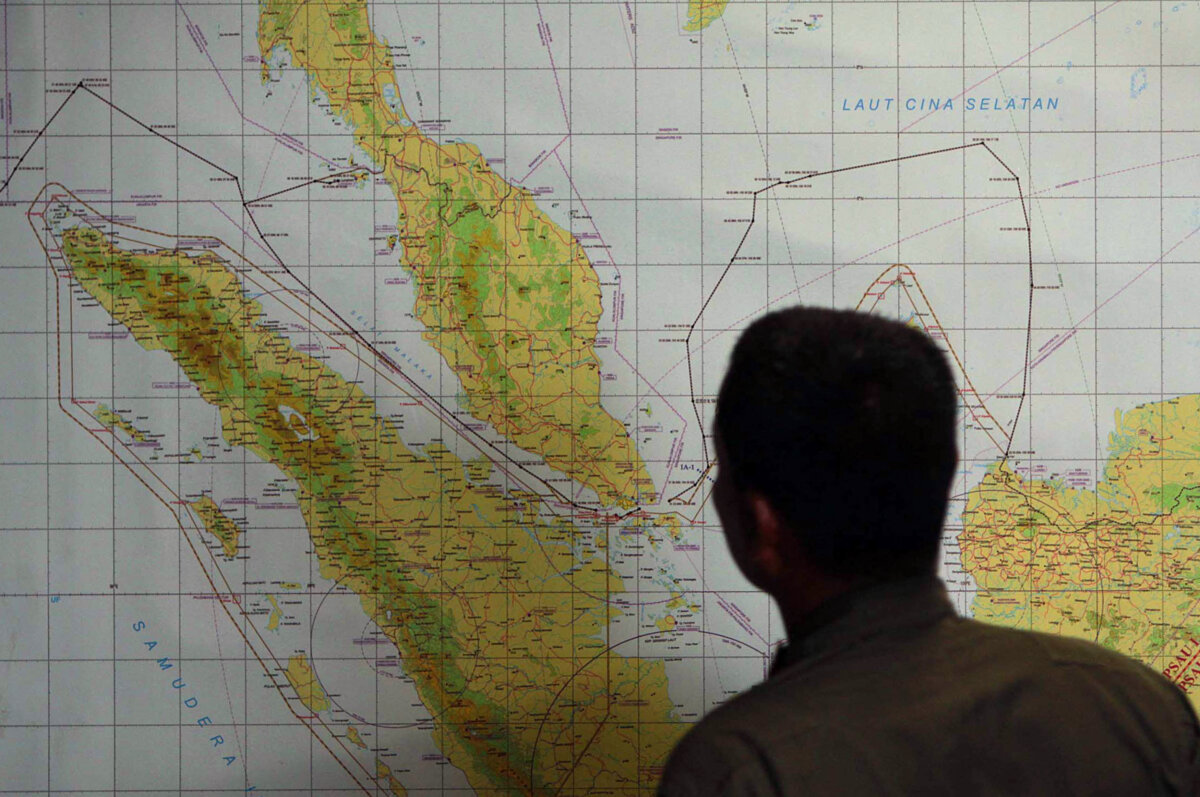 A member of the Indonesian Air Force at Medan city military base inspects a map of the Malacca Strait, a sea passageway between Indonesia (seen left of the map) and Malaysia (seen top left of the map), on March 12, 2014. (ATAR / AFP via Getty Images)
About 23.2 million barrels per day of oil, roughly 29 percent of global maritime oil flows, passed through the strait in the first half of 2025, according to U.S. Energy Information Administration data from March 3.
During the same period, approximately 9.2 billion cubic feet per day of liquefied natural gas flowed through the strait.
The Energy Information Administration, citing the International Maritime Bureau, said piracy remains a threat in the Strait of Malacca, and attacks have increased since 2023, especially near Singapore.
The Strait of Gibraltar, between Spain and Morocco, connects the Atlantic Ocean to the Mediterranean Sea and is another major transit route.
In 2019, British forces seized an Iranian tanker near the Strait of Gibraltar over suspected sanctions violations involving Syria. Iran later seized a British-flagged tanker in the Strait of Hormuz in response.
Rising Hormuz Tensions
Since the onset of the conflict involving Iran, the Strait of Hormuz has faced significant disruption, and the latest warning from Iranian officials has signaled possible military action against foreign forces.
Maj. Gen. Ali Abdollahi, head of Iran’s central command, said in a statement carried by Iranian state broadcaster IRIB on May 4 that Tehran would attack “any foreign armed force” attempting to approach or enter the strait, “especially, the aggressive U.S. army.”
CENTCOM said in a May 4 post on X that “no U.S. Navy ships have been struck,” and it stated that U.S. forces are supporting Project Freedom and enforcing the naval blockade on Iranian ports.
The statement followed reports from Iranian media outlets alleging that Iranian forces issued warnings to U.S. naval vessels and engaged in a direct confrontation in the region.
In a separate May 4 update on X, CENTCOM said its forces had already begun operations in the waterway.
“U.S. Navy guided-missile destroyers are currently operating in the Arabian Gulf after transiting the Strait of Hormuz in support of Project Freedom,” the command said. “American forces are actively assisting efforts to restore transit for commercial shipping. As a first step, 2 U.S.-flagged merchant vessels have successfully transited through the Strait of Hormuz and are safely headed on their journey.”
A May 4 advisory from the UK Maritime Trade Operations center said that Washington had established an “enhanced security area” south of the main shipping lanes in the Strait of Hormuz. It also urged mariners to coordinate with Omani authorities because of “anticipated traffic volume.”
Speaking at a meeting of European leaders in Armenia on May 4, French President Emmanuel Macron said that the “only solution” that will lead to the permanent reopening of the Strait of Hormuz is a coordinated reopening between Washington and Tehran.
“The United States wants to reopen, or are ready to reopen the Strait of Hormuz. That’s very good,” Macron said. “That’s what we’ve been asking for since the beginning, but we’re not going to participate in any operations using force within a framework which, for my part, doesn’t seem clear. So we’ve built an ad hoc mission that we’re working on.”
Macron said that military planning for the ad hoc mission had taken place in London, where International Maritime Organization meetings have recently been held, but he did not provide details on the format of the discussions.
Reuters contributed to this report.
 Friends Read Free
Copy
Facebook
Tweet
Friends Read Free
Copy
Facebook
Tweet