
Provincial premiers have responded differently to the latest U.S. tariff threat as they meet in Prince Edward Island, with some calling for preparations to retaliate and others urging restraint.
The contrast is particularly evident between the neighbouring provinces of Ontario and Quebec.
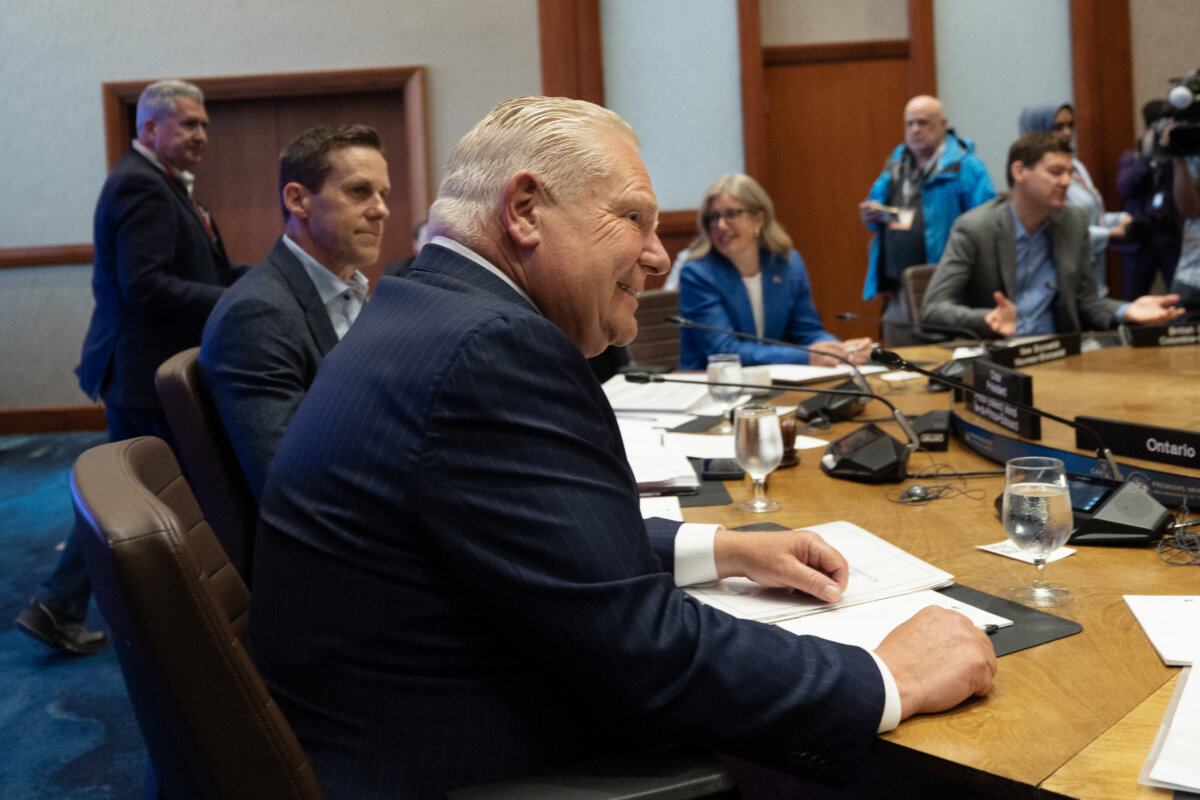
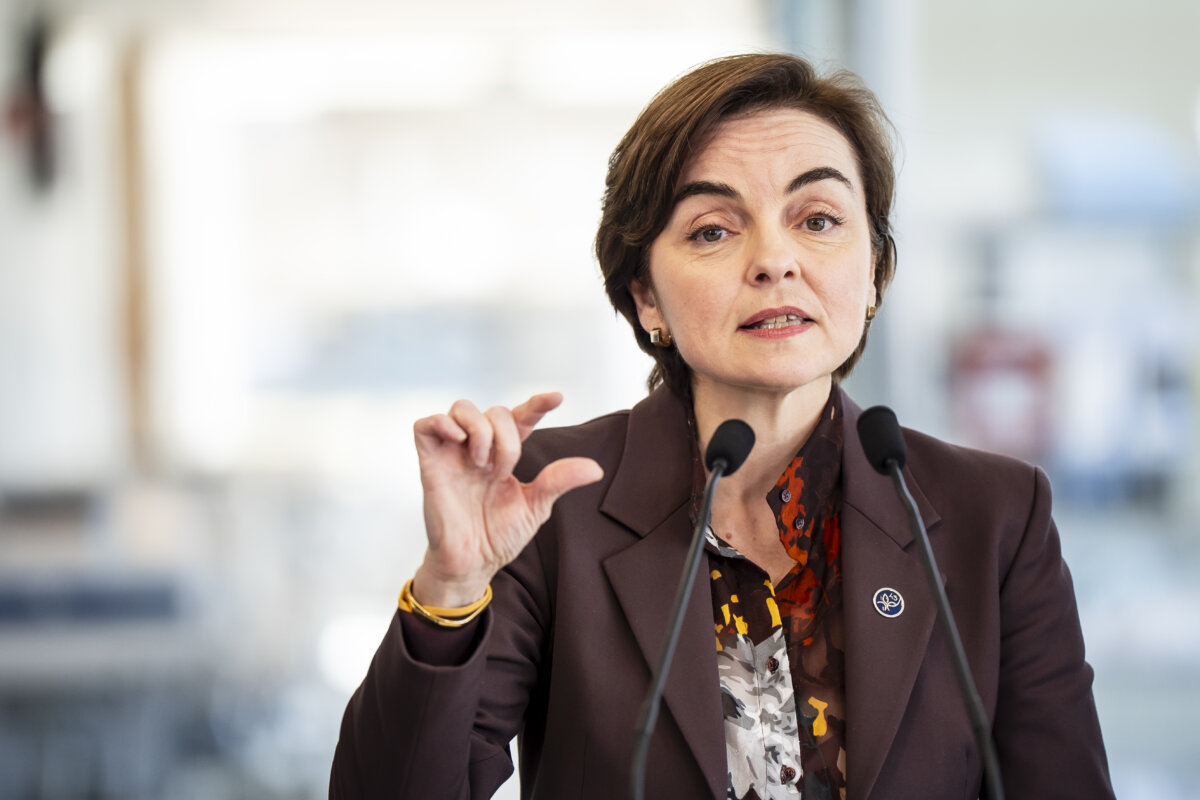
Ontario Premier Doug Ford said Canada should go “full tilt” in response to new tariffs announced by U.S. President Donald Trump on July 20. Meanwhile, Quebec Premier Christine Fréchette said the focus should be on intensifying negotiations and avoiding escalation.
“We need a plan from the prime minister,” Ford said in Charlottetown on July 21, adding that if negotiations fail to resolve the situation, “we need to hit them back as hard as we can.”
Ford said Canada has several options to make Americans “feel the pain” that he said Canadians are experiencing, including by going on the “offence” and leveraging its energy exports.
“We are an energy powerhouse, and we could dismantle the U.S. if we wanted to,” he said. “If we all work together, no matter if it’s the electricity, and I’m not speaking for the other provinces, I’m going to be very clear: the potash, the oil—we’re their number one customer in the world.”
Québec is a major electricity exporter to the United States and Fréchette said the option of imposing a tax on exports is not on the table.
“Ford has his approach, which is distinct from mine,” she said on July 21.
“I’m not sure that having strong retaliation against the United States is a tactic that will allow us to move forward on talks with the Americans, they’re not the most fond of this strategy,” she said, adding she believes the federal government agrees with her approach.
U.S. President Donald Trump signed proclamations on July 20 to impose 50 percent tariffs on a variety of Canadian goods after 30 days, citing discriminatory treatment of U.S. cars, dairy and alcohol. This would impact around $28 billion of Canadian goods, according to economists’ calculations.
Goods covered by the Canada-United States-Mexico Agreement (CUSMA) on free trade would not be exempt. Products compliant with the trade pact had been exempt from Trump’s previous border security-related tariffs, which the U.S. Supreme Court struck down in February, and their replacement Section 122 tariffs, which came shortly after.
Ottawa and provincial governments had retaliated against Trump’s initial tariffs in early 2025 by imposing duties on U.S. autos and removing U.S. alcohol from liquor store shelves.
Ford has taken a hard line against Trump and his tariffs, being a leading voice among premiers in calling for stronger retaliation.
The premier moved to leverage his province’s electricity exports to the United States on March 10, 2025, to force Trump to back down on his recently imposed tariffs. Ontario applied a 25 percent surcharge on exports to the states of Michigan, Minnesota, and New York.
Trump responded by threatening to slap 50 percent tariffs on Canadian steel and aluminum, leading Ford to rescind his measure the next day.
Ford said the new tariffs threatened by the U.S. administration could impact his province more severely. He called on his counterparts to form a “Team Canada” approach, saying that Ontario cannot bear the weight alone and that Trump needs to be hit “tariff to tariff.”
Ford’s government ran an anti-tariff TV ad campaign in the United States last fall, after which Trump cancelled trade talks with Canada. At the time, both sides were working on a deal to address U.S. tariffs which included sectors such as steel, aluminum, oil, uranium, and auto parts, according to U.S. Ambassador Pete Hoekstra.
“I don’t think folks recognize the impact of what happened,” Hoekstra said in late June about the collapse of the deal. Trade talks were frozen from November 2025 to March 2026 and little apparent progress has been made since.
The United States rejected the renewal of CUSMA on July 1 as it seeks changes to the agreement.
Prime Minister Mark Carney said on July 21 that Canada made “comprehensive” proposals to the United States to modernize CUSMA. The U.S. chief negotiator, Trade Representative Jamieson Greer, said the same day that proposals have not been substantial.
Other Premiers Weigh In
Other premiers, such as David Eby in British Columbia, also support taking a hard line against the United States.
“I think that Canada’s responses to U.S. trade attacks, in the form of our own tariff responses, can be a good way to send a message back to the United States,” Eby told reporters from Charlottetown on July 21.
Eby and Ford both said they’re not open to dropping their U.S. alcohol bans in order to avoid Trump’s latest tariff threat. Fréchette also rejected putting U.S. alcohol back on the shelves unless there are gains for Quebec. She also said the issue of supply management is “non-negotiable.”
Saskatchewan Premier Scott Moe responded to the tariff threats by saying the focus should be on negotiating a trade agreement with the United States.
“Why would you want to fight with your largest trading partner,” Moe told reporters on July 21 in Charlottetown. “Regardless of what they’re saying, we need this trade agreement.”
Moe said he expects Ottawa will ask provinces and territories to remove their bans on U.S. alcohol. Saskatchewan and Alberta initially followed other jurisdictions with the alcohol ban but reversed course in June last year. Carney said this week the decision on the ban lies primarily with provinces but added it should be taken as part of an “overall agreement” on trade.
Carney said he spoke with Trump on the morning of July 21 and that the two agreed to intensify negotiations.
The prime minister met with premiers virtually on the afternoon of July 21 to discuss the latest developments and is expected to meet them in person on July 23.
 Friends Read Free
Copy
Facebook
Tweet
Friends Read Free
Copy
Facebook
Tweet