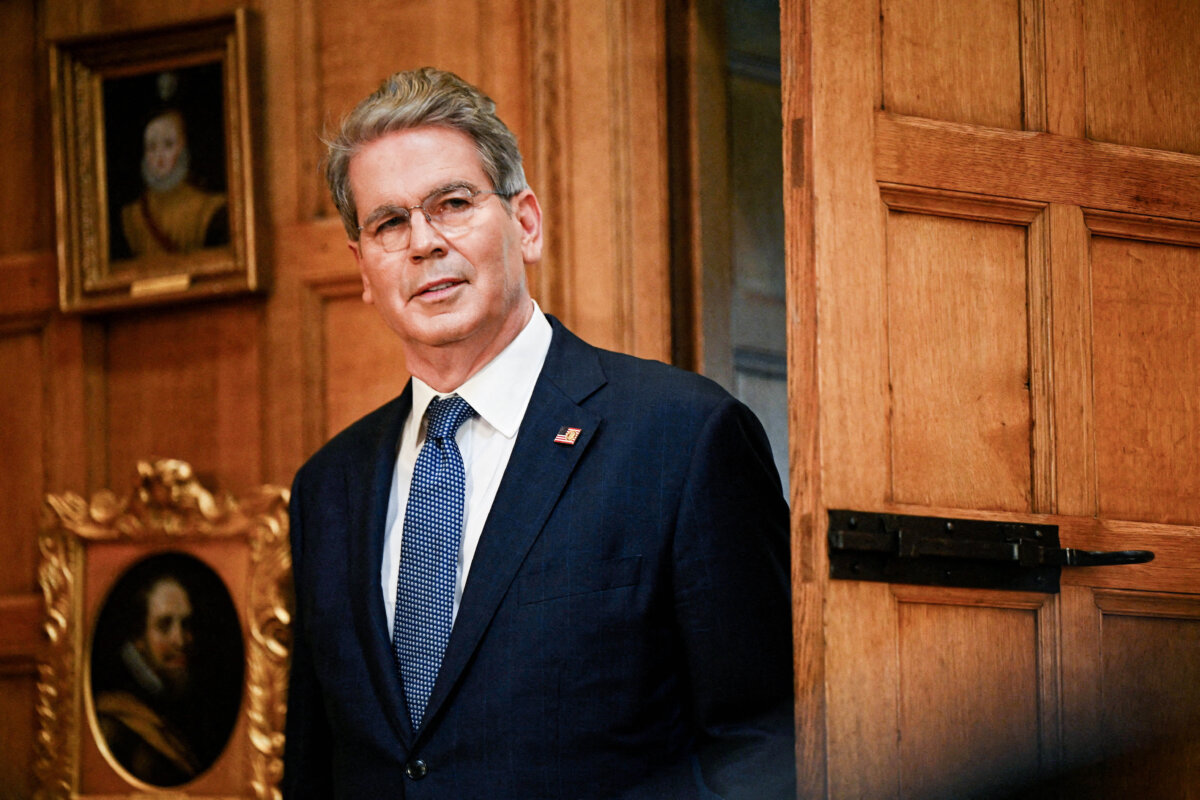

U.S. Treasury Secretary Scott Bessent said the Canadian government has not allowed Alberta to build an oil pipeline to the Pacific coast, and the province should build a pipeline into the United States.
“Alberta is a wealth of natural resources, but [the Canadian government] won’t let them build a pipeline to the Pacific. I think we should let them come down into the U.S.,” Bessent said on the American network Real America’s Voice on Jan. 23.
Bessent said Alberta is a “natural partner for the U.S.” and that Albertans are a “very independent people.” He also referenced the potential for a referendum on whether the province will become independent from Canada.
“People [in Alberta] are talking. People want sovereignty. They want what the U.S. has got,” Bessent said, before suggesting Europeans do not “have sovereignty” because of a lack of border controls and defence capabilities, and their dependence on China.
Elections Alberta recently approved a petition question on Alberta independence. Proponents now have until May 2 to collect 177,732 signatures in support of the petition question before it can qualify as a referendum.
The Alberta Prosperity Project submitted the question for the petition, which asks, “Do you agree that the province of Alberta should cease to be a part of Canada to become an independent state?”
A May 2025 Leger survey found that 29 percent of Albertans support their province becoming an independent country, while 5 percent were undecided and the remainder were opposed. A Pollara poll released on Jan. 9, 2026, found that 19 percent would vote for separation, while 75 percent were opposed.
Alberta Premier Danielle Smith has said she is against the province separating from Canada, though she has noted Albertans are “frustrated” with Ottawa. Smith has said her government would allow for a vote on separation if a citizen-led petition meets the requirements to qualify as a referendum question.
Smith has also expressed more optimism with regard to Alberta’s relationship with the federal government since she and the prime minister signed a memorandum of understanding (MOU) on Nov. 27, 2025, which proposes to build one or more pipelines to carry Alberta crude oil to the B.C. coast if a private proponent comes forward. The MOU also proposes to suspend the Clean Electricity Regulations in Alberta, lift a proposed oil and gas emissions cap, speed up environmental review processes, and adjust the oil tanker ban on B.C.’s north coast if necessary.
The construction of a prospective pipeline project is tied to the creation of the proposed Pathways Alliance carbon capture project, which would compress CO2 into liquid form, ship it through a pipeline, and store it in an underground facility. As well, in exchange for Ottawa’s commitments, Alberta has committed to increase its industrial carbon tax and reduce methane emissions.
Finance Minister Francois-Philippe Champagne was asked about Treasury Secretary Bessent’s comments later in the day on Jan. 23, and said he had learned over time that “you don’t need to comment on every single comment that is being made.”
Champagne said the MOU is a signal that Ottawa is “taking steps with Alberta to do things differently” and to grow its natural resources. “So I would say [to Bessent], ‘thanks, but no thanks,’” Champagne said.
“We will do our own things, and we will be able to develop our resources with Albertans, with Canadians. And that’s something I will remind him of the next time I see him,” Champagne said.
 Friends Read Free
Copy
Facebook
Tweet
Friends Read Free
Copy
Facebook
Tweet