
Officials from Washington and Kyiv met in Geneva on Feb. 26 to discuss post-war reconstruction in Ukraine.
Ukraine and Russia have been at war with each other for four years.
U.S. special envoy Steve Witkoff and President Donald Trump’s son-in-law Jared Kushner were representing the United States in the negotiations, which began shortly after midday, according to Rustem Umerov, chief of the Ukrainian National Security and Defence Council and head of Kyiv’s delegation.
“Together with the Government’s economic team, we will thoroughly work through the prosperity package: mechanisms for economic support and recovery of Ukraine, instruments for attracting investment, and frameworks for long-term cooperation,” Umerov wrote in a Feb. 26 post on X.
He said that “preparations for the next round of trilateral negotiations involving the Russian side” would also be discussed and that “it is necessary to synchronize positions ahead of this stage.”
“An important issue is the humanitarian track and the issue of possible exchanges. We expect concrete results regarding the return of our citizens,” Umerov said, adding that Ukraine is “focused on practical solutions.”
Ukrainian and U.S. officials last met in Geneva on Feb. 17–18 for trilateral talks that also involved representatives from Russia.
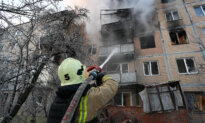
The reconstruction of Ukraine has gained prominence as a factor following the increase in Russian aerial strikes, which have hit Ukrainian infrastructure in recent weeks and months.
Kyiv hopes to attract about $800 billion of public and private funds over the next decade to rebuild the country, the Ukrainian Ministry of Economy, Environment, and Agriculture said on Jan. 3.
“It is important that the Plan offers a single strategic vision and coordinated approach, rather than separate initiatives. It focuses not only on rebuilding what was destroyed, but also on economic transformation and modernization so that Ukraine has a strong competitive economy, social stability, and high defense capabilities—thereby strengthening European and global security,” Ukrainian Minister of Economy, Environment, and Agriculture Oleksiy Sobolev said when he announced the plan.
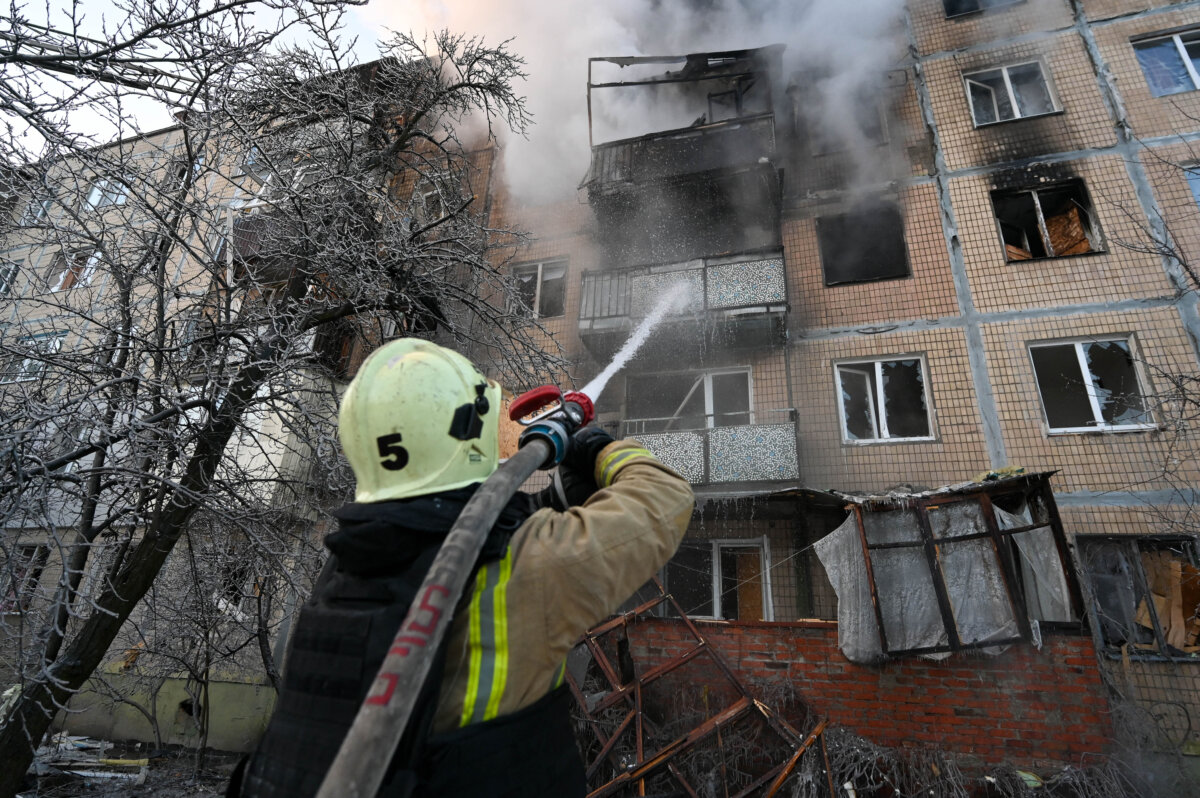
Ukrainian President Volodymyr Zelenskyy said in a Feb. 26 post on X that Russia had launched 420 drones and 39 missiles in another night of attacks on energy and other infrastructure.
“Destruction has been recorded in eight regions, with many private homes and apartment buildings damaged,” he said. “As of now, dozens of people are reported injured as a result of this attack, including children.”
Zelenskyy said that most of the missiles fired by Russia had been downed by Ukraine’s air defenses but that some had gotten through and struck their targets.
The country’s energy infrastructure has been particularly battered by Moscow’s barrage over the winter, according to Kyiv. Ukrainian Energy Minister Denys Shmyhal said on Jan. 16 that “there is not a single power plant left in Ukraine that has not been hit by the enemy during the war.”
Moscow has denied intentionally attacking civilian targets and said the overnight assault Zelenskyy referred to was in response to Kyiv’s attacks on Russian civilian facilities.
According to state news agency TASS, Russia’s Ministry of Defense stated: “Last night, in response to the Kiev regime’s terrorist attacks on civilian infrastructure facilities on Russian territory, the Russian Armed Forces delivered a massive strike by ground-based and airborne long-range precision weapons and attack unmanned aerial vehicles on Ukraine’s military-industrial enterprises and energy infrastructure facilities used to support the Ukrainian army’s operations, and also military airfields.”
The latest World Bank assessment, released on Feb. 23, estimated that rebuilding Ukraine’s economy will cost $588 billion. The assessment is based on data from Feb. 24, 2022, through Dec. 31, 2025.
That figure amounts to more than three times the country’s projected gross national product for 2025, according to Ukrainian Prime Minister Yulia Svyrydenko.
On Feb. 25, in a Telegram post, Zelenskyy said he had spoken with Trump.
During that call, the presidents agreed that the next round of trilateral talks with Russia, slated for March, should lead to a meeting of the countries’ leaders to tackle the most difficult issues preventing peace.
“Only in this way can all the complex and sensitive issues be resolved and the war finally ended,” Zelenskyy said.
Witkoff and Kushner were also involved in the call.
While in Geneva, the pair will also be conducting negotiations with Iran over its nuclear program.
 Friends Read Free
Copy
Facebook
Tweet
Friends Read Free
Copy
Facebook
Tweet