
U.S. Vice President JD Vance said on June 15 that United Nations inspectors will return to Iran to evaluate the country’s nuclear facilities as part of any deal with the United States to end hostilities.
“Yes, absolutely,” Vance told NBC News. “One of the core parts of the agreement is that the [International Atomic Energy Agency] and the United States are going to help Iran destroy the highly enriched stockpile, and that’s something that’s spelled out very clearly” in the U.S.–Iran memorandum of understanding, he said.
The memorandum is a framework to end the Iran conflict. It was announced by U.S. President Donald Trump as well as Pakistani and Iranian officials over the past weekend. The memorandum will be signed at a formal ceremony in Switzerland on June 19, Vance said.
He did not say when inspectors from the International Atomic Energy Agency (IAEA) would visit Iran, saying that it would be considered on Friday.
“But our expectation is that … because there’s broad agreement on this, there isn’t a whole lot of disagreement on this particular issue, that should happen very quickly,” he said. “Again, if the Iranians comply, benefits will flow to them, and that’s what we hope to see. We want them to behave like a normal country. I want them to have a successful country, but only if they do what’s necessary to commit long term to not building a nuclear weapon.”
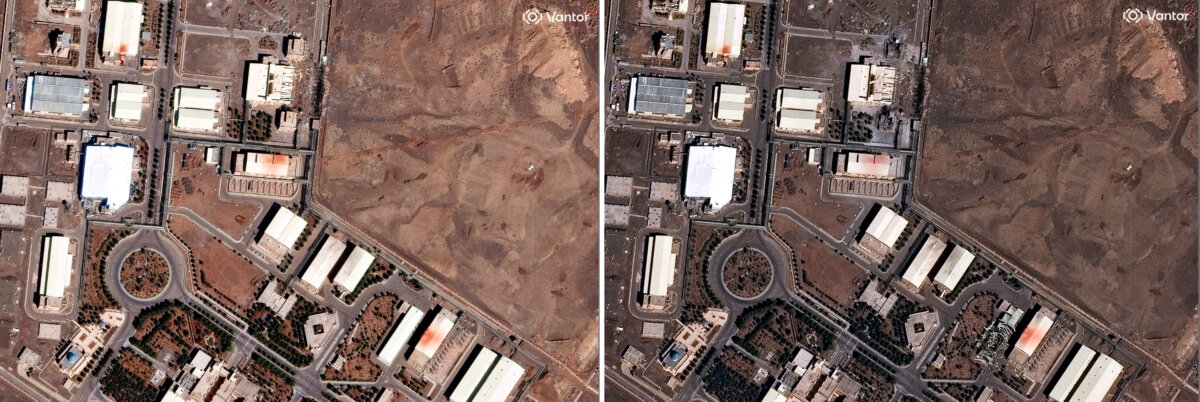
For years, U.S., Israeli, and European officials have said Iran is using its controversial program to try to create nuclear weapons, accusing the nation of enriching uranium to near weapons-grade levels. Iran currently has around 970 pounds of highly enriched uranium that is believed to be buried beneath facilities that were bombed by the United States last summer.
The uranium was enriched to 60 percent purity, a short step from weapons-grade levels of 90 percent, according to the IAEA.
“In February 2026, the Agency stopped conducting all in-field verification activities in Iran due to the military conflict,” the IAEA said in a statement on June 8. “Despite the ongoing military conflict, it was possible to resume some in-field verification activity in Iran last week when the Agency conducted a routine inspection at the Bushehr [Nuclear Power Plant].”
It added that “no inspections have been conducted at other declared nuclear facilities in Iran during this reporting period.”
Iran has said for decades that its nuclear activities are for peaceful purposes, not for making weapons.
The website of the Atomic Energy Organization of the Islamic Republic of Iran quotes a statement from former Iranian leader Ali Khamenei in which he said: “The Islamic Republic of Iran regards use of nuclear and chemical weapons as a cardinal and unforgivable sin. We raised the slogan ‘Middle East free from nuclear weapons,’ and we remain committed to this slogan.”
IAEA Director General Rafael Grossi told Sky News presenter Yalda Hakim in June 2025, “We came to the conclusion that we could not affirm there is any systematic effort in Iran at the moment to manufacture a nuclear weapon.” He said the IAEA’s report found that Iran is enriching uranium to 60 percent, so “there were elements for concern.”
As part of a deal with the United States, Iran also must “make the long-term commitment not to rebuild” its nuclear program that was damaged in U.S. strikes last year, Vance said. He said the current deal differs from one that was reached under the Obama administration in 2015 that “basically bribed the Iranians to stop that program.”
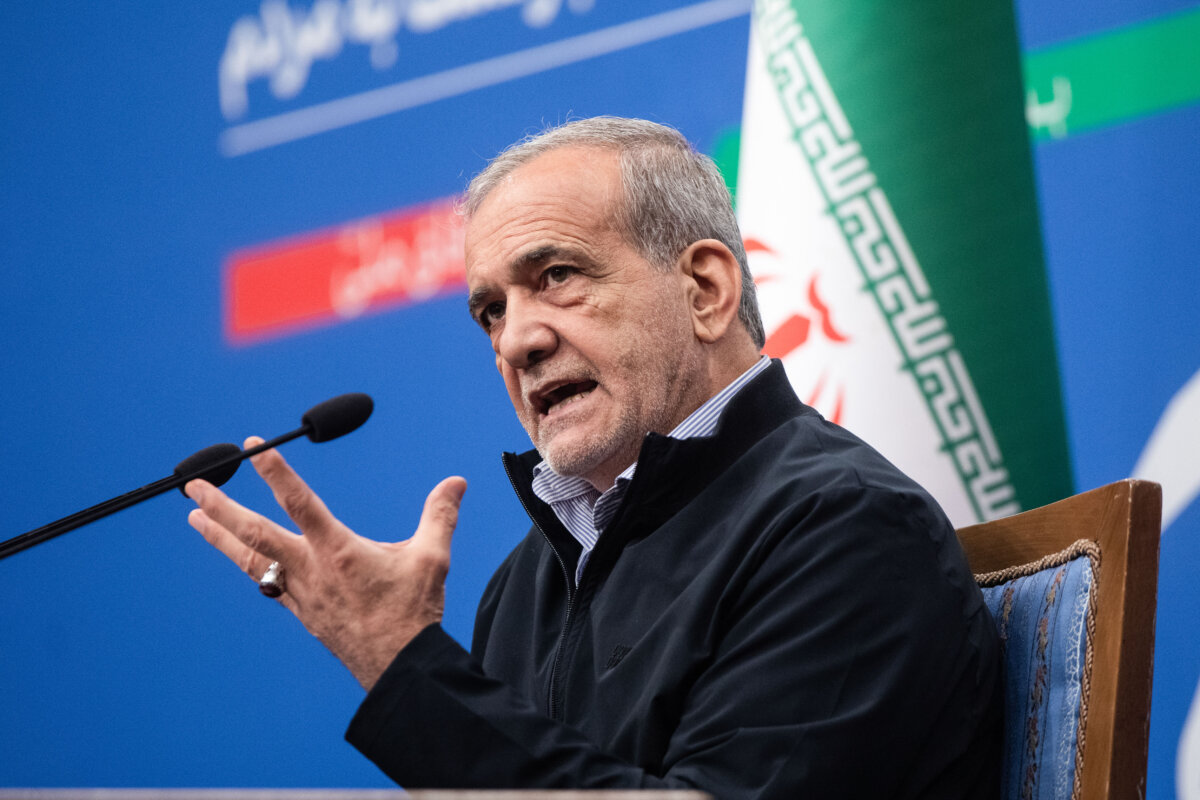
In a June 15 post on X, Iranian President Masoud Pezeshkian wrote that the deal’s framework would be “an important step toward ending the war and beginning negotiations,” adding that “a final agreement has not yet been reached,” according to a translation.
“The Islamic Republic of Iran has prepared itself for all options, and the government’s focus, with or without an agreement, is honest service to the people. The Iranian nation learned from its martyred Imam not to submit to humiliation,” he said, referring to the now-deceased Khamenei, who was killed in strikes in February.
 Friends Read Free
Copy
Facebook
Tweet
Friends Read Free
Copy
Facebook
Tweet