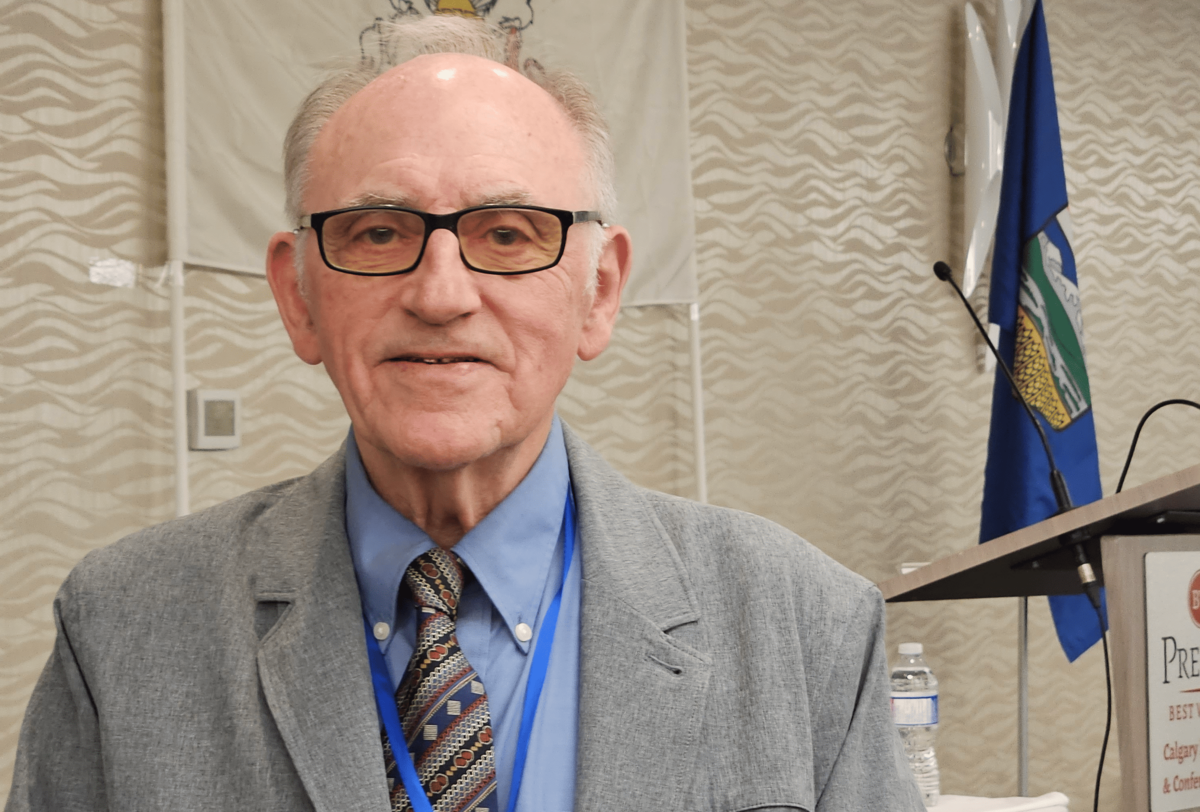
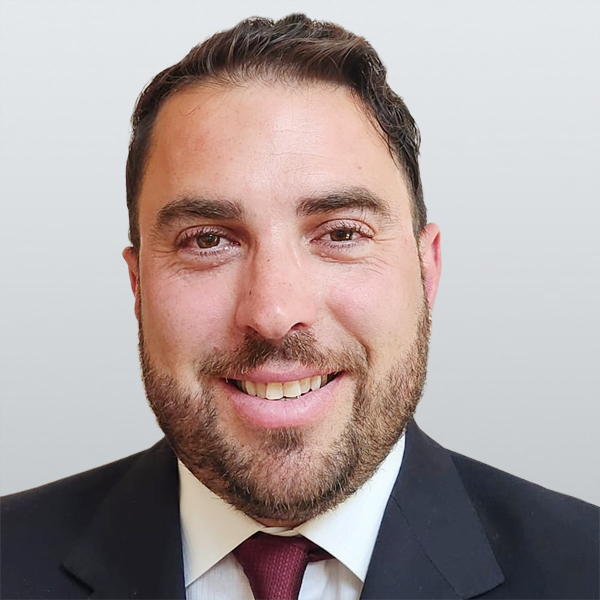

CALGARY—Former Newfoundland Premier and the last surviving first minister who helped frame Canada’s 1982 Constitution Brian Peckford says today’s courts are “trying to secularize our nation” and are abandoning the Charter’s original framework anchored in “the supremacy of God and the rule of law.”
“What happened to God?” Peckford asked the crowd at the Conference for Dominion of Canada hosted by the Council of Alberta Lawyers on May 16 in Calgary.
“The most violated is the supremacy of God and the rule of law, which is the opening words to the Charter. We didn’t call it a preamble, it was the opening words, which were to be the framework to interpret the rest of the Constitution.”
The Charter of Rights and Freedoms is itself part of the broader Constitution Act passed in 1982. Peckford said that many modern judicial decisions and interpretations have ignored and “hijacked” the meaning of the Charter as he and others framed it.
“They have … ignored it in many later decisions,” Peckford said, adding that courts have instead embraced a “living tree doctrine” as part of an attempt to “secularize our nation.”
Peckford said the Constitution was intended by framers to evolve via the suggested amendments of elected officials, not via different interpretations of the judiciary. He pointed to assisted suicide as an example of improper interpretation of the Constitution.
“The whole question of the assisted suicide right is a living tree document interpretation, which completely violates the framework of the Constitution being the supremacy of God,” Peckford said.
Big Government, Secular Drift
The Conference for Dominion of Canada focused on Canada’s Christian legal and societal roots and featured pastors, historians, activists, and lawyers alongside Peckford.
Throughout the event, speakers argued that the erosion of the supremacy of God in the Charter’s opening words is leading to a growth in state power and tearing the moral fabric of society.
“Regimes which have denied the existence of God and followed an atheistic or hard secularist philosophy have demonstrated the least regard for human rights,” former Reform MP Eric Lowther said, referencing atrocities by Marxist regimes.
“When no God is acknowledged, the state can all too easily become God with appalling consequences,” he added.
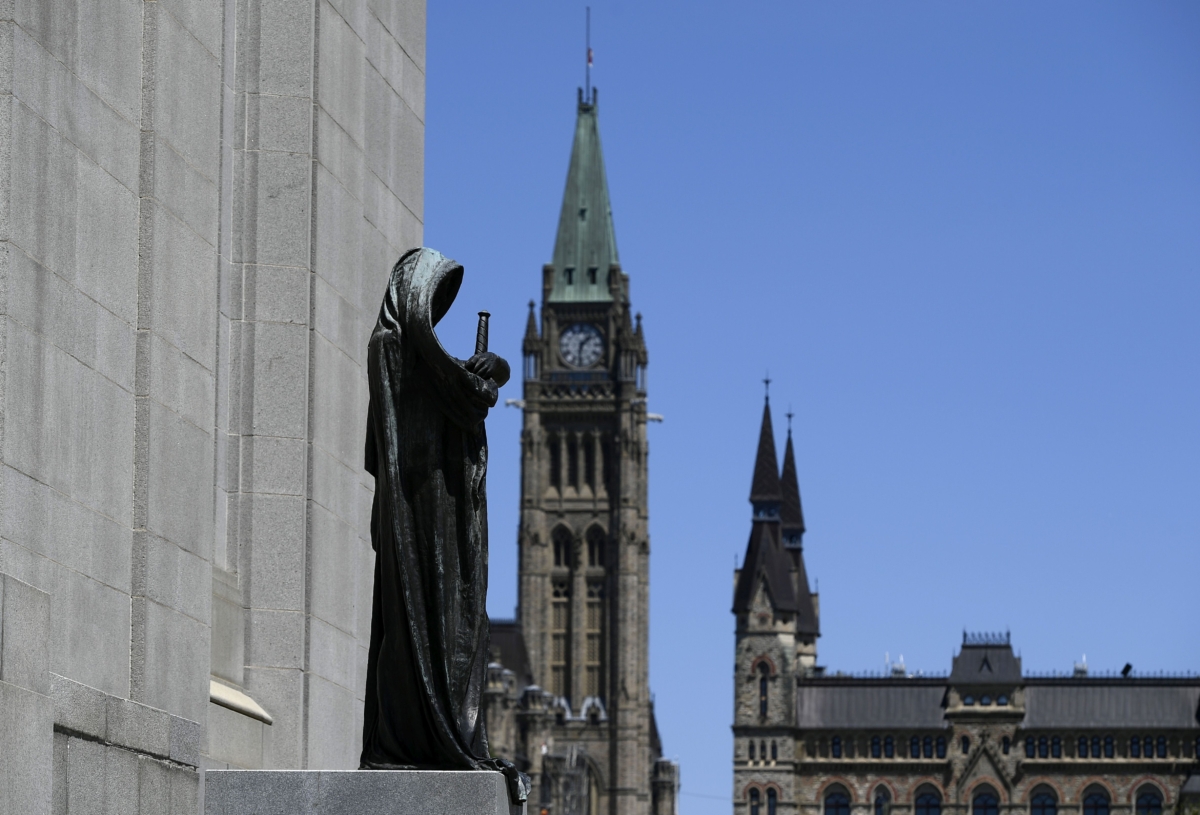
Lowther said that the supremacy of God is something courts and Parliament have moved away from giving much weight to in their decisions.
His concerns were echoed by Pastor Tim Stephens, who said in acting as the arbiter of pluralism the state takes on too much power.
“When you have religious diversity or multiculturalism or pluralism, religious pluralism, you have the state which assumes the position of neutrality,” Stephens said. “The issue is the state doesn’t then become neutral … in that scenario, the state actually becomes God; they become supreme,” he added.
Stephens said that Canadian society already has clear distinctions between church and state while still operating under a Christian-derived moral and legal framework.
“There was cooperation together, but there was no confusion,” Stephens said.
History
Fellow speaker, lawyer Roger Song, delved into history in advancing an argument for the primacy of God in Canada’s legal framework, noting references to God in the Magna Carta, English common law, and the British monarchy itself.
“The God referenced in the Constitution of Canada is the God of Abraham, Isaac, and Jacob,” Song said. “The God who created the universe and human race in His image, in male and female.” But he said this principle has been gradually abandoned, citing as an example a 1999 B.C. Court of Appeal decision in which Justice Mary Southin wrote in the appeal of R. v. Sharpe that “the words supremacy of God in the Charter have become a dead letter.”
“The judges of both the Supreme Court of Canada and its lower court openly and bluntly reject the supremacy of the authority of God and God’s law in our Constitution and in their judicial decisions,” he said, going on to talk about his belief that once a nation abandons God as the basis for democracy and law, it will fall under “the tyranny of evil.”
In speaking of his own experiences growing up in communist China, Song raised the reality of people being brainwashed into worshiping a party and a political leader, since it happened to him.
“I was born and raised in communist China, and was brainwashed in my entire education from primary school all the way to law school in China to believe in the supremacy of the Chinese Communist Party and its great leader,” he recounted.
Fellow speaker, author Michael Wagner, also drew parallels with Canada’s judiciary absorbing secular trends occurring in the United States, such as two key U.S. Supreme Court decisions removing school prayer and Bible reading from public schools.
“Canada is part of Western civilization, which was and is influenced by Biblical values,” Wagner said, while detailing court rulings in recent decades that he said have “expelled Christianity from Ontario’s public schools.”
Resistance and Change
Lawyer Leighton Grey said that legal institutions have increasingly turned from the concept of “biblical justice” to “social justice” and called for more forthright opposition to secularization and incursions on freedom.
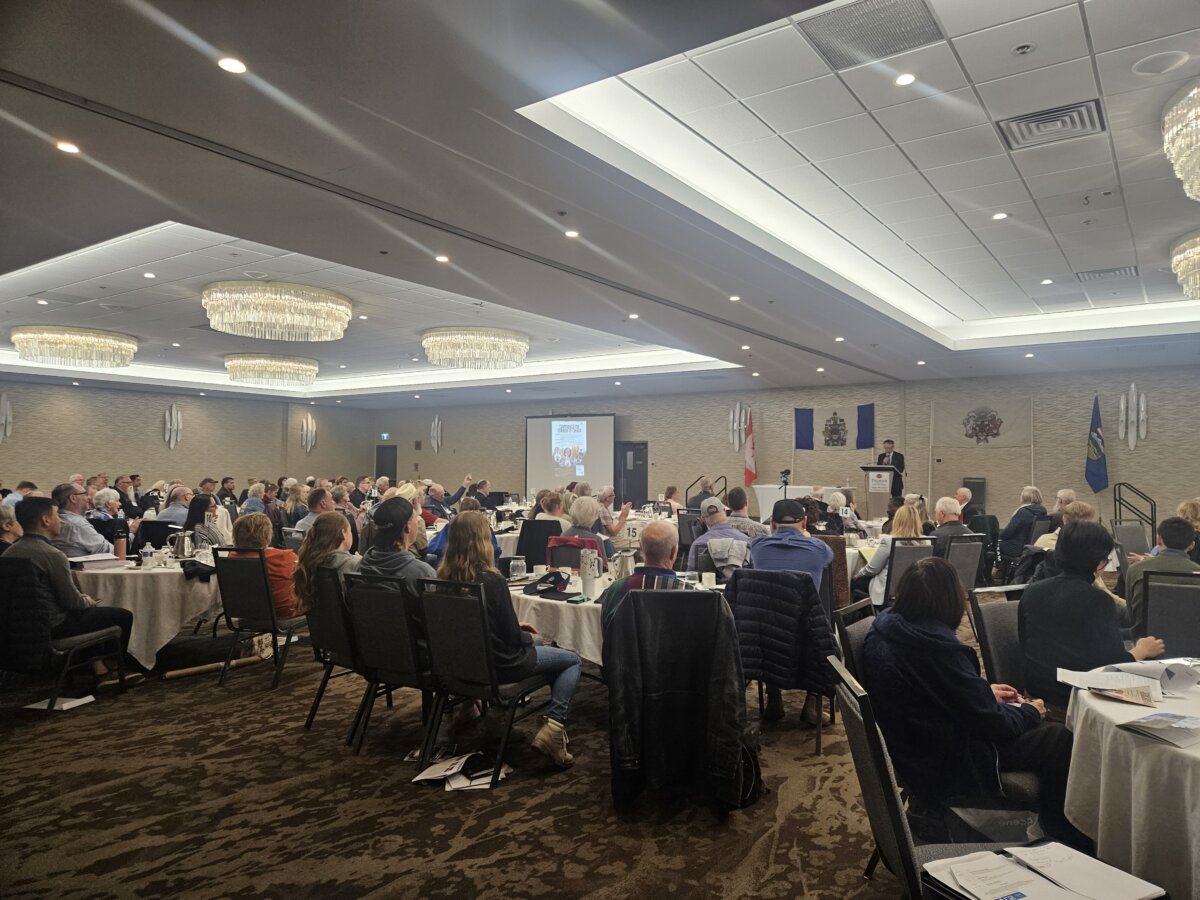
“We should have been there on the ramparts, protecting society,” Grey told the audience, saying lawyers shouldn’t have stayed quiet during pandemic restrictions.
Fellow lawyer Grant Abraham said Canada has entered a period of “post-nationalism.”
“The easiest way to explain what post-nationalism is, is it means after the death of Canada,” Abraham said. “This is an intentional agenda to deconstruct the framework of this nation.”
Abraham, along with activist Faytene Grasseschi, said that part of pushing back on this is focusing on Alberta, which both described as crucial to resisting Canada’s slide into secularism and post-nationalism.
“Alberta is the last beachhead for the liberation of the rest of Canada,” Abraham said, while Grasseschi said Alberta is “ground zero for the battle for many of the things that we care about: faith, family, freedom.”
The event wasn’t focused on whether or not Alberta should separate. In recent years, Alberta has implemented a series of policies and legislation on key cultural issues, including setting limits on the federal government’s euthanasia policy, and prohibiting medical gender transition for children.
Throughout the conference, despite declarations of faith and criticism of what they said is a slide toward secularism and authoritarian tendencies, all of the speakers said they are not advocating for theocracy and support a separation of church and state.
“We don’t want the church imposing itself upon all the laws and the regulations of the people,” Pastor Stephens said.
Rather, the participants said they want to restore democratic and constitutional rigor as they see it under an overarching moral framework of God in order to guide the future of the country and legal interpretations, rather than to regulate what people believe in.
For his part, Peckford said the bigger issue is spiritual, rather than political.
“Hope for our country can only be found in our nation repenting and turning back to God,” Peckford said. “It is our job as Canadians to recognize the supremacy of God, to hold fast to the Constitution, and pray for our nation.”
 Friends Read Free
Copy
Facebook
Tweet
Friends Read Free
Copy
Facebook
Tweet