
Ottawa is seeking input from Canadians on defence spending and how to best strengthen the economy during an ongoing trade war, as it prepares to announce a federal budget this fall.
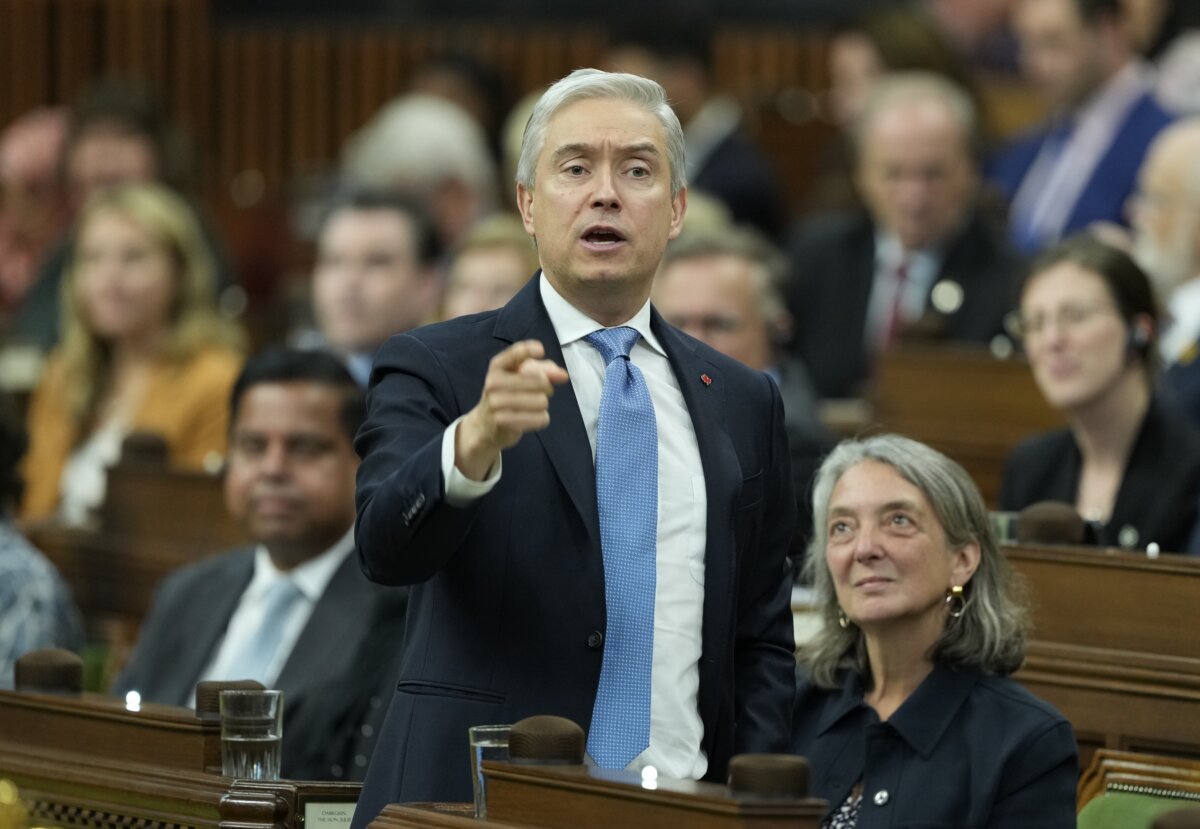
Finance Minister François-Philippe Champagne launched consultations for the budget this week that will be held until Aug. 28.
“Consultations are open for you to share your ideas on Canada’s economic future,” Champagne said in a video posted to social media on July 14. “We want to hear from you. Your ideas will help us guide the choices we need to make as a nation.”
Champagne said he, Secretary of State for the Canada Revenue Agency and Financial Institutions Wayne Long, and Parliamentary Secretary Ryan Turnbull will be hitting the road “over the coming weeks” to meet with Canadians from across the country to “discuss key issues” as part of the pre-budget consultation process.
Consultations will concentrate on lowering costs for Canadians, creating jobs, building more homes, accelerating nation-building projects, and strengthening Canada’s defence industrial capacity, the government said in a press release.
Canadians can also have their say via a questionnaire or by submitting a letter.
The multiple-choice questionnaire asks only four questions and then collects personal information such as province of residence, age range, and gender. The questions fall under the categories of the economy, affordability and services, and defence. The fourth question allows respondents to offer one suggestion to the government.
Budget Plans
The government did not originally plan to table a budget this fall. Champagne in May said the government’s plan would be laid out in the throne speech as well as in a Fall Economic Statement. The announcement elicited heavy criticism from Opposition parties and prompted concern from some fiscal critics about the pace of spending and the size of the deficit.
Prime Minister Mark Carney promised just four days later that his administration would unveil a budget this fall. He defended his decision to forgo tabling it in spring, as is customary, saying that presenting a budget before holding in-depth discussions with the United States would be premature.
“There is not much value in trying to rush through a budget in a very narrow window—three weeks—with a new cabinet,” he said at the time. “We will have a much more comprehensive, effective, ambitious, prudent budget in the fall.”
Trade discussions have been tumultuous over the past few months as U.S. President Donald Trump continues to change tariff rates and discussion deadlines. The president announced last week his plan to impose a blanket 35 percent tariff on all Canadian imports beginning Aug. 1.
The announcement came despite Ottawa acquiescing to Trump’s demand to drop its digital services tax (DST) on American technology companies, or risk halting all trade discussions. The DST would have placed a 3 percent levy on revenue tech giants such as Amazon receive from Canadian customers.
Carney recently proposed an Aug. 1 deadline for finalizing a trade deal and has committed to collaborating with the United States to secure an agreement. The prime minister has yet to announce potential counter-measures.
Carney has also been focusing on reducing expenditures and increasing investments in recent weeks.
Last week Champagne sent letters to cabinet ministers asking most to slash program spending within their departments by 7.5 percent starting next spring, escalating to 15 percent within three years.
The Canadian Press contributed to this report.
 Friends Read Free
Copy
Facebook
Tweet
Friends Read Free
Copy
Facebook
Tweet