
The federal government has announced that it will be breaking with its tradition of introducing budgets in the springtime, instead introducing them in the fall going forward.
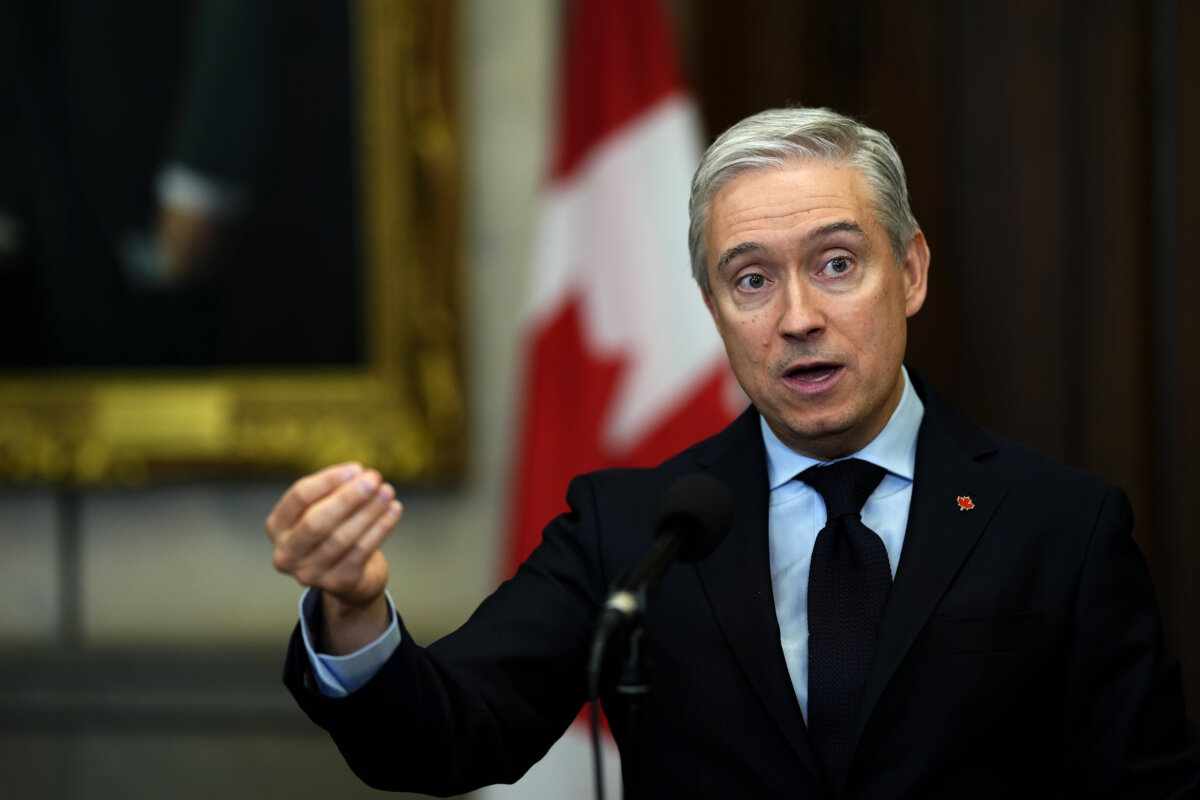
Finance Minister François-Philippe Champagne made the announcement on Oct. 6. While Conservatives have been critical of the government for not introducing a spring budget in 2025, and for expecting a heightened deficit in the upcoming fall budget, they did not protest the move.
“Changing the date Canadians are told how bad inflation and deficits are going to be is not going to give comfort to anybody,” Tory House Leader Andrew Scheer said during question period in the House of Commons on Oct. 6. Aside from this comment, Conservatives did not question the government on the new budget cycle.
Champagne said a fall budget can give businesses and local governments more predictability, while also giving MPs more time to examine government spending.
“In the new budget cycle, my colleagues will be happy because it is going to give them more clarity to see the budget expenditures,” Champagne told the House.
Ian Lee, a professor of business at Carleton University, concurs.
“The big picture takeaway is that this will give more time to parliamentarians to scrutinize government spending, more diligently. So that’s the value added,” he told The Epoch Times in an interview.
Lee said the previous method of introducing the budget in April did not allow sufficient time to examine the federal main estimates, which are tabled by March 1 by the Treasury Board. He said these estimates focus on the “micro” of federal departments’ expenditures, but there was typically not enough time to sift through them.
“There’s a whole bunch of government departments in our country, and they spend a half a trillion dollars in total… So we should want more scrutiny of the government departments, and we couldn’t get it,” Lee said.
Ottawa noted in a backgrounder explaining the change that the Parliamentary Budget Officer and the House of Commons Standing Committee on Government Operations and Estimates have previously called for “greater alignment between the budget and Main Estimates.”
Other countries in the G7 also introduce budgets in the fall. The United Kingdom switched to fall budgets in 2017, which was done to give the government more time to explain forthcoming changes that would take effect in April of the following year. Prime Minister Mark Carney was Governor of the Bank of England at the time.
The French government tables its budget bill in October, while the Italian government approves its budget in October with a parliamentary vote of approval to take place by year-end. The Japanese government tables a draft budget in December, which has to be voted on before the start of the new fiscal year on April 1.
Nelson Wiseman, a professor emeritus of political science at the University of Toronto, said the moving of the budget from the spring to the fall may “complicate” the provinces’ budgets, as they typically introduce their budgets in the early spring, before the federal government introduces its budget.
However, Wiseman said he does not see this decision having many political implications. He noted the Conservatives are more focused on the deficits that the Liberal government could run in the next fiscal year.
Wiseman also said the Tories are focusing their messaging on the Liberal government’s decision to split expenditures into capital and operating, which Conservatives say amounts to “cooking the books” to hide higher deficits and debt.
Champagne called this accusation “irresponsible” when appearing before the House finance committee on Oct. 6. He told MPs that separating capital and operating spending will lead to “more transparent decision making.”
Champagne said his upcoming budget will “seize upon a generational opportunity to transform the Canadian economy through ambitious investments in a rigorous expense review so that we can spend less and invest more.”
Ottawa is working to find government efficiencies while at the same time increasing federal investments in industry and major projects to boost economic growth amid tariff pressure from the United States.
Parliamentary Budget Officer (PBO) Jason Jacques has said this approach is akin to having the foot on the gas and brake at the same time. The PBO has projected a deficit of $68.5 million for the next fiscal year, along with an increasing debt-to-GDP ratio. Jacques told MPs in late September Canada is on an “unsustainable” fiscal track.
 Friends Read Free
Copy
Facebook
Tweet
Friends Read Free
Copy
Facebook
Tweet