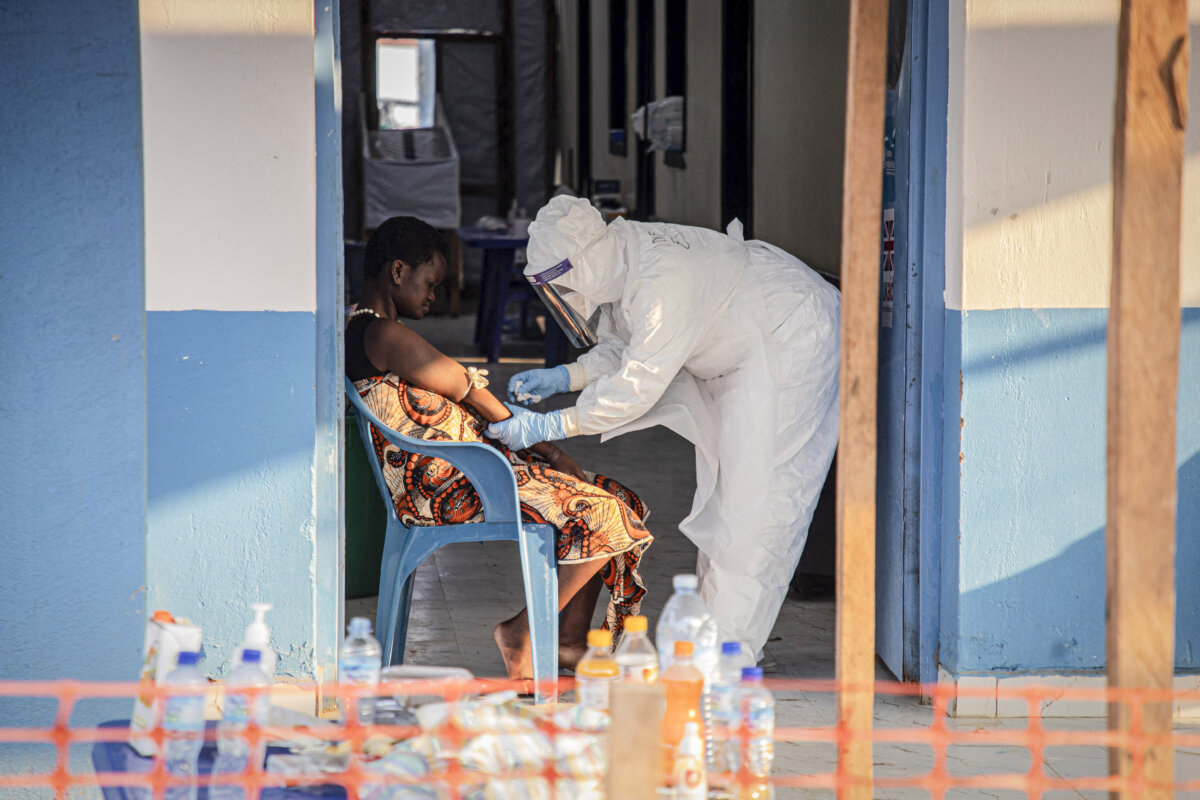

The World Health Organization (WHO) said on Tuesday it was still possible to bring the second-deadliest Ebola outbreak in Congo under control, amid fears it is outpacing containment efforts.
The global health agency said earlier in August that reversing the spread of the virus would be possible within three months, although since then it has expanded to a sixth province in the central African country,
The outbreak, Congo’s 17th and worst yet, has so far killed at least 2,325 people, according to officials.
The biggest Ebola outbreak occurred between 2014 and 2016 in West Africa, with more than 28,600 cases reported, according to the Centers for Disease Control and Prevention.
Speaking from Bunia in Congo, WHO incident manager Thierno Balde said that given the necessary resources, it would be possible to stop the current outbreak.
The WHO is seeking $115 million in funding for the Ebola response, and says it has so far raised about 60 percent of that target.
Multiple Challenges
Other challenges include armed conflict in the outbreak region, delayed detection, and surveillance teams being overwhelmed, together with a lack of any effective treatment or vaccines for the rare Bundibugyo strain of the virus.
Efforts at containment are being ramped up with an extra 400 medical beds added in the past two weeks, and more epidemiologists due to be deployed to trace anyone who has been in contact with the sick, Balde said.
“The situation is quite difficult, but people are working here day and night trying to control this outbreak,” he told reporters.
Contradictory Views
Other officials said between 70 percent and 80 percent of new cases have no known link to patients, meaning the virus is still spreading unchecked in many areas and suggesting it is a long way from being brought under control.
“We are far from discovering the magnitude of this outbreak,” said Dr. Wessam Mankoula, the head of emergency preparedness and response for the Africa Centers for Disease Control.
“It will not be over in a few weeks or even months,” he said.
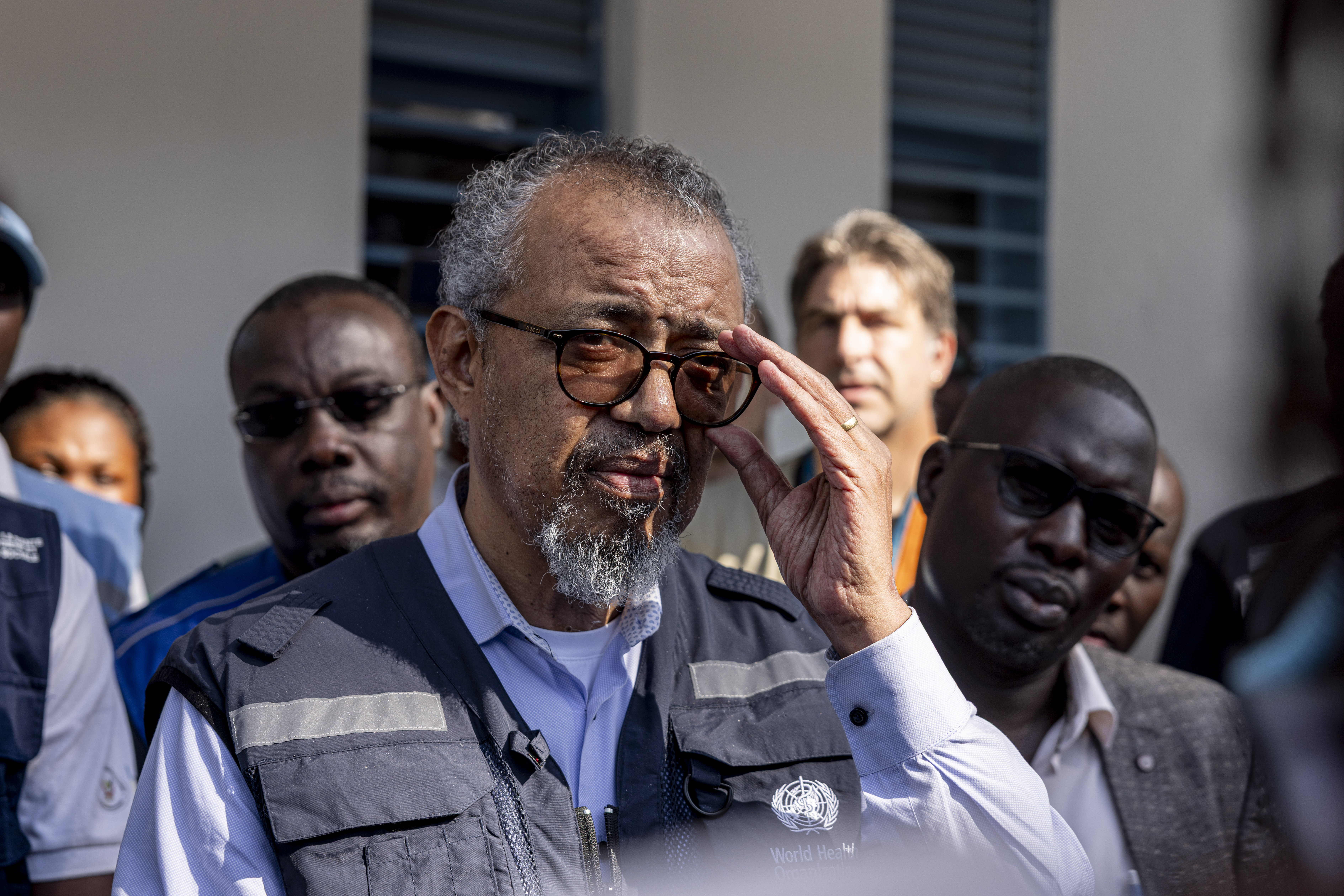 World Health Organization Director-General Tedros Adhanom Ghebreyesus in Bunia, Congo, on May 31, 2026. (Michel Lunanga/Getty Images)
The health organization is set to decide whether to extend the emergency status and issue recommendations to countries to control its spread.
The outbreak has seen several international and national groups travel to the infected areas to try to contain it.
According to the U.S. CDC, people can contract Ebola if their mucous membranes in the eyes, nose, or mouth, or their broken skin, come in contact with the bodily fluids of an infected person or contaminated objects.
Ebola does not spread the same way as respiratory viruses such as influenza, according to scientists, meaning a person cannot become infected simply by being close to a person with the illness.
Experimental Vaccine Trials Underway
In the race for a vaccine, human trials have begun in England for an experimental Ebola inoculation, officials announced on July 27.
The vaccine candidate was developed by the University of Oxford targeting the Bundibugyo virus.
The phase one trial will assess the vaccine’s safety and the immune responses it elicits and is funded by the Coalition for Epidemic Preparedness Innovations.
The vaccine, known as ChAdOx1 BDBV, uses the same platform as the COVID-19 vaccine developed by Oxford and AstraZeneca.
That was administered in the United Kingdom and some other countries before it was withdrawn worldwide in 2024 amid declining demand, after regulators identified a “rare” risk of serious blood clots.
An Indian manufacturer working with Oxford University has already manufactured about 620,000 doses of the vaccine and is awaiting authorization.
In Canada, pharmaceutical giant Moderna was this month given the go-ahead for a phase one clinical trial for an mRNA vaccine for Ebola, also targeting the Bundibugyo virus.
Victoria Friedman, Zachary Stieber, and Reuters contributed to this report.
 Friends Read Free
Copy
Facebook
Tweet
Friends Read Free
Copy
Facebook
Tweet