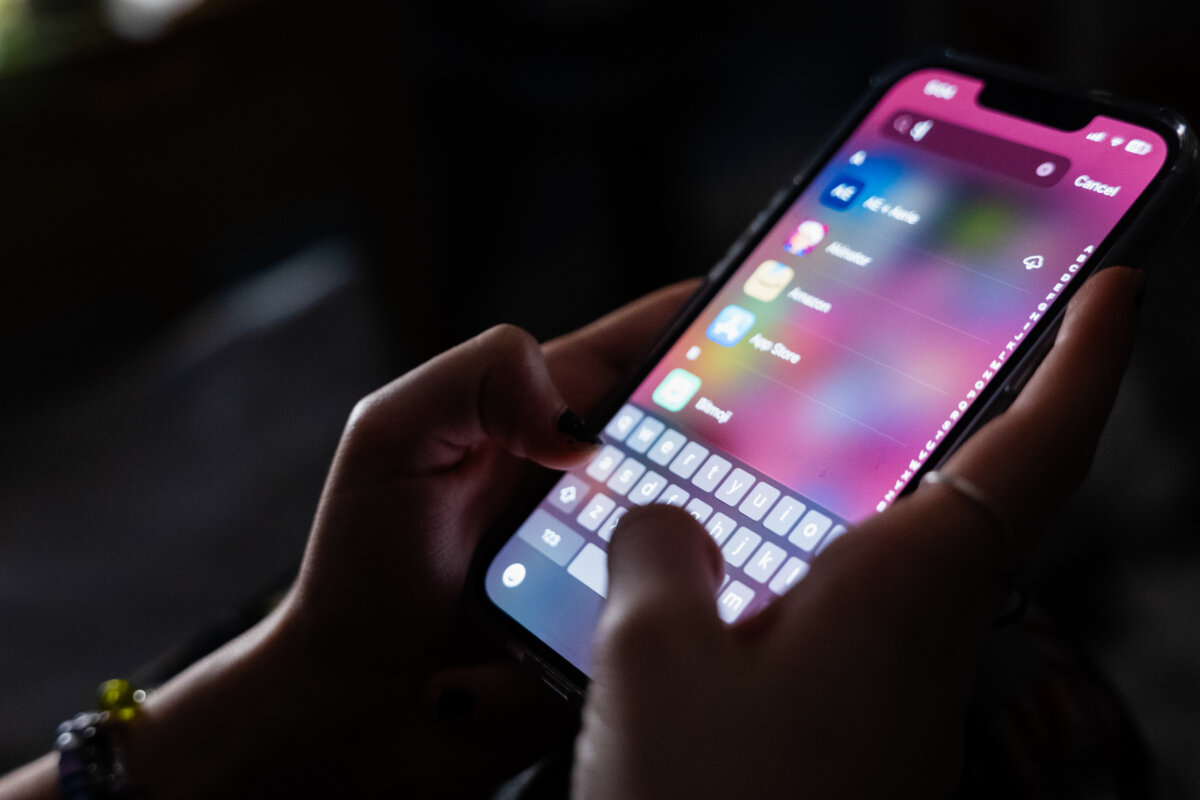
In recent years, declining newspaper sales and falling audiences for television and radio globally have caused social media to become the primary way that many people consume news, current affairs, and opinions.
Social media influencers, who can range from singers and models to journalists and academics, have become increasingly important gatekeepers and opinion-formers.
The platforms range from country to country, but include TikTok, YouTube, and Instagram, which appeal to a younger demographic than platforms such as Facebook and X.
Influencers Getting Rich
There is big money to be made as an influencer, and many of the most successful have some sort of corporate sponsorship.
Forbes published a list of the top 50 wealthiest “creators” in June. They made $853 million between them, up by 18 percent on the previous year.
A number of influencers have “brand partnerships” with Meta, Google, Nike, Prada, Kate Spade, and the National Women’s Soccer League, Forbes stated.
Andrew Selepak, professor of media production, management, and technology at the University of Florida, told The Epoch Times that two of his former students have become influencers and are often sponsored by corporations or other organizations to promote content.
“I don’t have any [students] who are being paid by politicians or by foreign governments, but you could see where that is something that’s definitely going on,” he said.
Generation Z, and many millennials, are more likely to consume content through social media than traditional media, according to Selepak.
Involvement of Foreign Actors
Foreign actors trying to influence public opinion in another part of the world is a very old concept. Only the technology is new, Mike Waller, former adviser to CIA Director Bill Casey and author of “Big Intel: How the CIA and FBI Went from Cold War Heroes to Deep State Villains,” told The Epoch Times.
He noted that George Washington, in his farewell address in 1796, warned against the “insidious wiles of foreign influence,” although in those days it was Britain he was referring to rather than China, North Korea, Iran, or Russia.
Influencing is just another form of lobbying, according to Waller.
“There’s no law against it,” he said. “It’s free expression, it’s free commerce.”
China has been extremely active in pushing its propaganda on social media in ways that cannot easily be tracked back to the communist regime, The Epoch Times has previously reported.
YouTube has removed more than 11,000 channels linked to Chinese “coordinated influence operations” in the third quarter of 2025, followed by more than 5,000 channels linked to Russia, according to the last bulletin from the Google Threat Analysis Group.
“It’s going on everywhere, and our adversaries would be foolish not to [do it],” Waller said. “It’s easy, it’s inexpensive, it’s effective.
“But it’s counterproductive and dangerous to think that because someone has a certain point of view that he’s being paid [by a foreign government].”
TikTok Cozy With Beijing
One of the most popular platforms for influencers to generate income is TikTok, which has about 150 million users in the United States and 1 billion worldwide, many of whom are in the 18 to 24 age bracket.
The company’s owner, China-based ByteDance, is in negotiations with the U.S. government over forced divestment due to concerns over data security and Beijing’s control over Chinese companies.
“TikTok is addictive, and it’s entertaining, and it’s fun,” Waller said. “So having something fun being some nefarious foreign operation doesn’t connect with people, and that’s the thing about TikTok, because you’re making a danger fun.”
Pro-Beijing influencers sometimes share videos touting China’s technological advances such as military robots, which appear both impressive and intimidating, according to Waller.
“They’re trying to demoralize us, they’re trying to compromise us,” he said. “They’re trying to create a sense of grim inevitability of the future, that you Americans are doomed, you’re going to be second-rate, or it’s going to be wonderful, because China’s going to lead the way. It creates a sense of inevitability when done on a mass scale.”
Spreading in Africa
Africa has emerged as a key region in which China and Russia appear to be using influencers with verve to push their narratives.
A report published in 2024 by the Africa Center for Strategic Studies in Washington documented nearly 200 pro-Russia and pro-China social media campaigns in each major region of Africa, with Beijing’s influencers particularly active in South Africa and West Africa.
The Institute for Security Studies, based in South Africa, published research in March suggesting that some influencers were “being paid to amplify key narratives.”
In August, Honour Zuma, an influencer in South Africa known as Cyan Boujee, apologized after promoting a film on her Instagram page for the Alabuga Start program, which offered jobs in the Russian Republic of Tatarstan possibly related to Moscow’s war effort.
“I believe this is a huge learning curve for me and the other influencers,” said Zuma—who had 1.7 million Instagram followers at the time and now has 955,000—in a video statement, which was widely reported on.
South Africa-based Lit allows entities to pay influencers who “align with [their] brand values, industry, and target audience.”
“When a brand or advertiser joins our platform, they undergo strict internal verification,” Nick Duncan, the founder of Lit, said in an email to The Epoch Times.
“We also maintain a list of company categories that are not permitted on the platform, including stock-trading apps, most gambling-related businesses, and lesser-known international companies.
“As the middleman between brands/agencies and influencers, we prioritize protecting both parties and ensuring a safe, trustworthy environment for collaboration.”
US Scale-Back
The United States has its own methods of influencing public opinion around the world and that likely includes influencers, according to Selepak.
“Every country is engaged in propaganda,” he said.
Traditionally, the United States has used state-run outlets such as Voice of America (VOA) and the sponsorship of various journalistic outfits and nonprofits to project its soft power overseas.
Over the past decade, it has also tried to target disinformation from bad actors through government entities such as the State Department’s Counter Foreign Information Manipulation and Interference (R/FIMI) office, as well as nongovernment partners.
However, the Trump administration has scaled back the soft power apparatus over concerns that it has become politically biased and targets Americans.
In March, President Donald Trump ordered a reduction in the scope of the U.S. Agency for Global Media, which runs VOA.
In a statement, the White House described VOA as “radical propaganda” and cited examples, including the decision of its management to not label as terrorists members of the Hamas terrorist group.
On April 16, Secretary of State Marco Rubio announced the closure of R/FIMI, and said, “Under the previous administration, this office, which cost taxpayers more than $50 million per year, spent millions of dollars to actively silence and censor the voices of Americans they were supposed to be serving.”
Waller called R/FIMI a “vital tool” but agreed that the office overstepped its bounds.
“We didn’t lose it because Secretary Rubio abolished it,” he said. “We lost it because it abused its own authority.”
The closure of R/FIMI and the stripping down of VOA created a vacuum that could be exploited by China and other foreign actors, he said. But he also noted that the VOA had become a “social revolutionary weapon against traditional societies.”
US Allies Accused
Allies of the United States have also been accused of paying influencers to massage public opinion.
The newspaper Haaretz in November claimed that the Israeli government has paid influencers in the United States to improve the country’s standing following the Gaza conflict.
In October, the BBC said it had discovered more than 100 bogus social media accounts purporting to be Muslim or Somali influencers who were supporting, among other things, the narrative of the United Arab Emirates in Sudan.
In the UK, Justice Minister Jake Richards, in a written reply to a parliamentary question, said the Ministry of Justice “uses social media influencers to help deliver its communications and operational priorities.”
“All influencer activity is subject to strict Cabinet Office spending controls,” he said.
Impact of AI
The future is likely to be dominated by artificial intelligence and deepfake videos, Selepak said. He said he believes that they could be highly effective in many parts of the world where traditional media are fairly weak and use of social media is high.
There are already instances of AI deepfakes having political ramifications, even when meant as a joke. He gave the example of TikTok videos generated with AI video tool Sora this year, in which Martin Luther King Jr. was recreated as a professional wrestler in World Wrestling Entertainment.
On Oct. 17, OpenAI, which owns Sora, announced on X that it was suspending depictions of King on Sora, saying, “Some users generated disrespectful depictions of Dr. King’s image.”
“There is a very dystopian aspect,” Selepak said. “Because we’re such visual creatures that if you’re consuming so much content from social media, and you’re going down a rabbit hole of deepfake narratives, you can really change people’s perspectives on things.”
 Friends Read Free
Copy
Facebook
Tweet
Friends Read Free
Copy
Facebook
Tweet