
News Analysis
The B.C. Conservatives’ crowded leadership contest is drawing an engaged voter base, with the party recently reporting more than 42,000 members, up from roughly 7,000 in December of last year.
The groundswell of engagement comes as the party nears the end of its first leadership contest after a meteoric rise to Official Opposition status in 2024, with candidates attempting to show they are best equipped to deal with the economy and property rights uncertainty surrounding court rulings related to the Declaration on the Rights of Indigenous Peoples Act (DRIPA).
Many candidates are also striving to prove to the party membership that they’re “true blue” conservatives who don’t shy away from topics such as parental rights, gender ideology in education, and free speech ahead of the May 30 finalization of votes.
David Leis of the Frontier Centre for Public Policy says candidates and a growing mass of voters have come together on repealing DRIPA and opposing policies of the incumbent government because of what they see as a dire situation facing the province.
“This is really quite an extraordinary scale of interest in this leadership race,” Leis said in an interview, adding that many of those tuning in believe “that B.C. is in deep trouble and there is an urgent need for policy change, and the hope for that change is with a change of the B.C. leadership.”
Stewart Prest, a lecturer in political science at the University of British Columbia, agreed that there is more interest than normal in the race and said it’s part of an overall shift.
“I think people are just paying more attention to politics generally now than they were a year or two ago,” Prest told The Epoch Times.
“The Conservatives in particular are able to tap into those who are motivated by frustration with the current status quo,” he added, noting that it seems “populist political conversations” among leadership candidates appear to be drawing more people to the party.
He adds that those who are paying attention to the race believe that the “the government has been failing on important issues, and just taking one step forward, one step back, over and over again.”
Brent Chapman, the longest-serving B.C. Conservative member in caucus, said that increased engagement from the grassroots is due to what he characterizes as a crisis faced by the province as well as by growing public concern over cultural and social issues that many voters feel have not been adequately addressed. Chapman is married to leadership candidate Kerry-Lynne Findlay.
“I sincerely feel that people have come to a sort of a threshold,” Chapman said in an interview. “People were waiting for common sense to surface, but maybe you have to go out and vote for it.”
For its part, the governing B.C. NDP says its policies are helping with daily cost-of-living issues, with the party saying it has provided tax breaks of up to 2 percent, helped in building 80,000 new homes, and hired more family doctors, and has a focus on climate change.
Economy
The leadership contest comes as the province faces significant debt levels and economic woes.
Deloitte forecast real GDP growth of 1.2 percent this year for B.C., a decline from 1.7 percent in 2025, while TD Economics has said the province is facing “sub-trend growth” largely due to challenges with housing, demographics, and trade-related economic decline.
B.C. is also experiencing soaring deficits and debt levels, with Budget 2026 projecting a $13.3 billion deficit for fiscal year 2026–27, up from roughly $9.6 billion the year before and considerably higher than pre-pandemic levels.
An analysis from the Chartered Professional Accountants of British Columbia earlier this year found that volatility and economic struggles are continuing to significantly “hamper business planning efforts” in the province, while a members survey carried out by the Business Council of B.C. and released May 6 found that 74 percent of respondents were cutting investment in the province due to DRIPA.
Ideology
Much of the content of B.C. Conservative debates so far has centred on candidates’ future vision for the province as well as how big of a tent the party should strive for.
Prest noted that leadership debates “have shown a lot of agreement across key areas” such as repealing DRIPA and increasing B.C.’s economic competitiveness.
But more generally, he says, the race reflects a broad split between a more establishment lane and a more populist wing of the party. Sitting Peter Milobar, currently an MLA, and Ian Black, a former minister in Gordon Campbell’s B.C. Liberal government, are closely allied with the province’s centre-right establishment, Prest said, while Findlay, a former federal Tory MP; Caroline Elliott, a political commentator; and businessman Yuri Fulmer are more allied with the right-wing populist voting bloc.
“You can sort of split them along those lines,” Prest said, though adding that most candidates have some ties back to centrist conservatism in their records.
“We can see B.C., in some ways, as a kind of microcosm of the country as a whole, where there is this interior that tends to lean heavily conservative and to be more supportive of more populist-style candidates,” Prest added.
Leis, by contrast, said divisions between candidates are less ideological than a reflection of a broader push for major policy change.
“I think that’s where increasingly you get down to things such as what you see in classic electoral form, more and more picking away at people’s historical policy stances and also ones of personal style and critiques of each other’s background and experience,” he said.
For his part, Chapman said he sees divisions among candidates as being more about what he characterizes as either “globalist” or genuinely committed to putting the interests of British Columbians first.
“I want to know that the person who is telling me that they are conservative, that it’s not just when the cameras are on, but when the door is closed, are they going to stick to those values?” Chapman said.
“Are they going to try to put those [values] forward and put policy together that respects those values? I think it really does matter.”
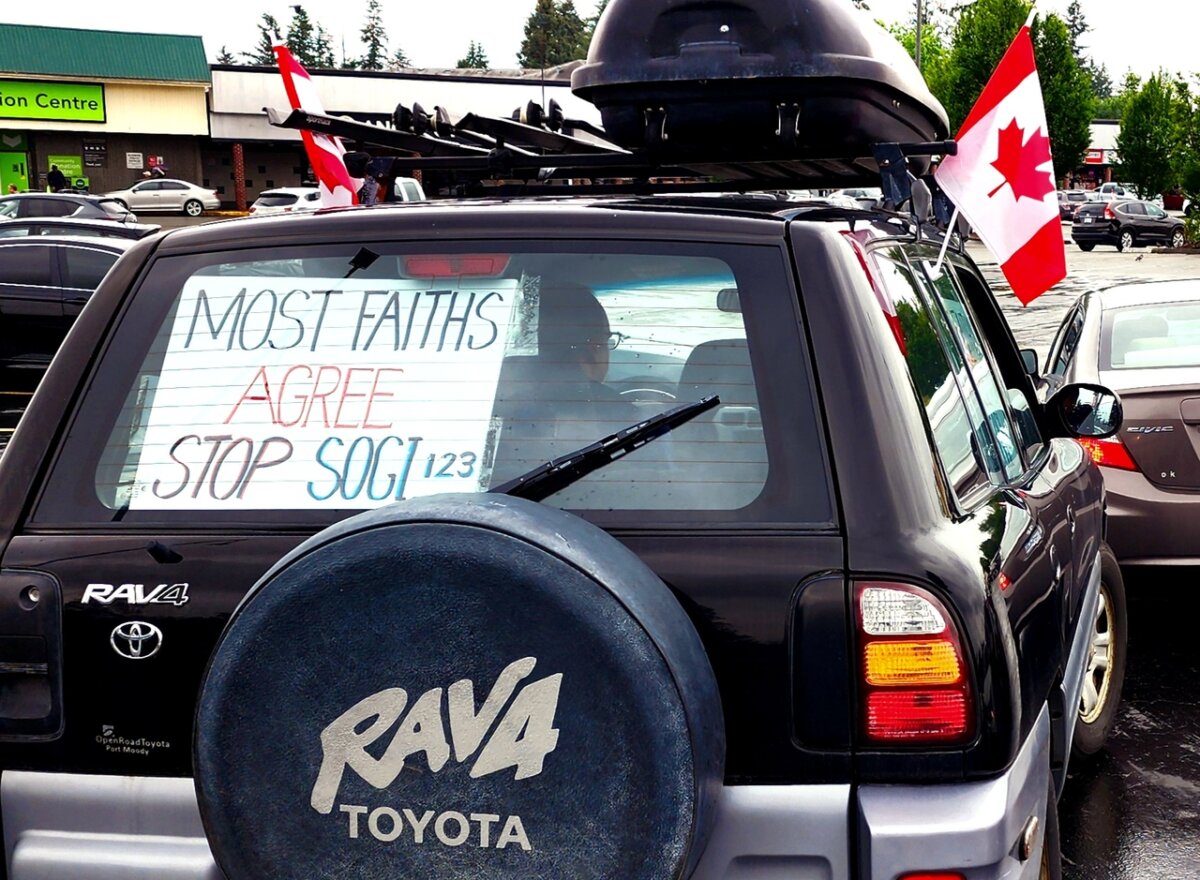
Chapman added that issues such as SOGI (sexual orientation and gender identity) curriculum guidance have also sparked increased engagement and pushback among some in the B.C. Conservative voting base, as parents and traditional conservatives become alarmed about the ideological direction in schools and public institutions.
“Twenty years ago, really, most of our discussions were about taxes and about spending,” he said. “Now I think we get into some issues that are really quite important to people at a deeper level.”
Challenges After Leadership Race
Prest said that the B.C. Tories appear to be increasingly competitive electorally and that the next leadership candidate could become premier. An Angus Reid poll published on May 5 suggested that the provincial Conservatives have opened a 10-point lead over the governing NDP.
However, despite the B.C. Conservatives facing a weakening opponent electorally, Prest said they still have a challenge in finding someone who is not only a good candidate but also a strong contender among the general public in a provincial election.
“Some of these candidates in the conservative leadership race are strong conservative leadership candidates,” he said, “but that’s not the same thing as being strong premier candidates.”
Chapman cautioned against a situation in which a candidate is pushed to compromise on core beliefs in order to be what some in party leadership may feel is more electable.
“[Former B.C. Conservative Leader] John Rustad struggled a bit because we had so many people pushing him into the middle,” he said of Rustad’s decline. Rustad, who saw the party rise to official Opposition status in the 2024 election, stepped down last year amid internal pressure and MLAs leaving the party.
“I believe John, from an integrity standpoint, wanted to stay solid with his conservative values,” Chapman said, adding, “there was so much push that I think it really causes confusion.”
Leis noted the issue of unity as a challenge for the next leader as the race nears its conclusion.
“The new leader … will face the significant challenge of bringing together not only the other candidates that were not successful, but reaching out as well to those other fractured parts of the larger conservative movement,” he said.
However, Leis said the reality of B.C.’s situation of being no longer “investable” and having uncertainty over basic matters like property rights, will cause sufficient pressure to push real change in the months and years ahead.
“People are waking up to this brutal reality that there has to be a major policy reset in order to make the province of British Columbia—let alone the country—governable, economically sustainable, let alone sovereign,” Leis said.
 Friends Read Free
Copy
Facebook
Tweet
Friends Read Free
Copy
Facebook
Tweet