
Half of this large Brazilian family carries a special trick up their sleeves—if you high-five them, they high-six you in return.
Fourteen of the 23 members of the da Silva family were born with six digits on each hand. They don’t consider the anomaly detrimental though. Quite the opposite, they hope for their children to inherit it.
“When we get pregnant and go for a scan, we just want to know if it’s five or six digits. We don’t care if it’s a boy or girl,” one of the family members told BBC.
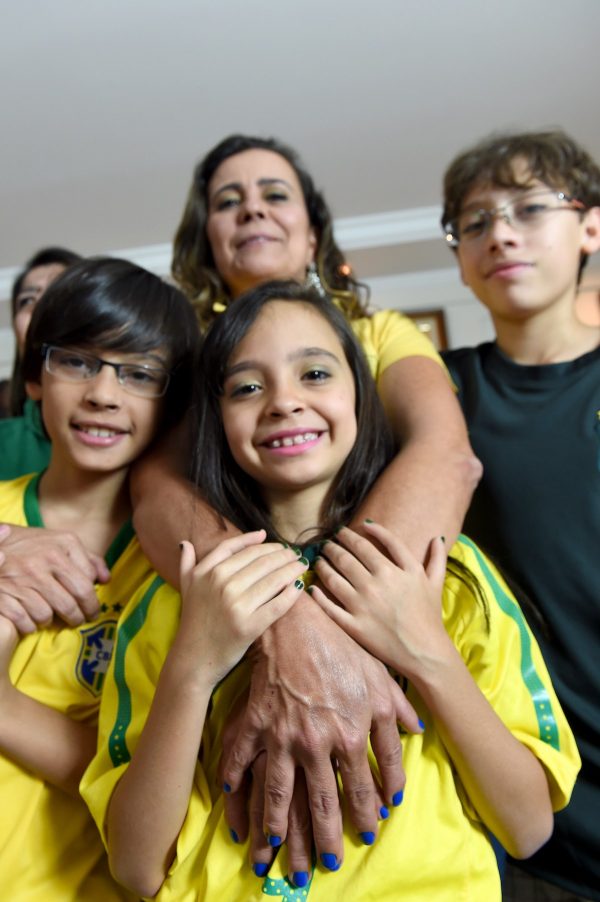 Members of the da Silva family, Pedro (L), Silvana (top C), Maria (bottom C) and Pedro, who were all born with 12 fingers, pose in their home in Brasilia, on June 21, 2014. (AFP PHOTO/ EVARISTA SA)
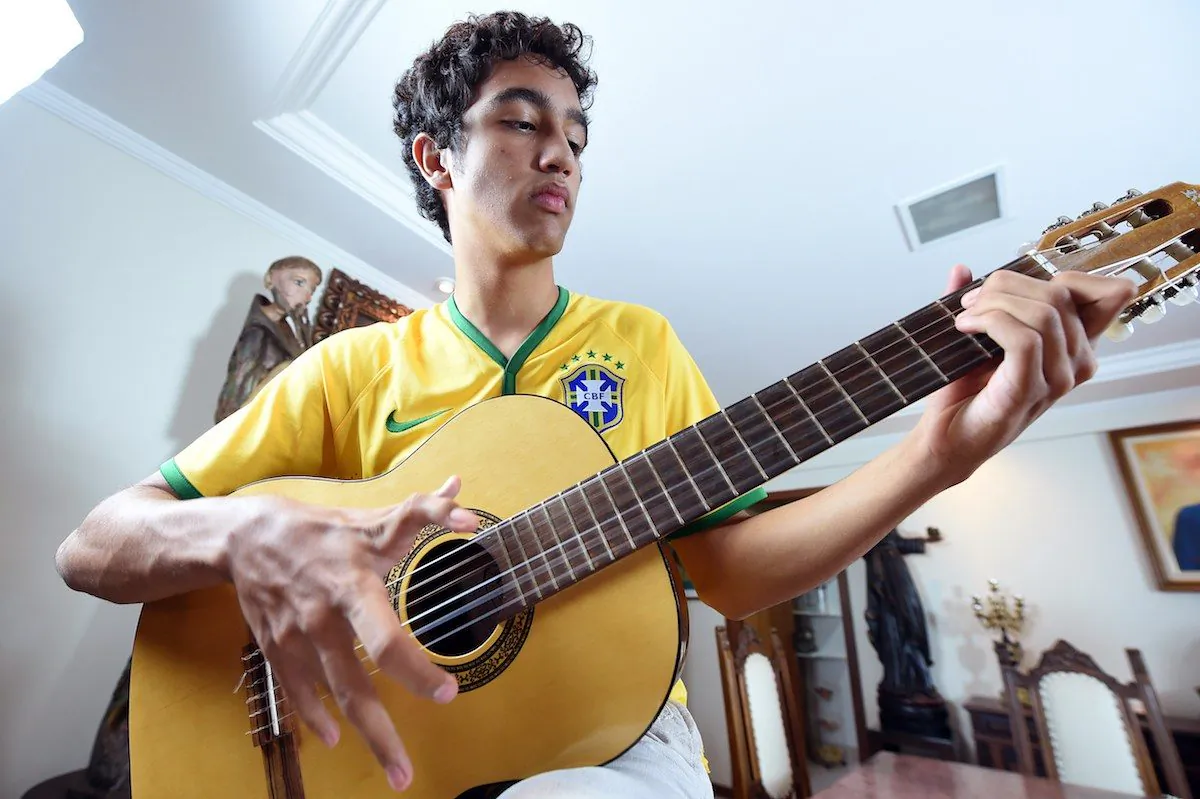
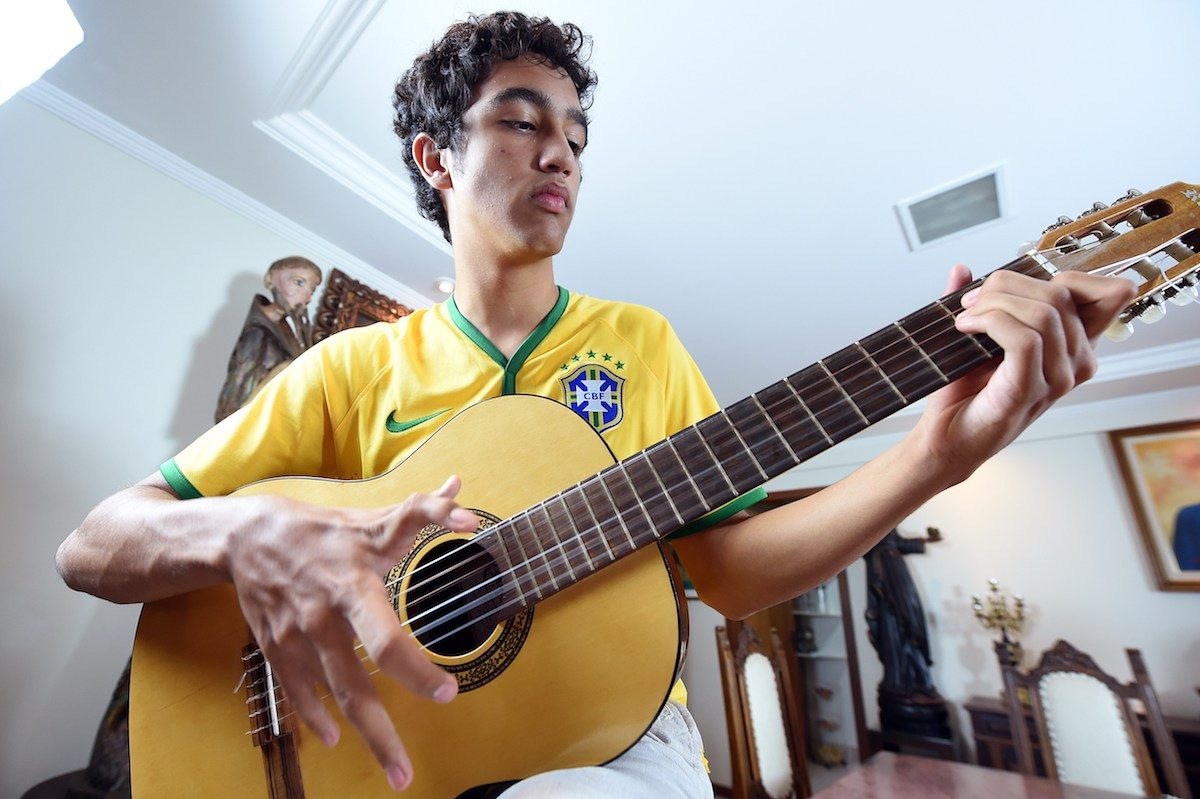
As opposed to some other anatomic anomalies, their extra fingers are not just limp outgrowths, but real, functioning digits. They can take advantage of them playing piano, guitar, or—as expected in the country of soccer—get a better grip on the ball as goalkeepers.
The condition is called polydactyly and is fairly common among newborns. A 1994 study on data from Jefferson County, Alabama, found it in about one in 430 white males, one in 1660 white females, one in 74 black males, and one in 90 black females.
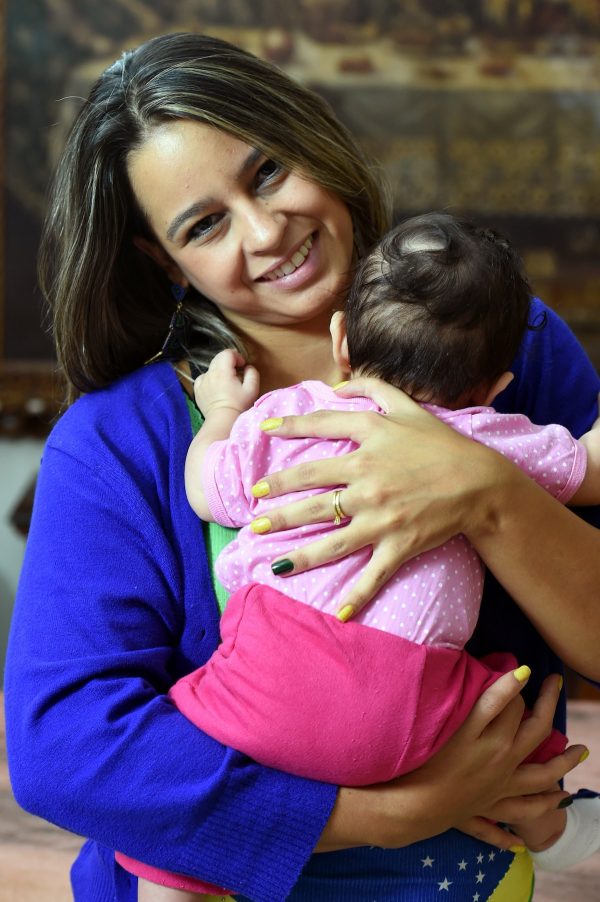 Ana Carolina Santos, who was born with 12 fingers, poses with her daughter Catarina in their home in Brasilia, on June 21, 2014. (AFP PHOTO/ EVARISTA SA)
It is rare, however, for the extra fingers to be fully functional.
Joao Assis da Silva, 18, aspires to be a goalkeeper, taking advantage of his peculiarity.
“I think it’s good because my hand is bigger than other hands and I have a better grip. I can hold the ball much better than people with five fingers,” he told BBC.
He has a difficulty, however, getting goalkeeper gloves that fit. “I have to buy two [pairs of] gloves, cut one finger from a glove [and] put it on [the] other so I can have a six finger glove,” he said.
Another family member, Maria Morena, said her piano teacher wished to have extra fingers too, since it can enable the player to reach more keys. Indeed, 12 digits would allow you to play chords otherwise anatomically impossible.
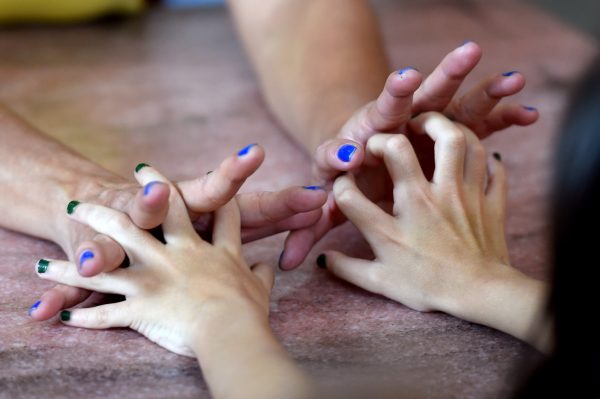 Silvia Santos da Silva and Maria Santos, who were both born with 12 fingers, join hands in their home in Brasilia, on June 21, 2014. (EVARISTO SA/AFP/Getty Images)
But having extra fingers isn’t all beer and skittles.
For example, manicure takes 20 percent longer.
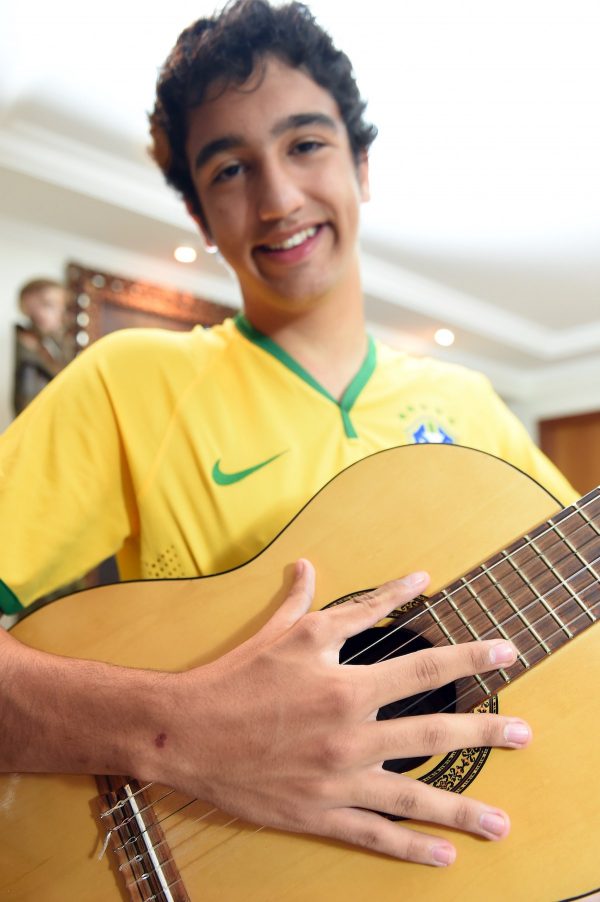 Joao de Assis, who was born with 12 fingers, plays guitar in his home in Brasilia, on June 21, 2014. (AFP PHOTO/ EVARISTA SA)
 Friends Read Free
Copy
Facebook
Tweet
Friends Read Free
Copy
Facebook
Tweet