
Prescription drugs provide relief from pain, fight infection, stabilize moods, reduce inflammation, combat dread diseases, and extend lives.
These medications have become a fact of life for many Americans. Half of them took at least one prescription drug, on average, in a given month, according to a recent Centers for Disease Control and Prevention (CDC) survey. More than 13 percent took five or more.
And the rate is growing.
In 2020, Americans filled 6.4 billion prescriptions, about 19 per person.
By 2023, Americans were consuming more than 210 billion daily doses of medication. That’s more than 600 pills, shots, drops, IVs, creams, mists, or suppositories for every person in the country per year.
A child born in 2019 in the United States can expect to spend roughly half of his or her life taking prescription medications, according to Jessica Y. Ho, a researcher at Penn State University.
The United States consumes more prescription drugs than any country in the world and spends nearly twice as much for them as all other nations combined.
Big Business
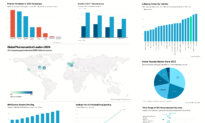
Global pharmaceutical sales were estimated at $1.6 trillion in 2023, according to Statista. That’s roughly equal to the gross domestic product of Spain and nearly double that of Switzerland.
The 10 largest pharmaceutical companies in the United States alone have a combined worth of more than $2.1 trillion.
Recent growth in the industry has been driven by the creation of new types of medications, including biologics and peptides. These medications can be highly effective but also very expensive.
Biologics are drugs derived from living sources rather than chemicals. Medicare paid nearly $66,000 per patient for prescriptions of Humira in 2023. That’s a biologic medication to treat rheumatoid arthritis, plaque psoriasis, and other diseases.
Development of biologics has more than tripled over the past decade. The Food and Drug Administration approved 17 biologics in 2023, up from an average of four per year between 1999 and 2013.
Americans consumed 72 percent of the top 50 biologic drugs sold in the world in 2022, according to the Department of Health and Human Services.
Peptides are drugs that mimic the function of certain substances within the human body.
A particular type of peptide called GLP-1 helps regulate blood sugar and appetite. Ozempic, Weygovy, and Trulicity are GLP-1 medications.
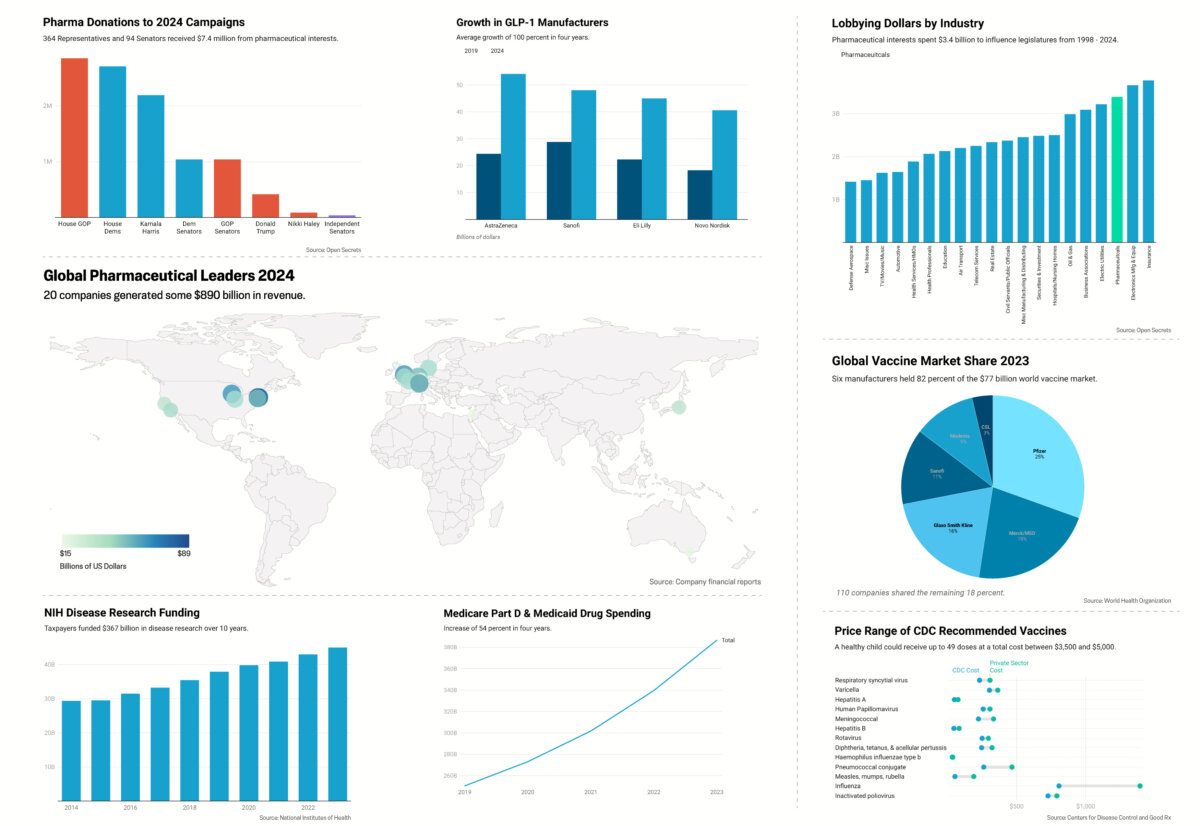
Medicare Part D alone paid more than $22 billion to provide GLP-1 medications in 2023, an increase of nearly 130 percent in two years.
Currently, the GLP-1 market is dominated by Novo Nordisk, Eli Lilly, AstraZeneca, and Sanofi, although others are working to develop similar medications.
U.S. drug prices were more than double those in other countries as of 2022, and prices were more than four times as high for brand-name drugs, according to global consulting firm RAND.
Political Spending
Pharmaceutical companies do considerable business with the federal government, deriving $387 billion in payments from Medicare Part D and Medicaid in 2023 alone.
Pharmaceutical companies and some 100 allied political action committees spent more than $15 million in campaign contributions during each of the past two presidential elections and nearly as much during the midterms.
Those amounts are overshadowed by the pharmaceutical industry’s annual lobbying expenditures. The industry spent more than $150 million to influence federal and state legislatures in 2024. Of its more than 700 lobbyists, nearly two thirds were former government employees.
The pharmaceutical lobby spent more money over the past quarter century than did electric utilities, oil and gas companies, and hospitals and nursing homes—more than the automotive and defense aerospace industries combined.
Research
Developing new medications is expensive. The cost of bringing a new drug to market can range up to $2 billion, according to data cited by the Congressional Budget Office.
Congress aided companies investing in research via the One Big Beautiful Bill Act, which includes a provision for makers of drugs that treat rare diseases. The law widens the definition of a rare disease drug and further delays Medicare price negotiations on drugs that treat them.
That allows the makers of those drugs to continue charging Medicare full price for the medications, in order to fund future research.
Normally, a drug that has been marketed for at least nine years and receives $200 million per year in Medicare payments would be eligible for price negotiation.
Few drugs used to treat orphan diseases reach that revenue threshold, according to advocacy group Patients for Affordable Drugs.
However, eight of these drugs are projected to generate total revenues averaging $21.9 billion each by the time they would have been eligible for price negotiation. That’s according to a 2023 study published in JAMA Internal Medicine.
The pharmaceutical industry spent $83 billion on research and development in 2019 and had nearly doubled that by 2023.
The taxpayer-funded National Institutes of Health also spent more than $360 billion on disease research from 2014 to 2023.
Vaccines
Vaccines are a global business; more than 7 billion doses were delivered in 2023, according to the World Health Organization. The value of that market was approximately $77 billion.
In the 1980s, American children were routinely vaccinated against seven diseases, a vaccine regimen that included two shots and one oral administration.
Currently, the CDC recommends immunization against 17 illnesses, delivered in as many as 13 vaccines. From birth through age 18, a healthy child could receive up to 49 vaccine doses.
That could cost as little as $3,500 at prices negotiated by the federal government for its health programs. For commercial health insurers and private payers, the cost could be $5,000 or more, according to CDC data.
The CDC reported that it vaccinated about 117 million low-income children between 1993 and 2023. The agency estimates that routine child immunizations prevented about 508 million illnesses, 32 million hospitalizations, and more than 1 million deaths, saving more than $3.2 trillion.
By the end of the COVID-19 state of emergency in spring 2023, the federal government had purchased a total of 1.2 billion doses of COVID-19 vaccines from Pfizer and Moderna at a cost of $25.3 billion, according to health policy research center KFF. The average price per dose was nearly $21.
 Friends Read Free
Copy
Facebook
Tweet
Friends Read Free
Copy
Facebook
Tweet