
It finally passed.
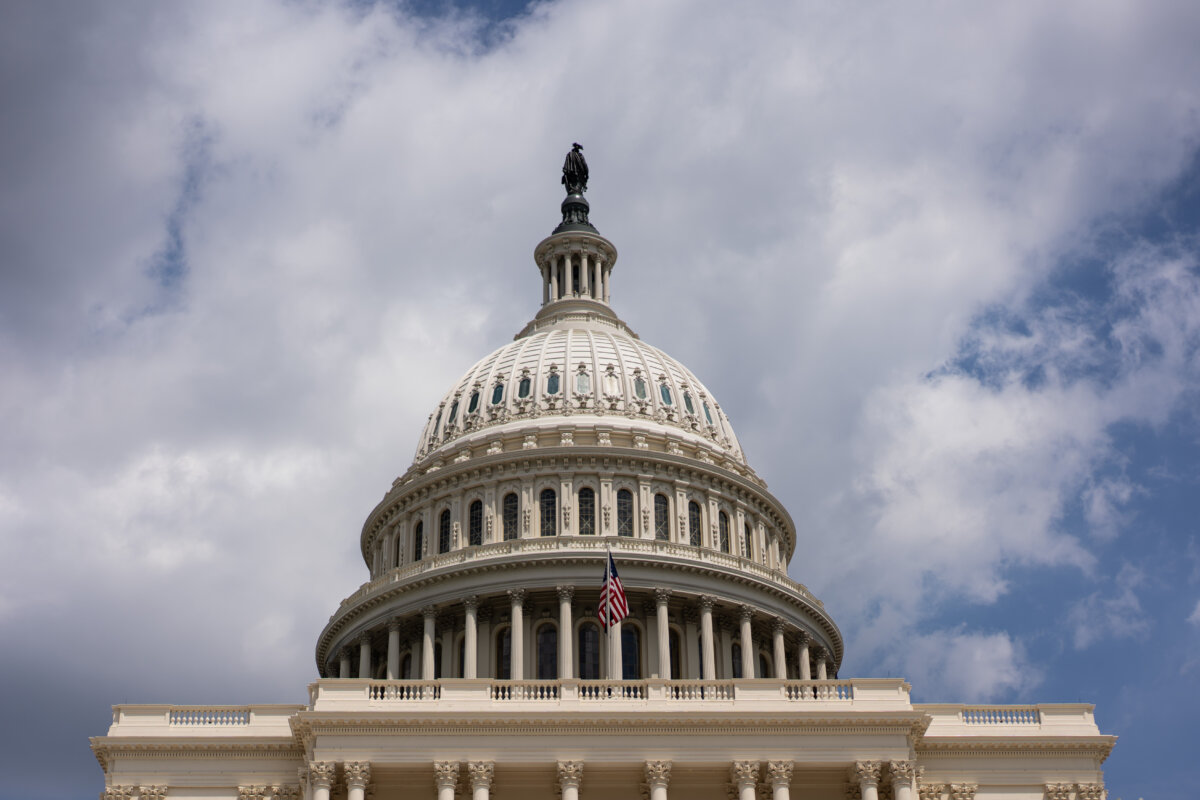
The House on Thursday afternoon sent President Donald Trump’s sweeping domestic policy to his desk after a marathon session that started on Wednesday morning.
It passed the House in a 218-214 vote. Two Republicans—Reps. Thomas Massie (R-Ky.) and Brian Fitzpatrick (R-Pa.)—joined Democrats to vote against the package.
It came after an all-night session as Republicans scrambled to win over holdouts who had derailed an earlier attempt to advance the 940-page measure.
Minority Leader Hakeem Jeffries (D-N.Y.), in a ploy to delay the final vote, smashed a record for the longest House speech, speaking for 8 hours and 44 minutes in protest of the package.
The bill will head to Trump’s desk ahead of a self-imposed July 4 deadline. He is expected to sign it tomorrow. The legislation enacts many of Trump’s domestic policy initiatives, including tax cuts, boosting spending for the border and defense, and phasing out clean energy tax credits.
This occurred after an earlier procedural vote was held open on the floor for a record seven and a half hours as leadership sought to build support for legislation behind the scenes.
Speaking to reporters at about 1:45 a.m. ET, House Speaker Mike Johnson (R-La.) blamed the breadth of the Senate changes to the bill for the difficulties.
“I encouraged our Senate colleagues to make as few modifications as possible, and they made more than I frankly anticipated,” Johnson said.
Four conservatives—Reps. Keith Self (R-Texas), Victoria Spartz (R-Ind.), Andrew Clyde (R-Ga.), and Massie—had initially voted against advancing the bill, along with Fitzpatrick, a moderate.
Ultimately, four Republicans flipped their vote to yes, and the eight abstaining Republicans also voted yes. Fitzpatrick was the sole Republican to vote against advancing the bill.
Lawmakers advanced the measure at around 3:30 a.m. ET.
Rep. Bob Ondar (R-Mo.), who had initially abstained from the vote to advance the measure, told The Epoch Times at around 3 a.m. ET that the Trump administration had persuaded him to support the bill.
Read more about what’s in the bill here.
Read more about Medicaid changes in the bill here.
For an explainer on the “senior bonus”, read here.
—Joseph Lord, Nathan Worcester, Jackson Richman
SCOTUS’ TOP DECISIONS
The Supreme Court has issued the remainder of its most anticipated decisions. Its opinions for the 2024–2025 term have waded into controversial topics like abortion, gender, and even TikTok’s relationship to national security.
Among other things, the court’s decisions are expected to make it harder for plaintiffs to block President Donald Trump’s policies, easier for states to ban “gender-affirming care,” easier for state Medicaid plans to avoid funding Planned Parenthood, and easier for states to impose age verification requirements on porn sites.
Perhaps the biggest decision came on June 27 when the Supreme Court said that courts likely exceeded their authority by issuing nationwide injunctions, which are orders providing nationwide relief from a policy rather than just as it affects the parties before the court.
Nationwide injunctions have proliferated in recent years, particularly at the beginning of Trump’s second term. Writing for a 6–3 majority, Justice Amy Coney Barrett indicated that the practice didn’t have a basis in the nation’s history.
Although Barrett’s opinion was against nationwide injunctions, it left open the possibility of other forms of relief that could impact people across the country. That included, for example, class actions whereby the parties in court seek to represent larger numbers of people.
Another big decision from June was United States v. Skrmetti, in which the six more conservative justices upheld Tennessee’s law banning “gender-affirming care” for minors. Chief Justice John Roberts denied the law was an illegal form of sex-based discrimination while Justice Sonia Sotomayor said in her dissent the court had done “irrevocable damage” to the 14th Amendment.
In Free Speech Coalition v. Paxton, Texas was similarly trying to protect minors from pornographic content. A porn industry group alleged Texas’ age verification requirement for porn sites infringed on residents’ right to access certain content.
But a 6–3 majority of the court held that Texas’ law was constitutional under a standard of review known as “intermediate scrutiny.”
In Maryland, a group of parents sued over a school district’s attempt to use “LGBT-inclusive” content while teaching students. The case worked its way through the court system and eventually reached the Supreme Court for oral argument earlier this year.
As in the other cases mentioned, the case, Mahmoud v. Taylor, saw the Supreme Court’s six conservatives forming the majority while the three liberals dissented. Justice Samuel Alito wrote the majority opinion and said that the content and the school board’s refusal to allow opt-outs violated the parent’s right to direct the religious upbringing of their children.
Other cases regarding Trump’s deportations caught a lot of attention this term, but weren’t as final or thorough as the other major decisions. The court intervened on a preliminary basis in cases challenging Trump’s attempt to deport alleged Venezuelan gang members under the Alien Enemies Act.
In April, the Supreme Court removed two orders blocking Trump’s deportations but also said he needed to provide potential deportees a form of due process known as habeas relief. A month later, a majority of the court appeared to block some of these potential deportations in a decision that was criticized by Justices Alito and Clarence Thomas.
—Sam Dorman
BOOKMARKS
U.S. District Judge Randolph Moss ruled on July 2 that Donald Trump’s administration cannot deny asylum claims of those crossing the U.S.-Mexico border, as this oversteps his authority. “The president cannot adopt an alternative immigration system, which supplants the statutes that Congress has enacted,” Moss wrote in his order.
Pete Buttigieg has narrowly emerged as the frontrunner for the 2028 Democrat presidential primary, according to a recent poll. Buttigieg only holds 16 percent in the poll, but has quadrupled the 4 percent he received in a poll last November.
Trump has asked the Supreme Court to allow him to fire Consumer Product Safety Commissioners Mary Boyle, Alexander Hoehn-Saric, and Richard Trumka Jr. Trump removed the three Biden-era appointees in May, but a federal judge later overruled that decision.
Trump announced a trade deal with Vietnam on Wednesday, securing zero percent tariffs for American goods entering the Asian nation. In exchange, Vietnamese products will face a 20 percent tariff, instead of the 46 percent previously announced on April 2.
Beaches around the country are being closed—just in time for the Fourth of July—due to unusually high concentrations of bacteria. The bacterial infestations sometimes stem from rain runoff flowing from urban centers.
—Stacy Robinson
 Friends Read Free
Copy
Facebook
Tweet
Friends Read Free
Copy
Facebook
Tweet