
All across China, local cadres are in a frenzy drilling the public in activities celebrating “red culture” in preparation for the Chinese Communist Party’s (CCP’s) 90th anniversary on July 1. Critics see this campaign as a sign of desperation on the part of the Party.
Singing red culture songs from the Mao era, which speak of the CCP as the “mother” and delight in prosperity and the good days under Communist Party rule, are especially important this year.
With the fragrance of jasmine wafting into China for the last few months, large-scale protests at an all-time peak, and the number of Chinese people quitting the Party and its affiliated organizations close to reaching 100 million, the CCP has been scared.
The compulsory soft-power brainwashing ploy of patriotic sing-along drills seems to be the CCP’s hope of keeping people in line.
The Chongqing Example
This approach has already been tested for three years in one major city.
China’s rising political star Bo Xilai, the party secretary of the megalopolis Chongqing in southwestern China, started a campaign to promote and revive the Party’s “red culture” in 2008 and began aggressively intensifying it a few months ago.
An April 20 Chongqing Daily article said that waves of red songs will storm Chongqing City, and a notice has been issued to mandate every city cadre and citizen to learn 36 red songs. The city’s official media was ordered to launch an intense media campaign to encourage everyone to sing the red songs.
Bo’s campaign was endorsed by four top members of the Politburo Standing Committee of the CCP, including Li Changchun, Xi Jinping, and Zhou Yongkang, who visited Chongqing last year. Wu Bangguo, chairman of National People’s Congress Standing Committee, who attended a “red song” concert in the city in April, also approved it.
The Red Songs’ Alleged ‘Miraculous’ Effects
The red song campaign soon spread to other areas of China. As instructed, all major media participated in aggressive campaigns extolling the virtues of singing red culture songs.
Some media reported about “miraculous” effects that have come with singing red songs: inmates getting their sentences reduced, mental patients getting cured, advanced cancer patients making it through chemotherapy.
Two news headlines said: “All Organs of Shan’xi Province Sing Red Songs out Loud to Express Deep Passion for the Party,” and “A New Red Song Era—Red Songs Storm China.”
Some telephone companies provide red song ring tones with a new telephone service. When one customer called the phone company and asked for a different ring tone, the operator said, “The ring tone is free, why would you want to change it?”
Recently many local governments also held red song concerts.
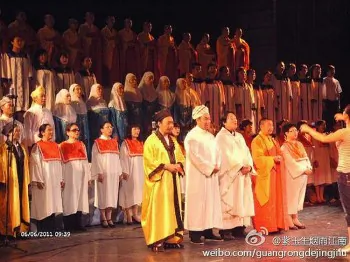
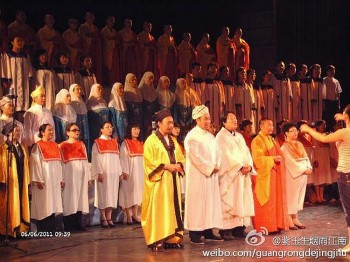
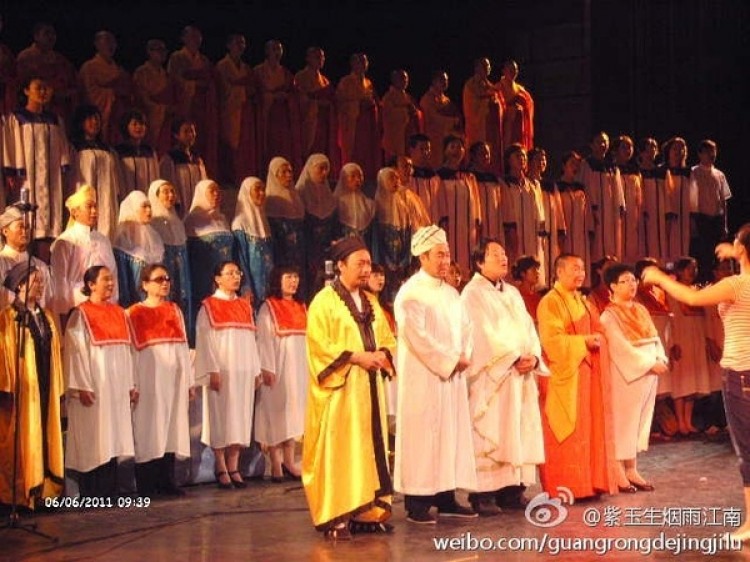
At one such concert individuals purporting to represent China’s five major religions—Buddhism, Taoism, Islam, Catholicism and Protestantism—went on stage singing red songs while wearing their religious attire, according to an article by the business magazine Caijing.
A chorus of 1,000 Chongqing employees of various government organs and enterprises were organized to give a red song performance in Beijing on June 11. The event made it to the front page of Chongqing Daily, with a headline that said, “Sing Loud the Main Theme Songs, Pass Down Red Songs for Generations to Come.”
The performance in Beijing cost hundreds of millions yuan (100 million yuan equals US$15 million), according to a participant in the performance.
Coercing People
Critics in and out of China have excoriated the Party for this latest campaign.
Hu Ping, editor in chief of the New York-based Beijing Spring magazine said in a recent article the red song campaign launched by Chongqing leaders is simply nonsense and has consumed public resources and taxpayer’s money.
“It intimidates, coerces, or forces people, either openly or secretly, to participate,” Hu said.
Although these types of movement were common in Mao’s time, they have disappeared for the past 30 years, Hu said. Now it is being brought back to life in Chongqing, and while there is no official rule for punishing absentees, everyone who has gone through similar movements knows their repressive nature, Hu said.
“Officials in charge expect everyone to be able to sing red songs, in other words, they will use this to evaluate an official’s political stance and attitude, thereby directly or indirectly affecting his or her promotion, salary, benefits, and even livelihood,” Hu said.
“Some officials with poor work performance can get in the spotlight and attract a lot of attention by actively supporting the campaign. However, officials who perform well but do not participate or even resist the movement will be discriminated against by their superiors,” Hu added, “In fact, high-ranking officials meant to test their subordinates’ loyalties and to eliminate their enemies when they launched this kind of campaign.”
Continued: Are the Chinese people really missing Mao’s era?
 Friends Read Free
Copy
Facebook
Tweet
Friends Read Free
Copy
Facebook
Tweet