Deep, Open Ocean Most Underexplored Area

By Kat Piper
Kat Piper
Kat Piper
August 5, 2010Updated: August 5, 2010

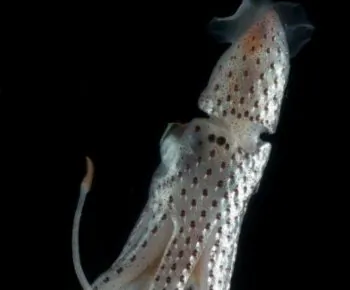
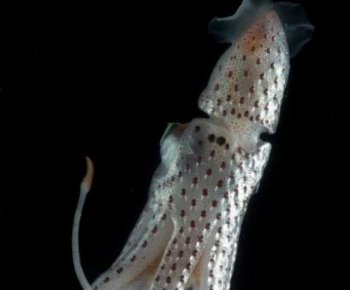
The jeweled squid, Histioteuthis bonellii, swims above the Mid-Atlantic Ridge at depths from 500 meters to 2,000 meters (about 1,640-6,562 ft.). (David Shale david.shale@virgin.net)
Scientists know the least about the largest habitat for life on Earth—the deep, open ocean—according to a study by U.K. and U.S. researchers.

Most of our knowledge about marine biodiversity comes from the shallow oceans and the seabed, while the deep, dark water column remains largely unexplored, says the research published in the journal PLoS One.

The reason stems from one of the pioneers of marine biology, Charles Wyville, who in the 1870s believed that life was confined to the upper layer of the oceans and the seabed, with the bit in the middle devoid of larger creatures.

More recent sampling has overturned this idea. Animals that have been found to live in these pelagic waters include megamouth sharks and giant squid.

Understanding the distribution of marine life is important for the sustainable management of marine ecosystems, said the researchers.

“It’s shocking that in 2010, the International Year of Biodiversity, the largest habitat on Earth remains virtually unexplored,” said lead researcher Dr. Tom Webb of the University of Sheffield in a press release.

Read the research paper.
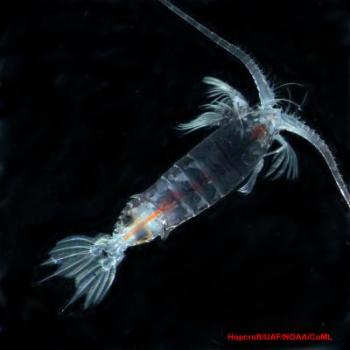
This is a female Gaussia princeps, a bathypelagic copepod.  (Hopcroft/UAF/CMarZ hopcroft@ims.uaf.edu)
This is a female Gaussia princeps, a bathypelagic copepod. (Hopcroft/UAF/CMarZ hopcroft@ims.uaf.edu)
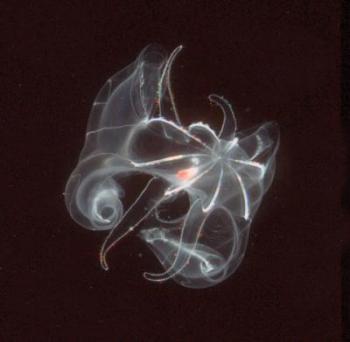
Named after Dudley Foster, pilot of the U.S. Navy submersible Alvin, who collected the first specimen, Bathocyroe fosteri (order Lobata) is common in midwater plankton collections. A lobate ctenophore found at intermediate depths in all the oceans, this species is very common near the Mid-Atlantic Ridge. (MAR-ECO/Marsh Youngblut)