Enjoy this selection of ghostly nebulae and spooky supernovae to celebrate Halloween.
Unfortunately we could not include any images of the mysterious and invisible dark matter that is believed to comprise more than 70 percent of our universe.
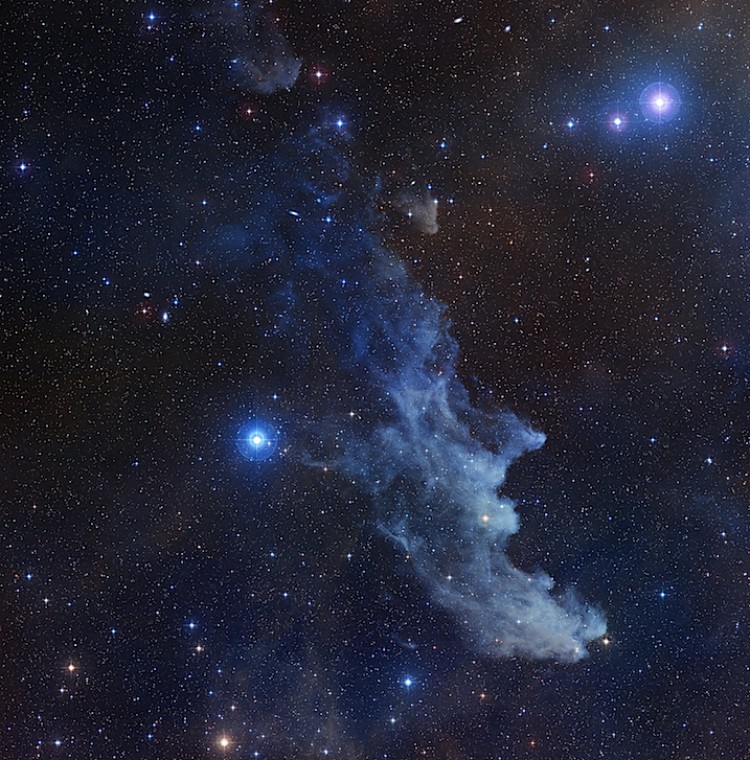
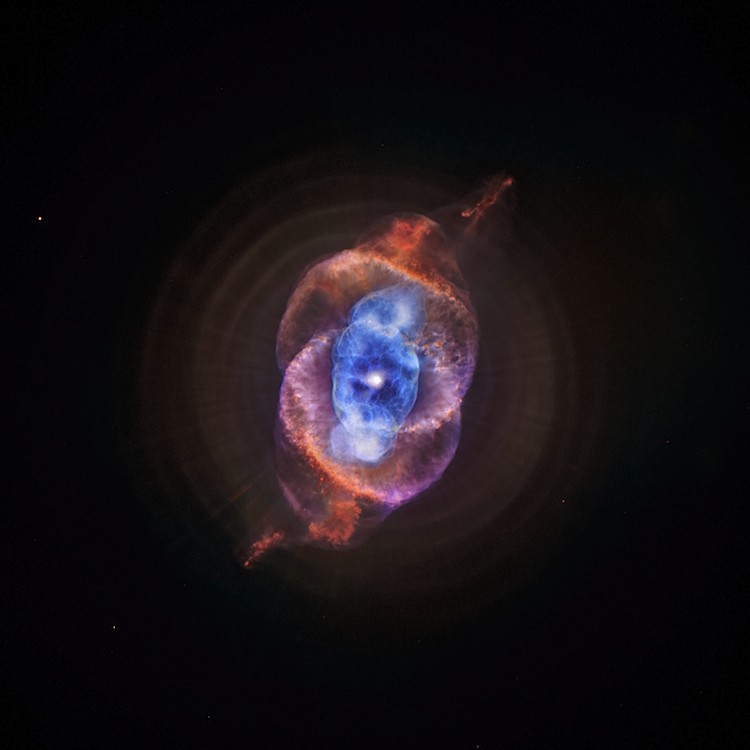
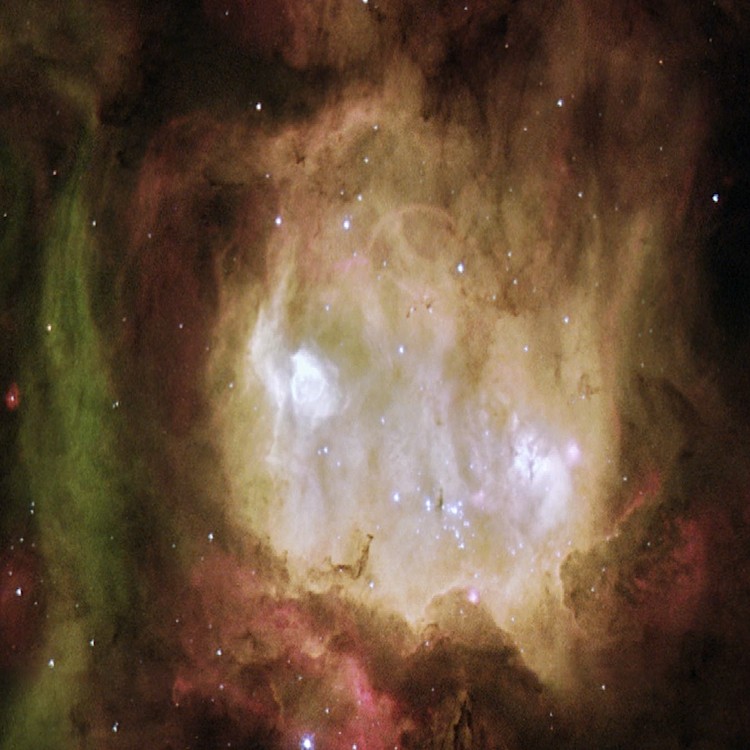
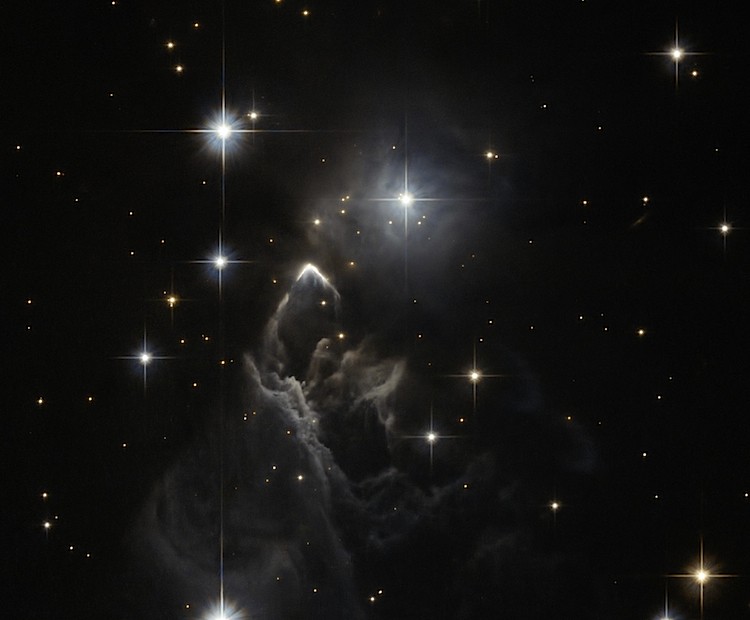
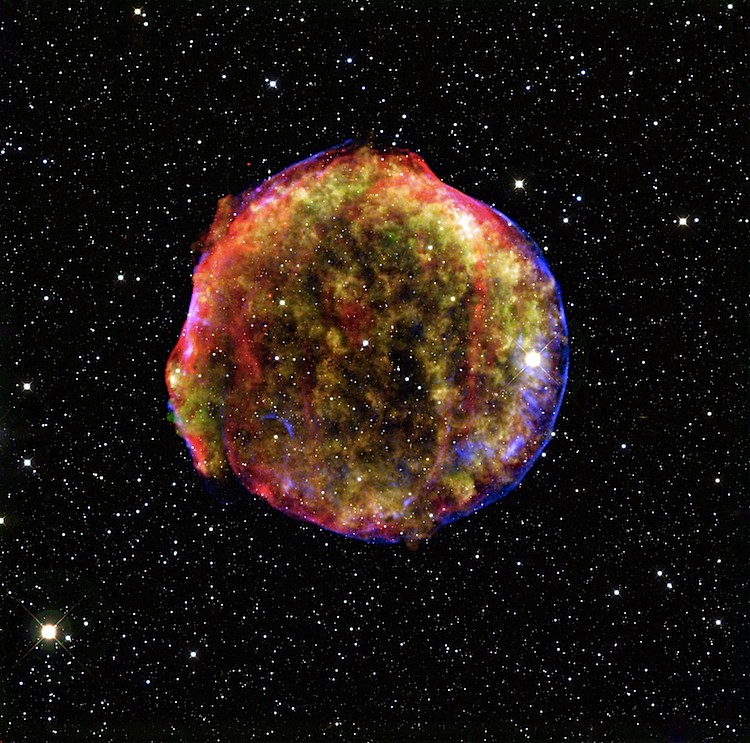
WITCH HEAD NEBULA: This reflection nebula in the constellation Orion is associated with the star Rigel, and looks like a fairytale crone. Officially known as IC 2118, the blue color is caused by its star, and dust grains, which reflect blue light more efficiently than red. (NASA/STScI Digitized Sky Survey/Noel Carboni)CAT'S EYE NEBULA: NGC 6543 is a planetary nebula undergoing a phase of stellar evolution that our sun may experience in several billion years. Material shed by the star is flying away at about 4 million miles per hour, and the star is expected to collapse into a white dwarf star in a few million years. (X-ray: NASA/CXC/SAO; Optical: NASA/STScI)GHOST HEAD NEBULA: NGC 2080 is a star-forming region in the Large Magellanic Cloud, a satellite galaxy of the Milky Way. It spans about 50 light-years. (NASA, ESA, Mohammad Heydari-Malayeri (Observatoire de Paris) et al.)GHOST-LIKE NEBULA: IRAS 05437+2502 is a small, faint nebula near the constellation of the Taurus. It has a bright upside-down V that along its upper edge that looks like a boomerang. There is a small star-forming region filled with dark dust. (NASA, ESA, Hubble, R. Sahai (JPL))ZOMBIE STAR: Originally seen in 1752 A.D., Tycho's Supernova or SN 1572 is in the constellation Cassiopeia. The explosion left a hot bright cloud of expanding debris (green and yellow). The blast's outer shock wave can be seen as a blue sphere of ultra-energetic electrons. Newly synthesized dust in the ejected material and heated pre-existing dust from the area around the supernova radiate at infrared wavelengths of 24 microns (red). (MPIA/NASA/Calar Alto Observatory)








 Friends Read Free
Copy
Facebook
Tweet
Friends Read Free
Copy
Facebook
Tweet