
The Department of Health and Human Services (HHS) has uncovered problems with a federally funded organization that procures organs, including the authorization of organ donation from patients still showing signs of life, the agency said on July 21.
The Health Resources and Services Administration (HSRA), part of HHS, reviewed 351 cases where organ donation was authorized—but ultimately not completed.
In nearly a third of those cases, patients showed neurological signs such as pain or had no cardiac time of death marked down when procurement was started.
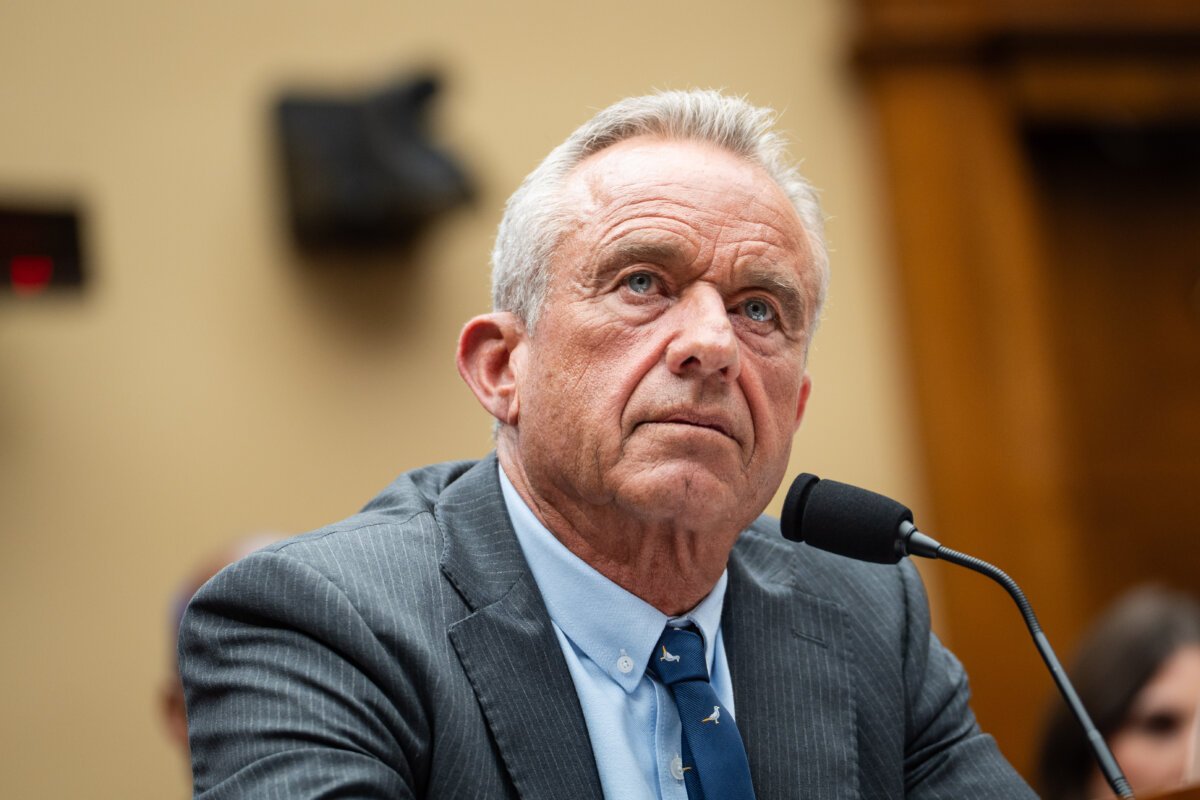
“Our findings show that hospitals allowed the organ procurement process to begin when patients showed signs of life, and this is horrifying,” Health Secretary Robert F. Kennedy Jr. said in the statement.
The probe also showed that staffers with a federally funded organization, which procures organs in Kentucky, southwest Ohio, and part of West Virginia, approached potential donors’ family members who they believed were under the influence of drugs or lacked the capacity to understand decisions to donate.
The investigated organization’s name was identified in previously released documents as Network for Hope.
The Organ Procurement and Transplantation Network, a public-private partnership that includes organ procurement organizations and transplant hospitals, probed Network for Hope over potentially causing harm to an injured patient during the previous administration, but closed the case without action.
A whistleblower who formerly worked for Kentucky Organ Donor Affiliates said that in 2021, a patient was pronounced brain dead and pursued as an organ donor by the organization despite that the patient showed signs of life multiple times, according to a letter made public by lawmakers in 2024.
The surgeon refused to operate because she felt it would be inhumane. The patient was ultimately discharged and is still alive today.
Based on the results of the probe, the government has directed the network to reopen the case. Similar cases have been uncovered and are being reviewed.
Kennedy directed the network to develop plans to address the issues raised in the probe, including developing minimum neurologic assessments and proposing policies that will improve how potential donors are handled.
Barry Massa, CEO of Network for Hope, told news outlets in a statement that it “looks forward to working collaboratively with HHS and HRSA and encourages the development of policies that support the betterment of the organ transplant system as a whole.”
Dr. Raymond Lynch, the chief of the Organ Transplant Branch of the Health Resources and Services Administration, said the primary problem identified in the investigation of Kentucky Organ Donor Affiliates was that the organization failed to reevaluate initial neurological exams of potential donors when they showed signs of improvement.
Other issues included not coordinating with medical teams, poor communication with families of potential donors, and misclassifying deaths.
“I apologize for care delivered to your constituents in Kentucky,” Lynch told Rep. Brett Guthrie (R-Ky.) during a hearing held by the House Energy and Commerce Subcommittee on Oversight and Investigations. “It’s unacceptable, and it’s something we’re not going to let stand.”
“This is fixable,” Lynch said. “This is something that can be done safely.”
Kennedy’s update comes after the House of Representatives approved a measure in May that would punish people involved with forced organ harvesting in China, where the Chinese Communist Party has engaged in state-sanctioned organ harvesting targeting prisoners of conscience, primarily Falun Gong practitioners, according to findings from the China Tribunal.
In 2022, a study published in the American Journal of Transplantation found that hundreds of medical professionals in China were involved in taking organs from people without establishing their brain death.
—Zachary Steiber; Stacy Robinson
BOOKMARKS
The Department of Education and the White House Office of Management and Budget (OMB) are facing a lawsuit over their decision to withhold $6.8 billion in federal funds for education programs like after-school care and English language classes. The government is holding the funds while it reviews the programs to ensure the money is being spent properly, according to a statement made last month.
Donald Trump said on Tuesday that his administration is considering eliminating the capital gains tax on houses, a move that mirrors legislation introduced by Rep. Marjorie Taylor Greene (R-Ga.) earlier this month. “Homeowners who have lived in their homes for decades, especially seniors in places where values have surged, shouldn’t be forced to stay put because of an IRS penalty,” Greene said in a statement announcing the No Tax on Home Sales Act.
Trump has already said he will not fire Federal Reserve Chairman Jerome Powell before his term expires next May, but speculation about his successor is already building. Check out Andrew Moran’s latest report for a peek at possible contenders.
U.S. Treasury Secretary Scott Bessent is calling for a review of the Federal Reserve’s non-monetary operations, such as the decision to spend $2.5 billion to renovate its headquarters. Bessent said the organization’s monetary policies should not be interfered with, but that it has been “threatened by persistent mandate creep into areas beyond its core mission, provoking justifiable criticism” of its recent decisions.
Deputy Attorney General Todd Blanche wants to interview Ghislaine Maxwell, associate of convicted sex offender Jeffrey Epstein. Maxwell, currently serving a 20-year sentence for her role in Epstein’s operation, may provide new details about the situation—if she is willing to speak.
—Stacy Robinson
 Friends Read Free
Copy
Facebook
Tweet
Friends Read Free
Copy
Facebook
Tweet