

Advertorial
Ask most patients what frustrates them about American healthcare, and the complaints tend to sound familiar: a ten-minute visit after an hour in the waiting room, a bill that arrives weeks later with a number nobody can quite explain, a referral that takes a month to schedule. Victor Mellor says he built We The People Health & Wellness Center to be the opposite of all three.
The Center, a membership-based health and wellness facility Mellor founded in Venice, Florida, runs on a model that is still unusual in American medicine: patients pay a predictable monthly fee directly to the practice rather than routing every visit through an insurance claim. In exchange, members get ongoing access to a provider, an annual wellness evaluation, and a menu of additional services — an arrangement the Center describes as a “freedom-based, patient-centered medical home.”
In practice, that philosophy shows up in things as simple as appointment length and as fundamental as which path of care a patient is offered. The Center’s model blends conventional primary care with a range of wellness and integrative services, and its providers describe their role as laying out the available options — conventional, integrative, or a combination — and letting the patient and provider decide together, rather than having a treatment path dictated by what an insurance plan will reimburse.
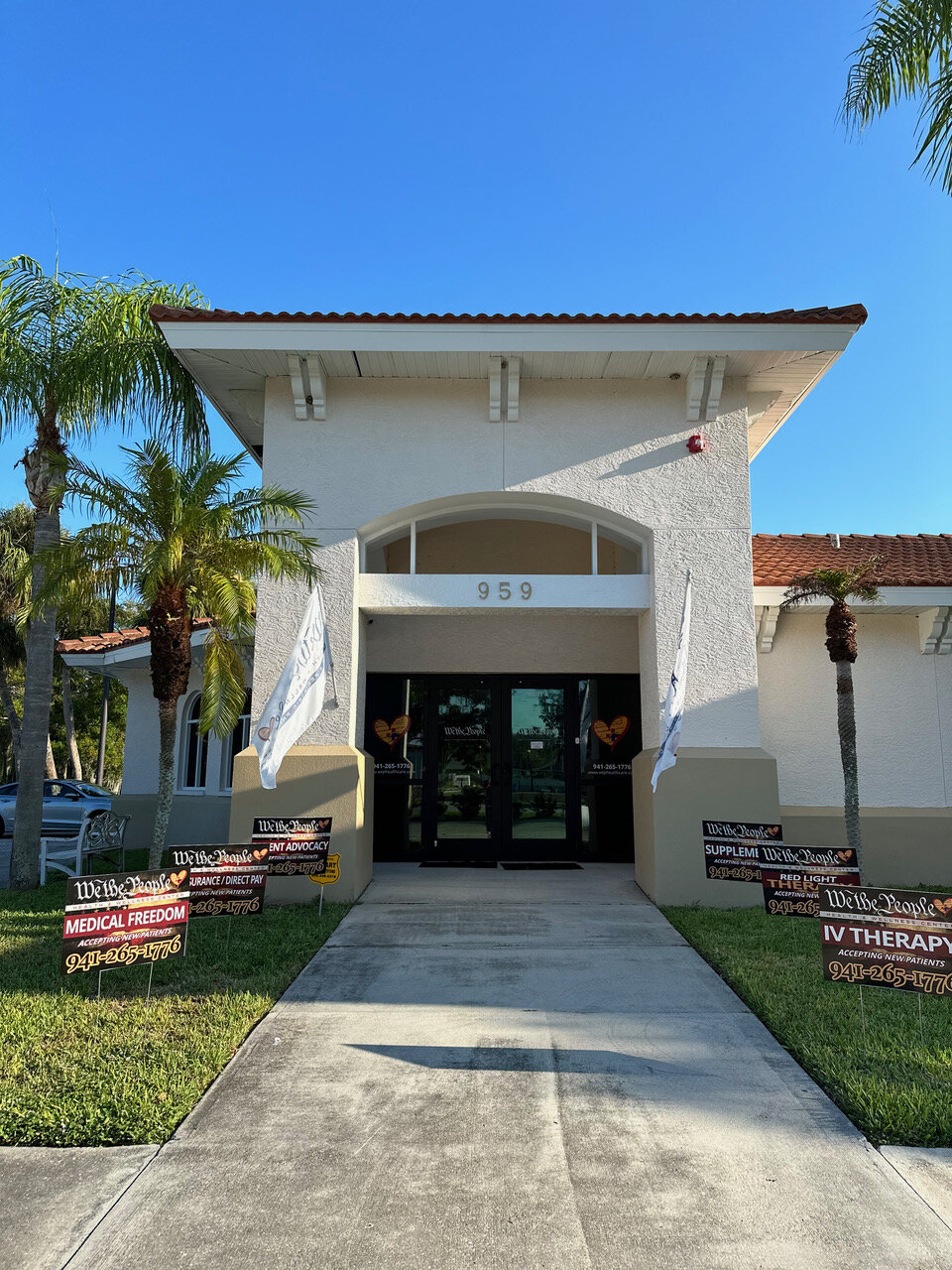 We The People Health & Wellness Center in Venice, Florida.
Mellor calls the idea behind that model health freedom: the right of patients and families to make informed medical decisions for themselves, to seek second opinions and hear from conventional, integrative, and emerging medical perspectives alike, to keep the doctor-patient relationship protected from outside interference, and to ask hard questions of the medical establishment without being shut down for it.
“Come listen. Ask questions. Challenge ideas. That is how a free society works,” says Mellor of the idea. He describes the broader goal as putting healthcare money “back into the hands of the people instead of the big bureaucracies and pharmaceutical companies.”
That idea, Mellor says, didn’t start as a talking point. He traces it to the years he’s spent building the Center around exactly that principle — patients making their own decisions, and providers spending time with people instead of paperwork.
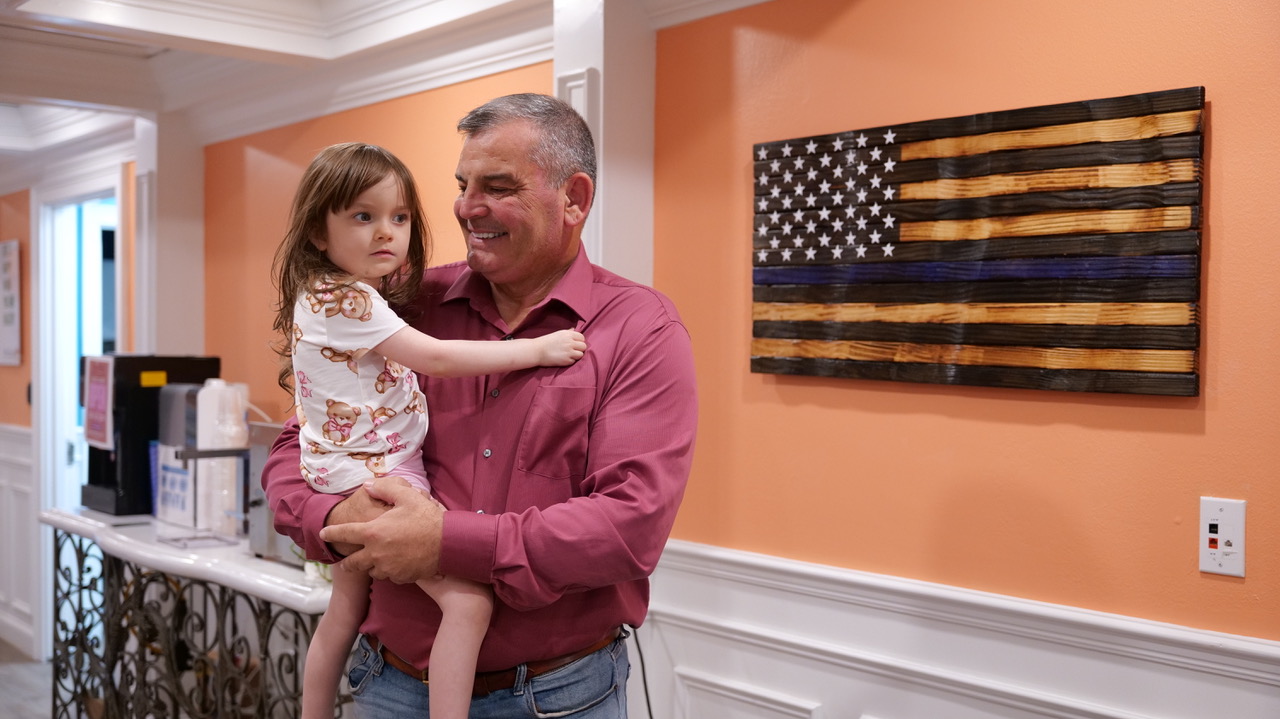 Victor Mellor with Sophia, a child living with autism, before her complimentary platelet-rich plasma (PRP) treatment at We The People Health & Wellness Center in Venice, Florida. Mellor made the treatment available at no cost to her family.
GAHA’s platform — reflected in the Great American Healthcare Plan (H.R. 8324), introduced in the U.S. House in April by Rep. Eric Burlison (R-Mo.) — calls for direct patient control of healthcare spending, real price transparency across the medical system, a greater emphasis on prevention over expensive late-stage treatment, and more flexible “Healthier Spending Accounts” that would let people use pre-tax dollars across a broader range of approved medical and wellness services than a typical health savings account allows today.
The distinction matters, and it mirrors what the Center already does on a small scale. Current health savings accounts are generally limited to a narrower list of qualified medical expenses and are only available to people enrolled in specific high-deductible insurance plans. The Healthier Spending Account concept GAHA is promoting would widen both ends of that equation — loosening who can fund an account and broadening the list of preventive, wellness, and integrative services people could pay for with it, rather than restricting the money to treatment after someone is already sick.
GAHA describes itself as a nonpartisan organization rather than a campaign committee, and its polling and policy materials are presented as public education rather than direct campaign advocacy. Mellor’s founding role in the coalition predates his congressional campaign, even as the two now share a common argument about who should control healthcare decisions.
For Mellor, the coalition’s arguments aren’t abstract. He points to the Center’s own membership model — patients paying a predictable monthly fee directly to their provider rather than filing every visit through an insurance claim — as a small, working example of what GAHA is proposing on a national scale.
That argument now has some national data behind it. GAHA commissioned McLaughlin & Associates to survey 1,600 likely voters nationwide in January 2026; the resulting memorandum, which reports a margin of error of plus or minus 2.5 percentage points at a 95 percent confidence level, found broad agreement across party lines. Seventy-nine percent of respondents said the healthcare system faces a crisis or major problems. Eighty-five percent called real price and treatment-option transparency extremely or very important. And 73 percent supported the kind of Healthier Spending Account model GAHA is promoting — including majorities of Republicans, Democrats, and independents alike.
None of that proves a policy will work. Attitudes aren’t outcomes, and a Healthier Spending Account’s real effect on costs or health would depend on how it’s designed, funded, and regulated — a point GAHA itself acknowledges. What the numbers do suggest is that the appetite for patients controlling more of their own healthcare decisions and dollars is broad and not confined to one party — an argument Mellor says the Center has already been demonstrating in practice, one membership at a time.
Mellor is careful to draw a line between the two roles he now holds. His founding membership in GAHA is a policy and advocacy commitment, distinct from his day-to-day involvement owning the Center, and distinct again from his congressional campaign — though he doesn’t pretend the three aren’t related.
This year, that same argument became part of something bigger. Mellor is now running for Rhode Island’s Second Congressional District seat in the U.S. House of Representatives, where health freedom has become a central plank of his platform — a campaign explored more directly in the final installment of this series.
The through-line is action. We The People Health & Wellness Center is the model Mellor built, GAHA is the national reform effort he helped launch, and his campaign is the next arena in which he hopes to advance those same principles. His healthcare platform was not created for an election. It grew from years of putting his own resources behind a simple belief: patients deserve greater control over their care, providers deserve greater freedom to practice medicine, and meaningful reform must do more than promise change. It must build it.
 Friends Read Free
Copy
Facebook
Tweet
Friends Read Free
Copy
Facebook
Tweet