
Fifteen-year-old Trent had ascended to the highest level of competitive youth baseball, practicing daily and traveling throughout Texas, Florida, and California for tournaments.
The outfielder made the varsity team as a freshman, a rarity in the Lone Star state’s ultracompetitive high school landscape.
Trent—who asked that his last name not be used for this story—was big and mature for his age and unintimidated by older players. He had a great first scholastic season with plenty of home runs, yet fell out of love with the game years before he was on any college coach’s radar, his father said.
“He was burned out,” his father told The Epoch Times. “He wanted to hang out with friends, play video games—all that stuff a teenager normally wants to do.
“I blame myself for not putting him in other sports, just focusing on baseball.”
The pressure on children and parents to focus on one sport has never been higher, according to policy experts and federal lawmakers who are concerned about the consolidation of the youth sports sector.
Industry analysts predict that 2026 will see ample opportunities for private equity firms to buy up more leagues, facilities, equipment manufacturers, and software companies that produce tools for measuring performance and for college recruitment.
Meanwhile, supporters of waning community-based, recreation-level sports organizations say they’ve been shoved aside by expensive pay-to-play businesses. They plan to put forth policies, legislation, and, potentially, antitrust lawsuits to reverse the trend at a time when many adolescents are quitting organized sports.
The $40 Billion Machine
The $40 billion competitive youth sports industry is now bigger than the NFL and all of college athletics combined, House Education and the Workforce committee members learned during a December 2025 hearing. Witnesses outlined the costs of travel sports clubs, the shift away from recreational-level participation, and unintended consequences such as financial debt, burnout, and injuries from overtraining.
Rep. Kevin Kiley (R-Calif.), who initiated that hearing, said 70 percent of children quit organized sports by age 13, while the parents of those who do stick with it are increasingly lured into competitive or “elite” programs. In 2024, the average American sports family spent more than $1,000 on their child’s primary sport, a 46 percent increase from 2019, Kiley said.
Community-based recreation programs, which are typically run by volunteers or local governments and require minimal fees, were decimated during the Great Recession of 2008. Money was tight for millions of American families, and municipalities slashed parks and recreation funding.
In the decades that followed, for-profit, pay-to-play entities filled the void and have increasingly consolidated. Now it’s difficult for small sports programs to compete without the facilities, coaches, and players needed to sustain affordable local leagues, Katherine Van Dyck, a former Federal Trade Commission antitrust litigator, said during the hearing.
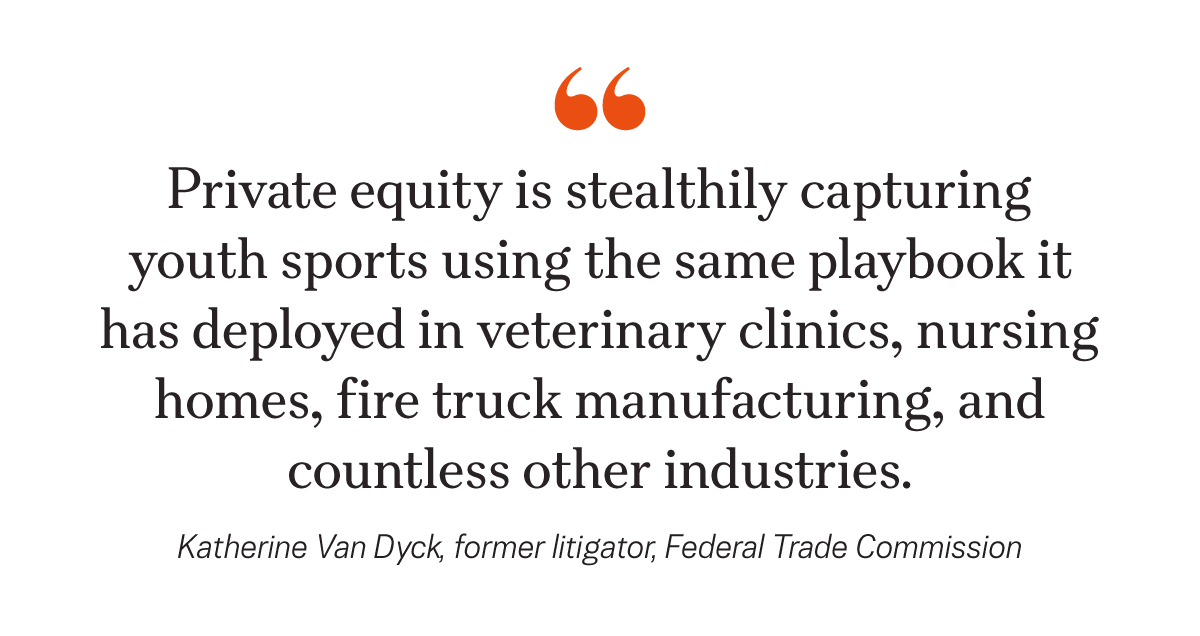
“Private equity is stealthily capturing youth sports using the same playbook it has deployed in veterinary clinics, nursing homes, fire truck manufacturing, and countless other industries,” she said.
An April 2025 white paper from Red Chalk Group, a consulting company that serves Fortune 500 companies and private equity firms, provides an example: The 3STEP Sports company, backed by Juggernaut Capital Partners, completed 75 acquisitions since 2016 that affected eight different sports, 2,500 programs, and 1.5 million participants.
Chris Russo, CEO of Fifth Generation Sports, an advisory firm to the sports industry, wrote in the Sportico sports business publication that “youth sports was 2025’s breakout [mergers and acquisitions] theme” as American families prioritize team fees, private coaching, and tournament travel over “many other expenses.”
This is, in part, due to the appeal of college athletic scholarships and NCAA name, image, and likeness (NIL) licensing revenue opportunities, according to Russo.
“While only a small percentage of athletes will ever play in college, a much larger percentage of families believe they might, or at a minimum, believe their child has a shot at scholarship or NIL-related opportunities,” Russo wrote in the Dec. 19, 2025, column.
“This belief system—whether realistic or aspirational—has driven even greater investment in club teams and travel tournaments, showcases, personal training, recruiting platforms, and video analysis.”
Filling the Void
Black Bear Sports Group was specifically criticized during the House committee hearing for acquiring ice rinks, leagues, and team ranking systems across the nation and requiring families to purchase expensive live streaming services to watch their child’s games.
The company website, however, notes that Black Bear has maintained community ice rinks and leagues for all levels, including youth and adult recreation, which would have otherwise shut down because of financial and management problems.
A company spokesman told The Epoch Times that Black Bear is owned by a small number of hockey enthusiasts, not a private equity firm. Its 44 facilities are located within a 30-minute drive of other ice rinks, offering families a choice at similar prices, always noted upfront, and not with the intent of putting competitors out of business.
“Every year, we put thousands of kids on the ice for little to no cost, and we’ve saved struggling and closed ice rinks across the Mid-Atlantic, Northeast, and Midwest, preserving community cornerstones,” the spokesperson said. “Our focus is participation, development, and community.”
Specialization
Dean Foti said he enjoyed multiple sports as a teenager before concentrating on soccer; playing and then coaching at Syracuse University.
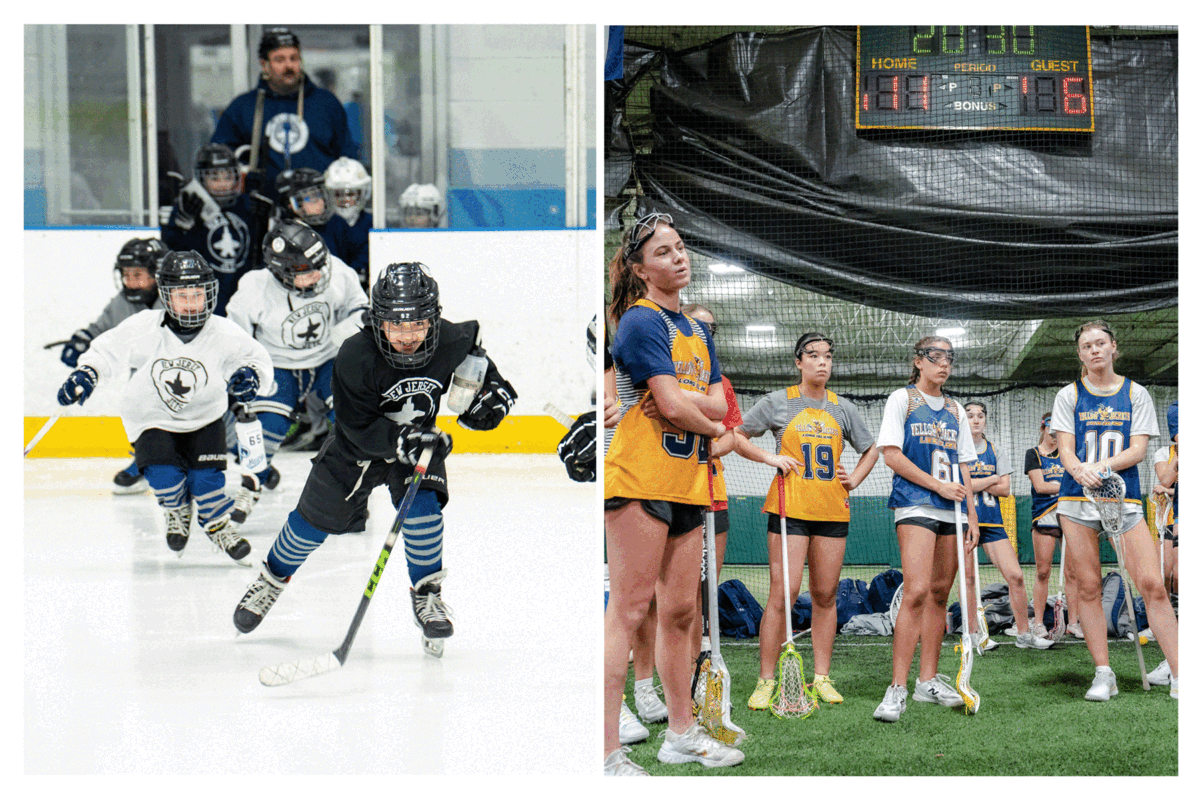
Now, as the technical director of a nonprofit organization that oversees 250 soccer clubs and dozens of leagues throughout a portion of upstate New York, Foti said he is witnessing the end of the three-sport athlete as children as young as age 7 begin specializing in a single sport. It’s getting to the point that parents fear their child won’t be able to join a travel team if they don’t join as soon as possible, skipping community-level programs that families have traditionally supported across multiple sports.
“This isn’t a rec program,” Foti told The Epoch Times. “It’s a futures program.”
Although many young athletes enjoy and benefit from high-level programs that adhere to best practices for youth player development, there are plenty of advantages to playing multiple sports, Foti said.
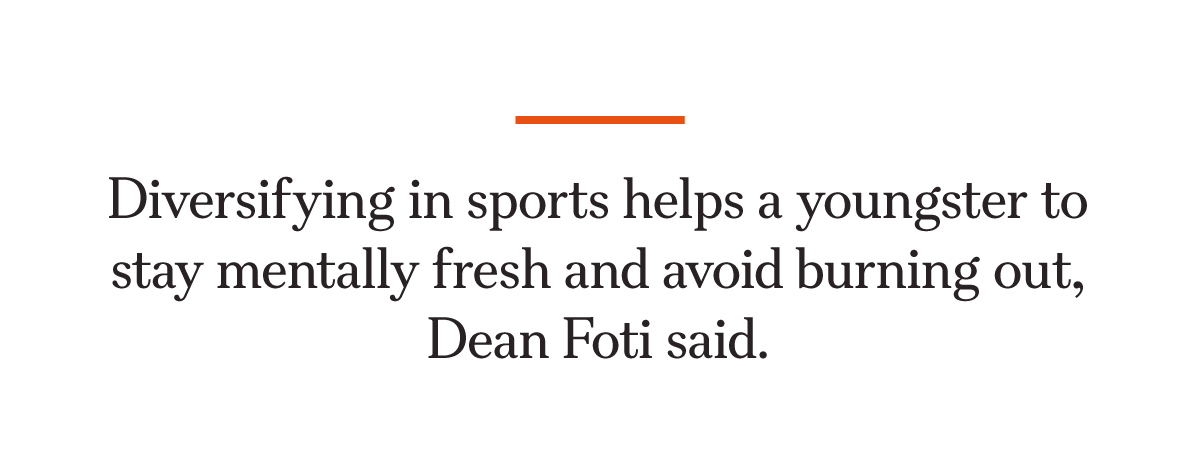
A highly skilled scorer in one sport might take on the role of a defensive specialist in another and gain a stronger work ethic. Multi-sport athletes also develop physically from cross-training in different environments and socially by interacting with different groups of peers. Diversifying helps a youngster to stay mentally fresh and avoid burning out.
“You’re excited when the season comes around again,” he said. “Well-rounded players develop good experiences in athletics.”
Injuries, Physical and Psychological
Dr. Mark Rieger, founding partner at the Pediatric Orthopedic Center in New Jersey, has witnessed the physical toll of specializing in one sport at a young age.
One of the most common overuse injuries, he told The Epoch Times, is when the growth plate in an athlete’s shoulder begins to separate because of repeated upper arm movement over the head, usually while playing baseball, swimming, and volleyball. Elbow injuries are frequent among baseball pitchers between the ages of 9 and 14. Young gymnasts often endure wrist injuries, and scholastic dancers and hockey players commonly develop hip problems. Lower spine stress fractures afflict athletes across several sports.
Anxiety—worrying about making mistakes or letting someone down—is also far too common, Rieger said.
“One of the most troubling patterns I see is when a child’s entire identity becomes tied to their sport. When injuries occur, and they often do, these children may feel as though they have lost who they are,” he said.
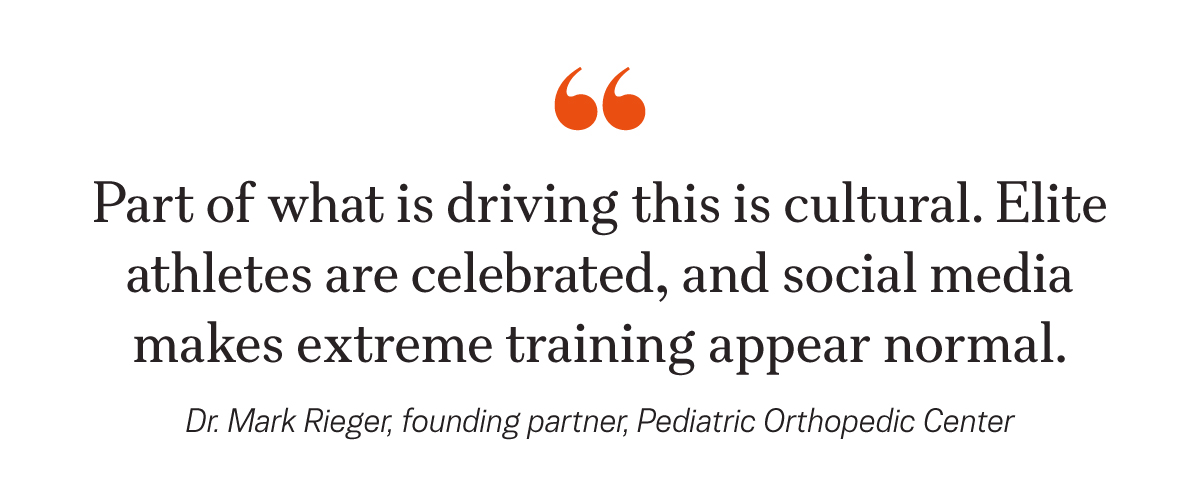
“Part of what is driving this is cultural. Elite athletes are celebrated, and social media makes extreme training appear normal.
“There is also a widespread belief that early specialization is the key to success.”
Rieger said he believes that the opposite is true. “The healthiest athletes are not the ones who train the most or specialize the earliest,” he said. “They are the ones who stay healthy, happy, and engaged over time.”
For the Love of the Game
Nick Torre played several sports growing up in Long Island but ultimately stuck with lacrosse. The 53-year-old father of three still competes on men’s teams.
Growing up, his daughters watched their father’s tournaments each summer in Lake Placid, New York, and then joined teammates, opponents, and other families for post-game meals and celebrations. They say that shaped their fondness for the game early on.
Torre’s daughters Jamie, Casey, and Dani all participated in multiple sports into their teens but then gravitated to lacrosse and played on nationally ranked club teams. Jamie, who was recognized for her consistent work ethic in games and practices, joined the U.S. Marine Corps. High schoolers Casey and Dani have been recruited to attend and play lacrosse at the State University of New York at Stony Brook after they graduate.
Torre coached and held leadership positions in both recreational- and travel-level lacrosse. The culture of the sport has changed dramatically since he was a child, he said, and not necessarily for the better.
Many parents put their kids in travel clubs for two or three sports and micromanage schedules, he said. Some families specialize in lacrosse to the point at which “it’s a job.”
Too many parents assume that their children will earn an athletic scholarship, Torre told The Epoch Times. He said they should instead have the goal of finding a college that’s a good fit, where their children can play a sport, rather than sending them to college in order to play a sport.
“Kids don’t just grab their sticks and go to the fields on their own anymore to play pick-up,” Torre said, noting that they could learn more from doing that than from playing organized sports. “You learn the love of the game.”
Many young athletes love a sport so much that they want to focus on it exclusively, “but that should be their choice, not the parents’,” Torre said.
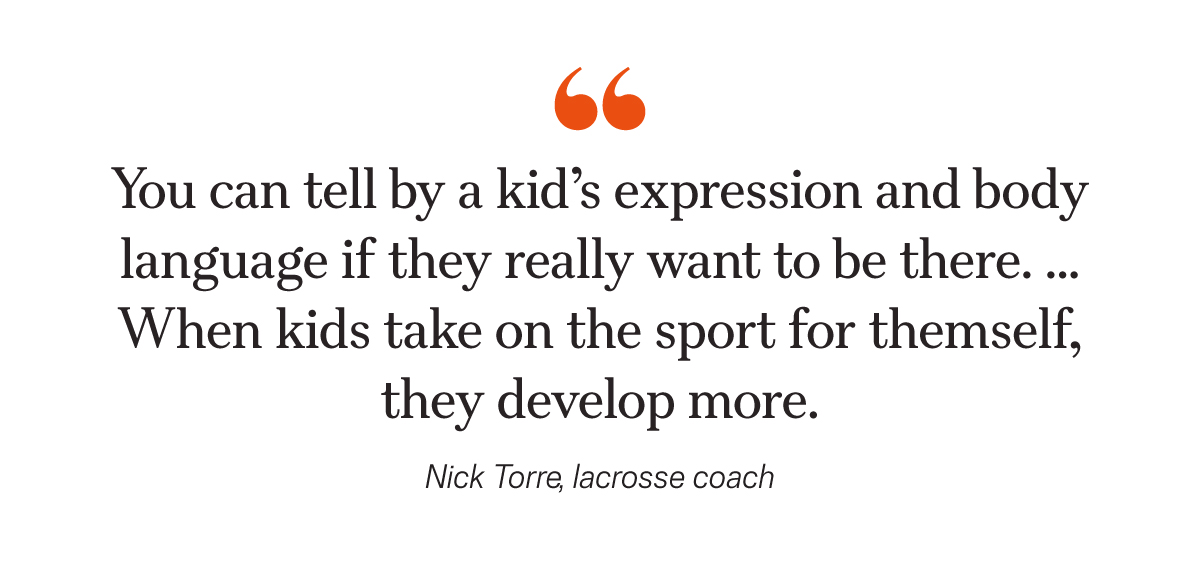
“You can tell by a kid’s expression and body language if they really want to be there,” he said. “They need to have their own voice. When kids take on the sport for themself, they develop more.”
Policy Suggestions
While lawmakers work to get more kids involved in physical activity, youth sports experts have some ideas for reforming youth sports.
At the December 2025 hearing, Tom Farrey, founder and executive director of the Aspen Institute’s Sports & Society Program, suggested using some of the federal tax revenues collected on sports betting for “closing gaps in youth sports” and funding local nonprofit sports programs.
Van Dyck called on Congress to modernize antitrust laws to take on the “vertical integration and serial acquisitions” that drive the monopolization of the youth pay-to-play sports industry.
Sports is the best place to teach social and emotional learning skills, said Steve Boyle of 2-4-1 Care, which provides athletic opportunities to children in low-income schools.
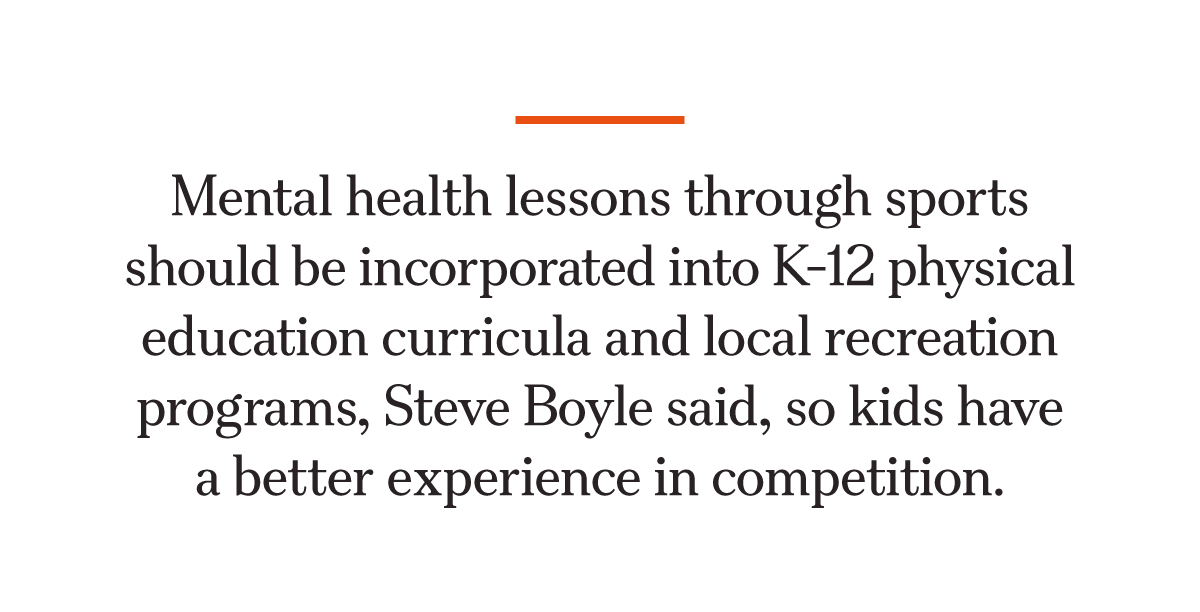
Mental health lessons through sports should be incorporated into K–12 physical education curricula and local recreation programs, Boyle said, so that youths have a better experience in competition.
“If you can calm yourself down when you’re in an anxious state, you’re a better athlete. If you can calm your anger down when you’re hypercompetitive, you’re a better athlete,” he said.
“Sports is the best opportunity to [teach those skills], and we miss out on so many kids if we don’t give them access to sports.”
John O’Sullivan, CEO of the Changing the Game Project, which promotes recreation-level athletics, challenges parents to “begin at the end” and ask themselves what they want out of sports.
“I don’t think anyone ever says I want a child who’s beat up, injured, burnt out, whatever,” he said at the hearing. “They want a healthy, functioning, high-character human being.”
 Friends Read Free
Copy
Facebook
Tweet
Friends Read Free
Copy
Facebook
Tweet