News Analysis
“California’s act does not adjust the boundaries of an existing category of unprotected speech to ensure that a definition designed for adults is not uncritically applied to children,” wrote Justice Antonin Scalia in the majority opinion. “The state wishes to create a wholly new category of content-based regulation that is permissible only for speech directed at children. That is unprecedented and mistaken.”
The decision marks the latest development in an ongoing debate on children’s exposure to video game violence, but it’s not likely to end the discussion. Lower courts had previously arrived at the same conclusion the highest court reached last week. Previously 11 states filed an amicus brief in support of the California law and the American Psychological Association, American Psychiatric Association, and the American Academy of Pediatrics conclude that an increase in aggressive behavior can be linked to violent video games.
“Unfortunately, the majority of the Supreme Court once again put the interests of corporate America before the interests of our children,” wrote California state senator and child psychologist Leland Yee in a statement.
Yee, who wrote the recently rejected California law which fined merchants $1,000 for each violent game sold to a minor, believes the high court’s decision will allow the video game industry to “continue to make billions of dollars at the expense of our kids’ mental health and the safety of our community,” and “put their profit margins over the rights of parents and the well being of children.”
One particularly disputed issue is the concern that exposure to these games leads to violent tendencies. A number of studies exploring the connection of virtual violence to its real-world counterpart were submitted to the Supreme Court. Although many reports identified a valid connection, others did not. The collection of studies prompted Justice Scalia to write that research does “not prove that such exposure causes minors to act aggressively.”
Another critical aspect in determining the case was found was in the definitions of the California act. The law targeted games which feature maiming, killing, dismembering, torturing, or sexually assaulting the image of a human being, but Justice Scalia found this to be an attempt to “shoehorn speech about violence into obscenity,” adding that “violence is not part of the obscenity that the Constitution permits to be regulated.”
“California’s argument would fare better if there were a longstanding tradition in this country of specially restricting children’s access to depictions of violence, but there is none,” wrote Justice Scalia, citing the violence in books such as Grimm’s Fairy Tales, Homer’s Odysseus, and others. However, not everyone agreed with this interpretation.
“What sense does it make to forbid selling to a 13-year-old boy a magazine with an image of a nude woman, while protecting a sale to that 13-year-old of an interactive video game in which he actively, but virtually, binds and gags the woman, then tortures and kills her?” countered Justice Stephen Breyer in his dissenting opinion. “What kind of First Amendment would permit the government to protect children by restricting sales of that extremely violent video game only when the woman—bound, gagged, tortured, and killed—is also topless?”
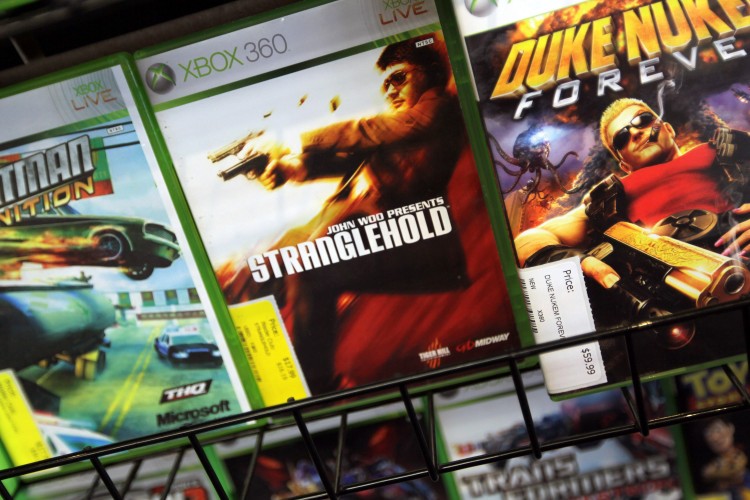
The high court’s decision has been cause for celebration for an industry that’s increasingly gory content has been under fire for years from parents and legislators. Now that this form of entertainment enjoys First Amendment protection, the only law that stands between violent games and children is that of parents.
 Friends Read Free
Copy
Facebook
Tweet
Friends Read Free
Copy
Facebook
Tweet