

U.S. Treasury yields, including the benchmark 10-year, came off their session highs on solid investment demand for the benchmark government bond.
The Treasury Department held a $39 billion auction of 10-year bonds on Oct. 7, resulting in a high yield of 5.3 percent, the highest in 26 years.
The sale was strong, with foreign investors—sovereign wealth funds, central banks, and international banks—scooping up more than 80 percent of the auction. This was far higher than the 10-year auction average of around 72 percent.
Direct bidders—institutional and non-institutional U.S. investors—took on a little more than 17 percent of the supply, below the decade average of 18.3 percent. Primary dealers—major banks and hedge funds—purchased fewer than 3 percent of the bonds, far below the 9 percent average.
After the auction results, the primary 10-year yield slid below 5.3 percent. The benchmark yield had traded at 5.35 percent—its highest level in 24 years—before the much anticipated auction.
It also staged a $58 billion auction of 3-year notes on Oct. 6, attracting solid demand, particularly from foreign investors. The 3-year yield closed at 4.932 percent and inched closer to the 5 percent mark midweek.
The Treasury Department will have two other major events this week.
The government has scheduled a $22 billion auction of 30-year bonds on Oct. 8. The 30-year yield climbed above 5.7 percent in the middle of the trading week.
The Treasury will also execute its latest debt buyback operation that day, repurchasing at least $4 billion of bonds maturing in 20 to 30 years.
Washington has pursued an aggressive buyback campaign to pressure long-dated yields, at least doubling its initial schedule of $2 billion.
These actions respond to intensifying selling pressure in the Treasury bond market, with investors fearing persistent inflation pressures from higher energy prices and central banks tightening monetary policy.
The Federal Reserve, for the first time in more than three years, raised its benchmark federal funds rate—a key policy rate that influences a wide array of business and household borrowing costs—at the September Federal Open Market Committee meeting.
While investors had penciled in back-to-back rate hikes at the October policy meeting, traders have pushed back those expectations to December because of a wealth of Goldilocks economic data last week.
With Treasury yields at their highest levels in many years, market watchers fear this could eventually filter through to U.S. stocks as investors take the guaranteed 5 percent return rather than the elevated risk in equities. But some are not entirely sure these rates are attractive enough to bolster demand in today’s climate.
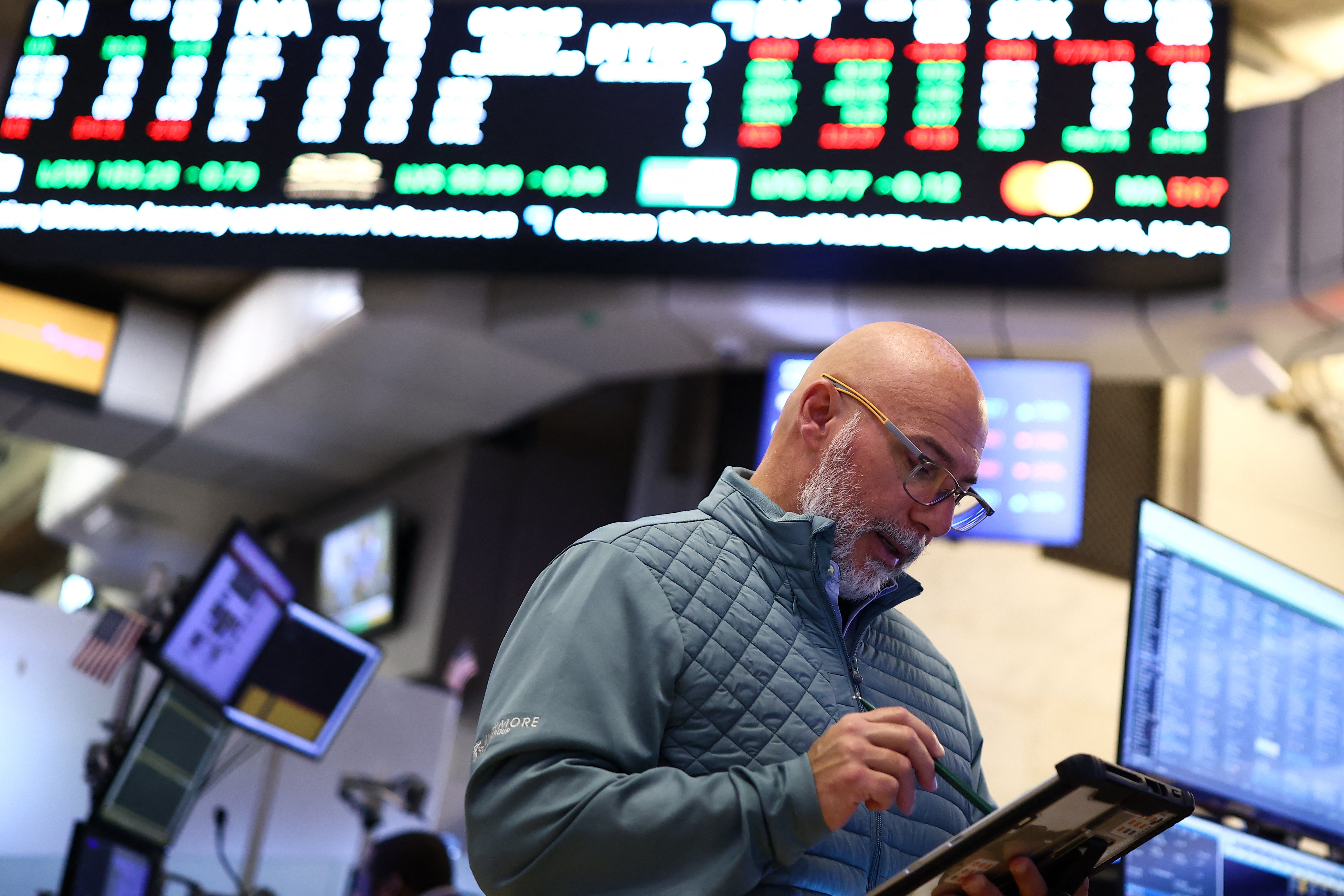 A trader works on the floor of the New York Stock Exchange on Sept. 28, 2026. (Charly Triballeau/AFP via Getty Images)
“Buying companies at around a 5 percent earnings yield while their earnings are growing 14 percent or 15 percent annually is a much better way to get paid while also growing with inflation.”
Meanwhile, yields are pushing higher across global bond markets, from France to Japan.
The UK 30-year government bond yield topped 6 percent. Japanese government bond yields are also elevated, with the 30-year yield at a record high of 4.2 percent. France’s 10-year is eyeing 5 percent, while Italy’s 10-year spiked 18 basis points in a single session to 4.71 percent.
Treasury Secretary Scott Bessent, speaking at an Oval Office event on Oct. 7, attributed the bond market rout in the United States to strong growth.
“We can see that, for the U.S., unlike the other countries, it’s a real rate issue. So it’s because of growth. Growth here is strong,” Bessent told reporters.
Still, global investors have been paying closer attention to U.S. Treasury auctions since the results can influence other bond markets, says Matt Weller, head of market research at StoneX.
“A weak auction can cause Treasury prices to fall and yields to rise,” Weller said in an Oct. 6 research note. “All else equal, higher U.S. yields can make dollar-denominated assets more attractive, potentially supporting the U.S. dollar against currencies such as the euro and Japanese yen.”
The greenback has greatly benefited from the recent surge in bond yields since August.
On Oct. 7, the U.S. Dollar Index—a measure of the buck against a weighted basket of currencies—surged more than 0.5 percent to firmly above 102. Year-to-date, the index is up more than 4 percent.
 Friends Read Free
Copy
Facebook
Tweet
Friends Read Free
Copy
Facebook
Tweet