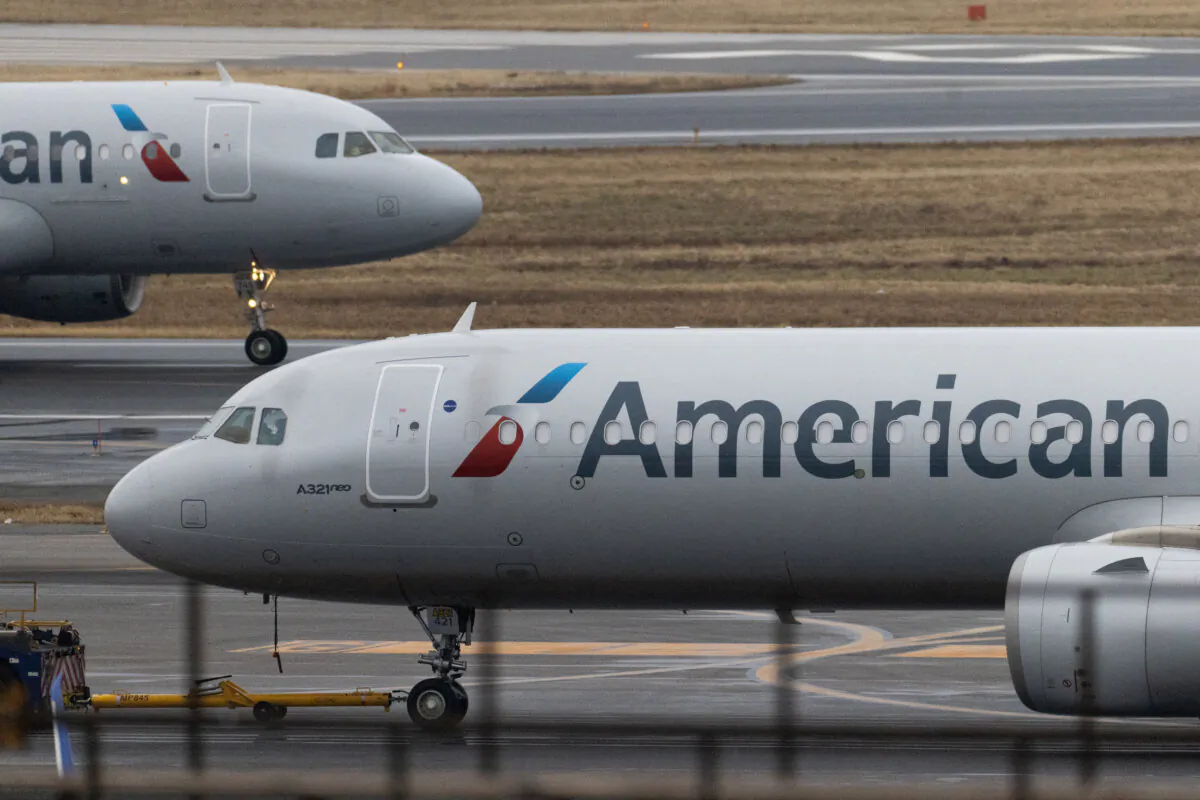

American Airlines is planning to deploy Starlink Wi-Fi in more than 500 of its narrowbody aircraft starting in the first quarter of 2027, the company said in a May 26 statement.
The installations will be done across the airline’s fleet of Airbus aircraft, including the new A321neo and A321XLR deliveries, American said. The company expects Starlink, with thousands of satellites in low Earth orbit, to deliver “multigigabit connectivity” to aircraft via its Aero Terminal, which promises speeds up to 1 Gbps per antenna.
“Starlink’s high speed and low latency make the Wi-Fi more reliable, which matters when customers are trying to load pages, join real-time collaboration tools or stay connected consistently throughout a flight,” American Airlines Chief Customer Officer Heather Garboden said.
Starlink said it has the most advanced satellite constellation in the world, with over 9,000 active satellites deployed across space, according to the company’s 2025 progress report. Starlink operates in more than 155 markets and has over 9 million customers. Starlink said it has already served over 21 million airline passengers and more than 20 million cruise passengers.
According to Starlink, its satellite network has delivered “high-speed, low-latency” internet to over 200,000 flights.
Multiple other airlines operating in the United States have also partnered with Starlink for delivering Wi-Fi internet to their customers.
On Feb. 11, Southwest Airlines announced Starlink services across the company’s network of 11 countries.
On Feb. 2, United Airlines said it had completed installing Starlink on more than 300 planes in under a year and expected further installations on an additional 500 aircraft by the end of this year.
In August, Alaska Airlines announced it had selected Starlink to provide Wi-Fi onboard its jets, with the tech expected to be installed across its entire fleet by 2027.
Currently, many airlines offer Wi-Fi service to passengers. Delta Air Lines offers such service for free on every flight via T-Mobile. Similarly, American Airlines offers Wi-Fi sponsored by AT&T on most domestic flights.
Starlink Performance, Concerns
In a June 2025 report, tech company Ookla assessed airlines for in-flight connectivity, finding that Starlink delivered the best performance compared to its competitors.
“The advantages of its dense LEO constellation compared to the GEOs make SpaceX’s Starlink the clear standout in speeds and latency,” the report said, referring to low-Earth orbit (LEO) and geo-stationary orbit (GEO).
Starlink had a median download speed of 152.37 Mbps. In contrast, the second-placed Hughes Network Systems provided a median download speed of 84.55 Mbps.
There have been concerns about the deployment of thousands of Starlink satellites in space. In a December 2022 report, the Federal Communications Commission (FCC) said that some of the concerns are related to orbital debris mitigation and space safety.
Some have found issues with the environmental impact of Starlink, such as the atmospheric effects from rocket launches and satellites reentering the atmosphere at the end of their missions.
In a Jan. 1 post on X, Michael Nicolls, the vice president for Starlink Engineering at SpaceX, said that Starlink was kicking off a “significant reconfiguration” of its constellation to improve space safety.
The company planned to lower the orbits of roughly 4,400 satellites from around 550 kilometers above Earth to about 480 kilometers. “The number of debris objects and planned satellite constellations is significantly lower below 500 km, reducing the aggregate likelihood of collision,” Nicholls wrote.
Meanwhile, on Jan. 9, the FCC granted SpaceX the authorization to deploy an additional 7,500 satellites to the Starlink constellation.
According to the agency, its decision allows SpaceX to operate satellites across multiple frequencies, supporting both fixed and mobile satellite services.
“President Trump is restoring America’s technology leadership,” FCC Chairman Brendan Carr said. “This FCC authorization is a game-changer for enabling next-generation services.”
By authorizing new and advanced satellites, the FCC “has given SpaceX the green light to deliver unprecedented satellite broadband capabilities, strengthen competition, and help ensure that no community is left behind.”
 Friends Read Free
Copy
Facebook
Tweet
Friends Read Free
Copy
Facebook
Tweet