
An auto industry alliance is urging Congress to permanently ban Chinese connected vehicles and related technology from the U.S. market, citing national security and economic concerns.
The Alliance for Automotive Innovation, which represents manufacturers producing most vehicles sold in the United States, called on congressional leaders Thursday to act before this Congress ends on Jan. 3, 2027.
In a letter to House and Senate leaders, Alliance president and CEO John Bozzella said China’s auto industry has benefited from unfair trade practices, government subsidies, intellectual property theft, and surveillance.
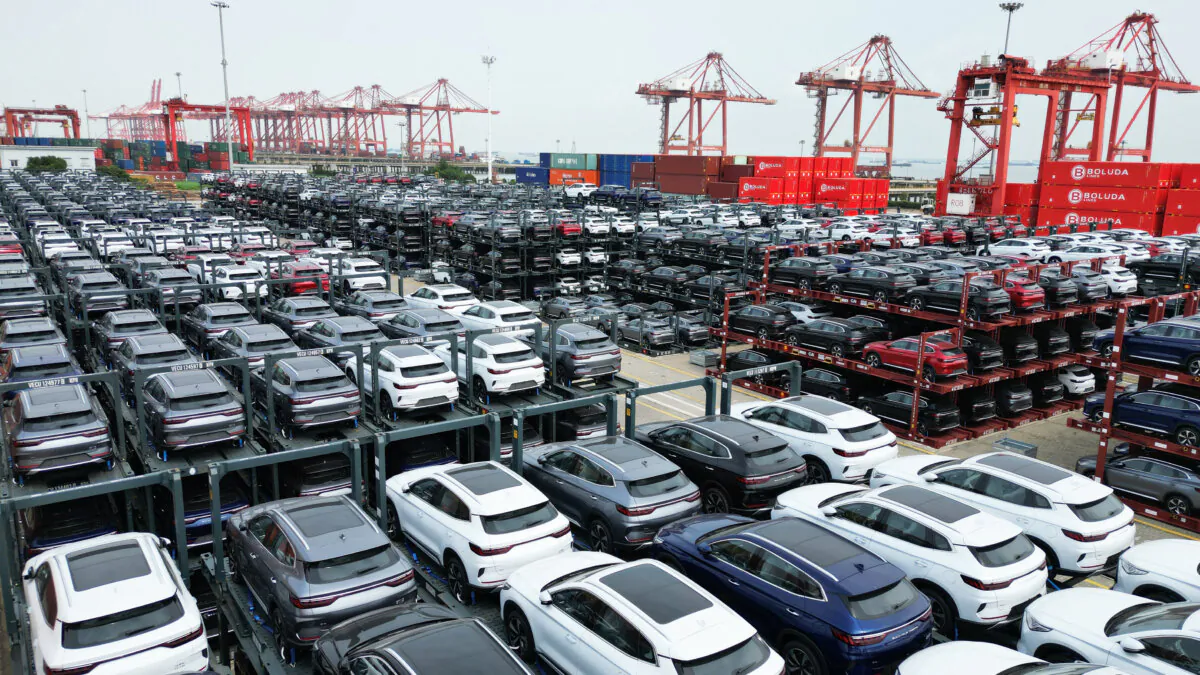
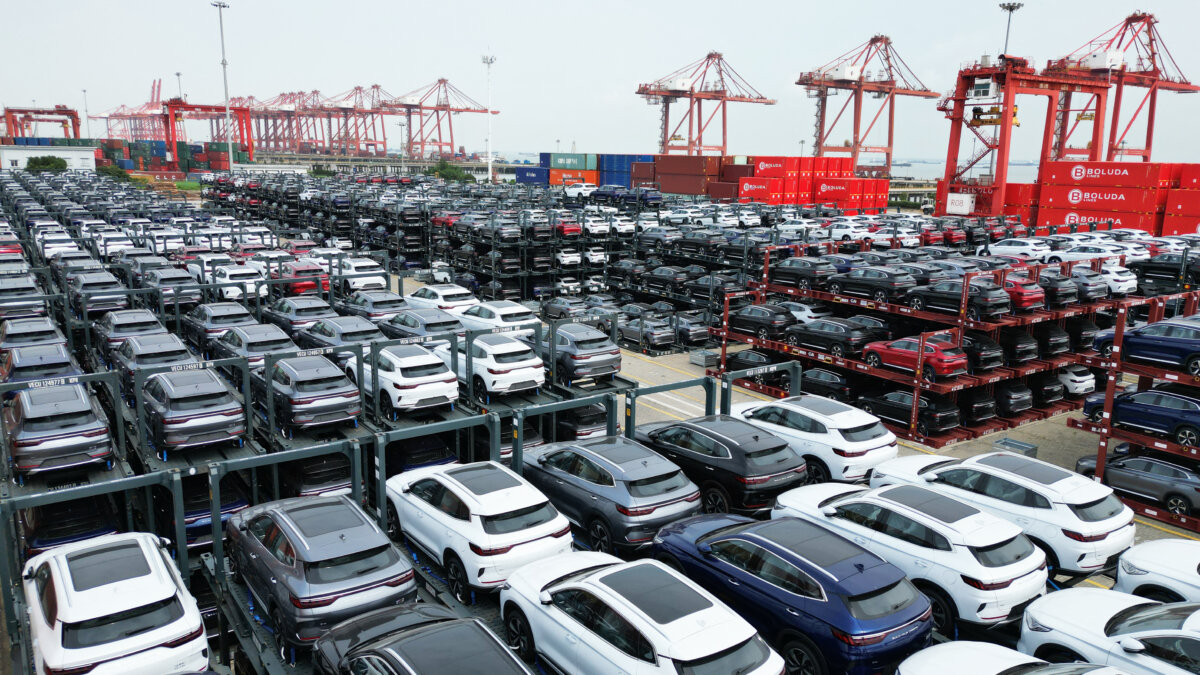
“Right now, Chinese automakers are dumping subsidized vehicles with connected software and hardware around the world,” Bozzella wrote, adding that China “is capturing market share” in Europe, Australia, Southeast Asia, Mexico and South America.
“This hasn’t happened inside the U.S. yet, but given the scale and urgency of this threat, we urge you to enact a Chinese vehicle, software and hardware ban before adjourning this year and make this policy the law of the land.”
Chinese connected vehicles already face major barriers to entering the U.S. market.
A Commerce Department rule adopted in January 2025 restricts certain connected vehicles, software, and hardware linked to China or Russia.
The restrictions cover software and Chinese- or Russian-connected-vehicle manufacturers and begin in model year 2027. Restrictions on covered hardware take effect with model year 2030.
The rule was adopted amid national security concerns surrounding connected vehicles. Federal officials have warned that the technology could be used to collect sensitive data or gain remote access to vehicle systems.
Congress is now considering proposals to enshrine additional restrictions into federal law.
This summer, the Senate Commerce, Science and Transportation Committee has advanced the Connected Vehicle Security Act of 2026. The legislation would restrict certain connected vehicles and related technology tied to foreign adversaries, including China.
A separate bill, dubbed the Motor Vehicle Modernization Act, has cleared the House Energy and Commerce Committee. It has a provision that would prohibit foreign adversaries from manufacturing, importing, or introducing motor vehicles into interstate commerce in the United States.
One provision in the Senate bill has raised concerns because it could potentially bar Mercedes-Benz from selling vehicles in America, even though the automaker is based in Germany.
The bill would restrict connected vehicles made by companies in which entities from covered countries control more than 15 percent of ownership or other measures of control.
According to Senate Commerce Committee Chairman Ted Cruz (R-Texas), Mercedes-Benz has nearly 20 percent Chinese ownership through stakes held by Chinese investors, meaning the company could fall under the provision as currently written. Cruz has said the language would need to be revised before the bill becomes law.
Mercedes-Benz is itself a member of the Alliance for Automotive Innovation. The trade group said it wants a “balanced policy” that allows all of its member companies to continue operating successfully in the United States.
In Thursday’s letter, Bozzella said the auto industry wants to work with lawmakers on the details so that restrictions aimed at China do not unintentionally hurt companies already operating in the United States.
“Automakers appreciate that approach because the details matter,” he wrote.
 Friends Read Free
Copy
Facebook
Tweet
Friends Read Free
Copy
Facebook
Tweet