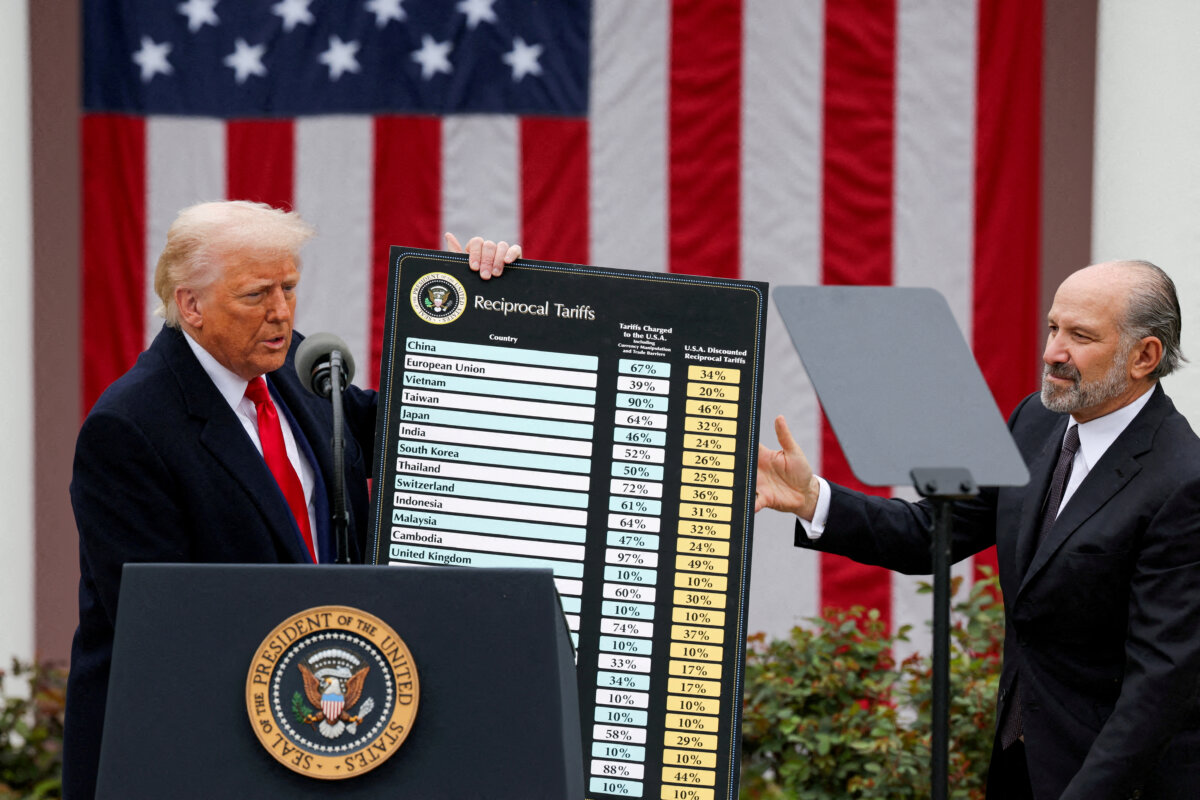

A federal court ruling against President Donald Trump’s authority to impose sweeping tariffs might be only a temporary setback for the administration, say Goldman Sachs economists.
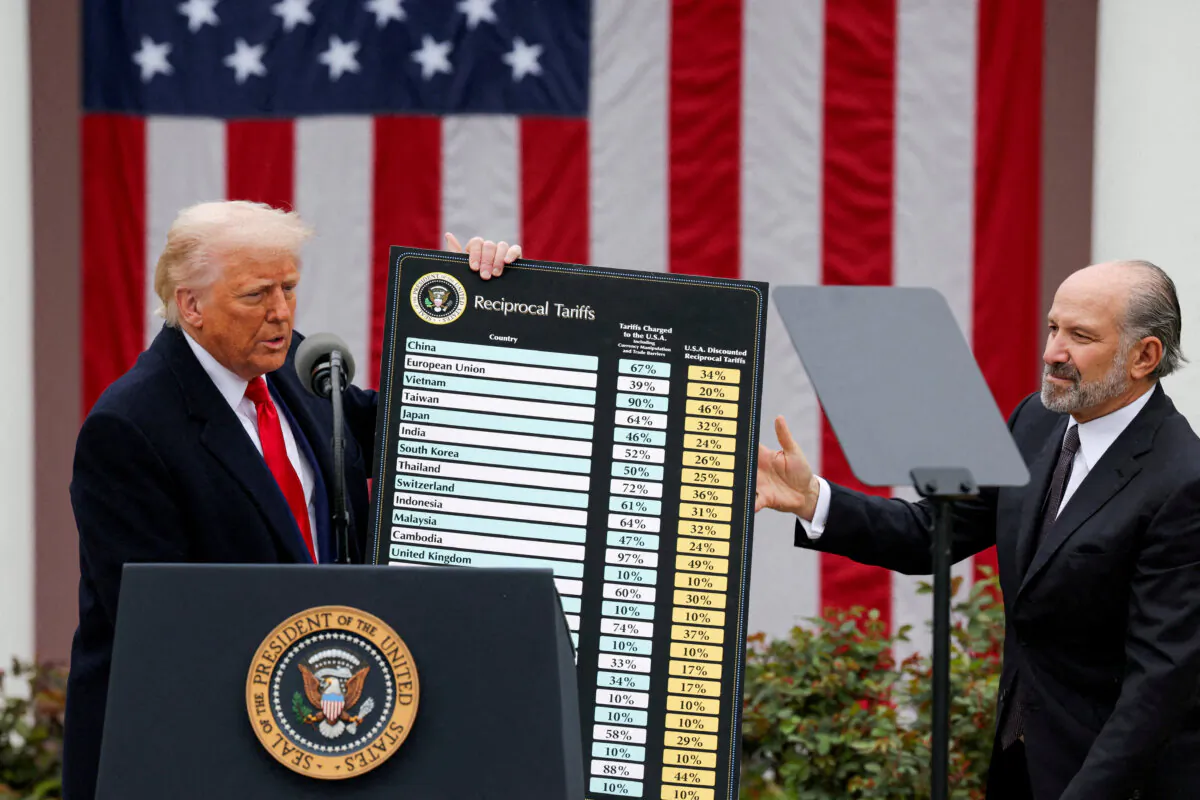
The New York-based U.S. Court of International Trade ruled on May 28 that Trump exceeded his authority by tapping the International Emergency Economic Powers Act (IEEPA) to implement levies on other countries.
The IEEPA is a federal law enacted in 1977 that permits the president to regulate global commerce in response to national emergencies.
Last month, Senate Democrats, with the help of four Republicans, scrapped Trump’s tariffs on Canada and Mexico declared under the emergency law in a 51–48 vote.
However, it was essentially a symbolic move as it will not be approved in the House, and the president wouldn’t sign it.
The panel of three judges, meanwhile, extended the White House 10 days to execute a formal process of halting the levies. The administration quickly appealed against the ruling with the U.S. Court of Appeals for the Federal Circuit.
Goldman Sachs economists believe the Trump administration has several tools available that “might not change the final outcome for most major U.S. trading partners.”
In addition to appealing the ruling, the administration might depend on Section 122 and Section 301 of the Trade Act of 1974, according to a May 29 research note by the bank.
Section 122 authorizes a president to implement tariffs of up to 15 percent for 150 days on imports from nations with sizable trade surpluses.
Analysts at Goldman Sachs say that, while it is only a short-term trade measure, it is a swift workaround that does not require formal investigations.
“The administration could quickly replace the 10 percent across-the-board tariff with a similar tariff of up to 15 percent under Sec. 122,” analysts said.
When first proposed in the 1970s, it was considered by U.S. officials as a quick strategy to address trade balances without requiring congressional approval or detailed investigations.
The other trade provision is Section 301, which grants the president broad authority to address unfair trade practices by foreign governments by instituting tariffs, sanctions, and other retaliatory measures.
Under this measure, the U.S. Trade Representative is permitted to investigate and respond to policies determined to violate trade agreements or discriminate against U.S. commerce.
While previous administrations have used it selectively since the 1980s to obtain leverage in trade negotiations, Trump has aggressively invoked Section 301 to impose levies on China since his first term.
Additionally, Section 338 of the Tariff Act of 1930 empowers the president to impose additional tariffs or new duties of up to 50 percent on goods entering the United States.
The president can use this provision if it has been determined that a foreign country has erected tariffs and other non-tariff trade barriers.
Like the other trade provisions, Section 338 has been rarely invoked by administrations, although presidents have threatened to use the law in various trade talks during the 1930s.
Section 232, which is currently used to justify tariffs on automobiles, steel, and aluminum, is another strategy that the Trump administration could employ, Goldman says.
The bank’s analysts state that the section could be broadened to other sectors under the guise of national security.
Michael Zezas, Morgan Stanley’s global head of fixed income and thematic research, echoed Goldman’s views that the administration can rely on multiple legal avenues to impose blanket global import tariffs.
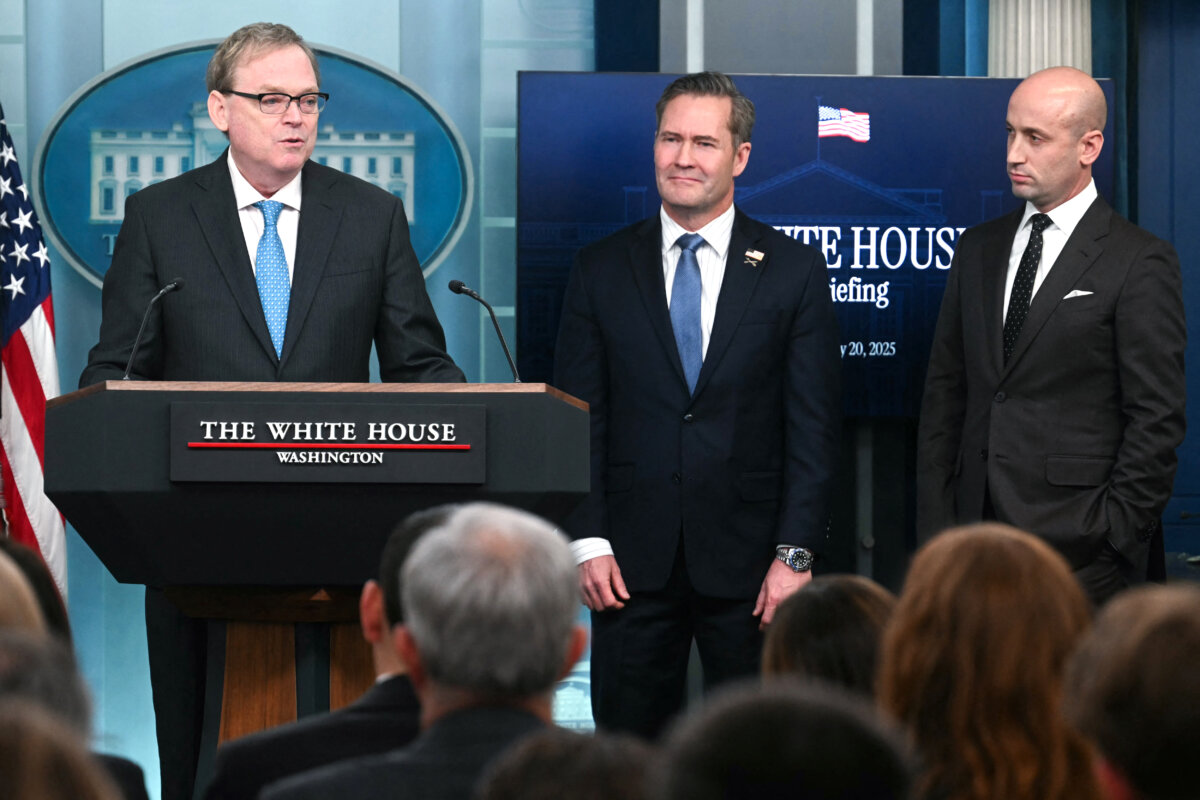
“The tariff levels that we had yesterday are probably going to be the tariff levels that we have tomorrow, because there are so many different authorities the administration can reach into to put it back together,” Zezas said in an interview with Bloomberg Television on May 29.
In the meantime, the White House will operate on the expectation that the appeals court will uphold the president’s tariff plans, says National Economic Council director Kevin Hassett.
Shortly after the court ruling, the White House issued a statement criticizing the decision.
“It is not for unelected judges to decide how to properly address a national emergency,” White House deputy press secretary Kush Desai wrote on social media platform X.
“President Trump pledged to put America first, and the administration is committed to using every lever of executive power to address this crisis and restore American greatness.”
 Friends Read Free
Copy
Facebook
Tweet
Friends Read Free
Copy
Facebook
Tweet