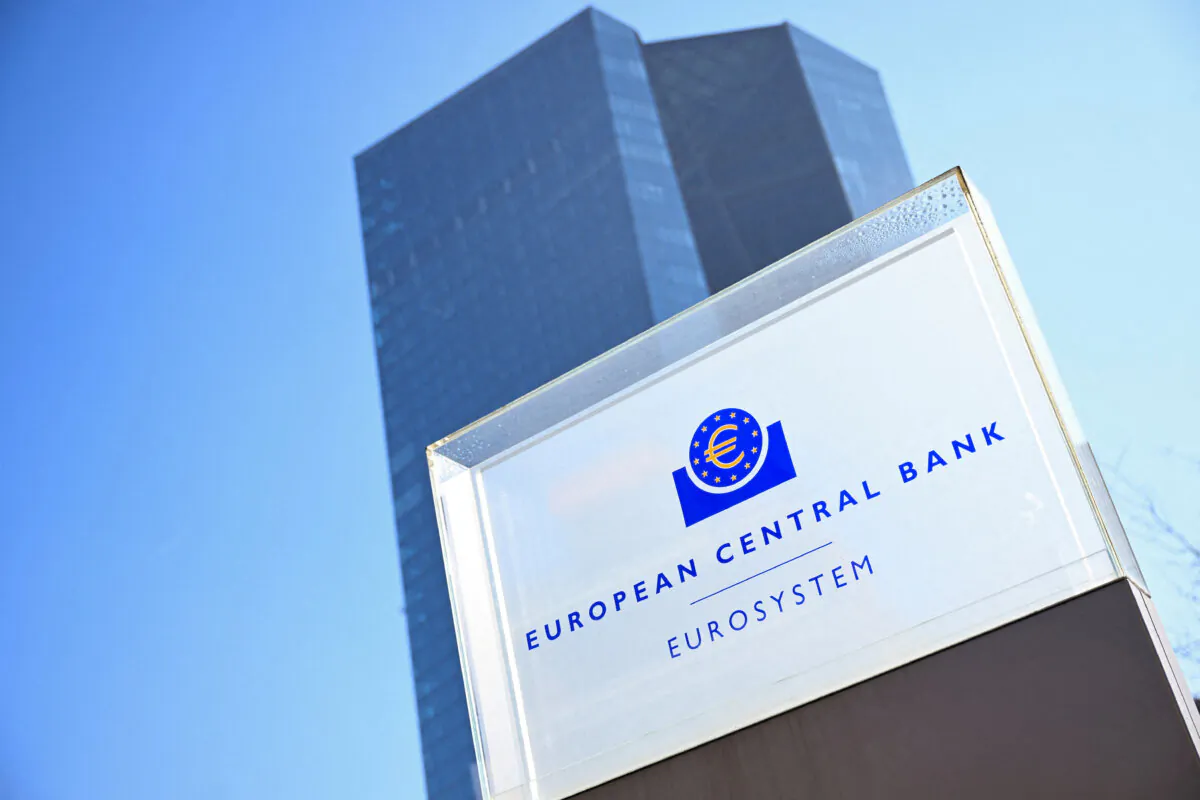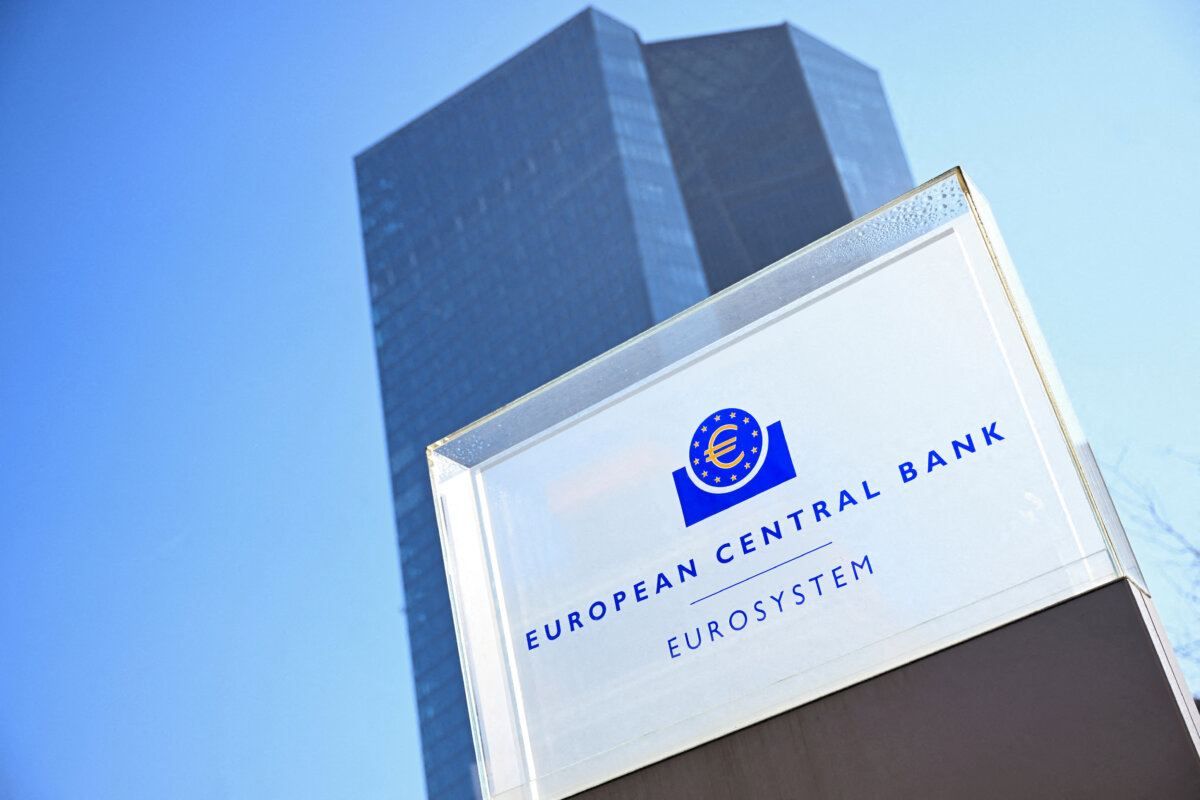

Euro zone inflation edged up slightly in August, staying close to the European Central Bank’s (ECB) target and bolstering expectations that policymakers will keep interest rates unchanged at next week’s meeting.
Consumer prices across the 20-nation currency bloc rose by 2.1 percent in annual terms last month, up from 2.0 percent in July, according to Eurostat data released Sept. 2. On a monthly basis, prices rose 0.2 percent after being flat in July.
The small uptick was driven largely by higher unprocessed food prices, which surged 5.5 percent on the year, and by services, which remained elevated with a 3.1 percent gain.
Core inflation, which excludes volatile food and energy prices, was unchanged at 2.3 percent. That stability suggests underlying pressures are holding steady, and makes a case for putting the ECB into a wait-and-see mode on interest rate moves.
“The eurozone inflation environment remains very sanguine for the moment. Inflation is close to target, and core inflation—while still slightly above target for the moment—is quite stable,” ING analysts said in a note. “With interest rates set at neutral levels, you could argue that this is a logical time for the ECB to keep rates on hold.”
Services inflation has become an important focus for policymakers, given its close ties to wages. Despite unemployment dipping to 6.2 percent in recent months, negotiated wage growth is moderating, with ECB trackers pointing to further easing toward 2.5 percent by early 2026.
“This could actually translate into a slightly softer inflation rate,” ING analysts said, adding that the eurozone economy has improved slightly but “nothing spectacular.”
The ECB has kept its key interest rate at 2 percent since July and is widely expected to hold again at its Sept. 11 meeting. While markets see monetary policy steady for the coming months, debate continues over whether another cut is in the cards by year-end, especially if disinflationary forces strengthen.
“Disinflationary forces are still present, and their impact becoming more visible makes a cut in December likely,” Ricarrdo Fabiani, an economist at Oxford Economics, said in a post on social media.
Citing a “slow growth” environment and “significant risks of downside surprises” in the eurozone economy, ING analysts said they see potential for ECB policymakers to deliver one more rate cut before holding rates steady. They described that as a “tall order,” however, given that “the case for holding steady is now quite solid.”
Striking a more hawkish tone, ECB board member Isabel Schnabel told Reuters that she sees inflation risks skewed to the upside, citing healthy economic growth and upward pressure on input costs due to the United States’ tariff policies, bolstering the view that no rate cuts are coming.
Bolstering the case for the ECB to be in a wait-and-see mode is a recovery in the eurozone’s manufacturing sector. The HCOB Eurozone Manufacturing Purchasing Managers’ Index rose to 50.7 in August from 49.8 in July, its first expansion since mid-2022 and the strongest level in more than three years.
“The economic recovery in the manufacturing sector is broadening,” Cyrus de la Rubia, chief economist at Hamburg Commercial Bank, said in a statement. “Incoming orders also offer hope for a sustainable recovery. After over three years of continuous declines, companies are now seeing a slight increase. Domestic orders have risen and are offsetting the weakening demand from abroad.”
 Friends Read Free
Copy
Facebook
Tweet
Friends Read Free
Copy
Facebook
Tweet