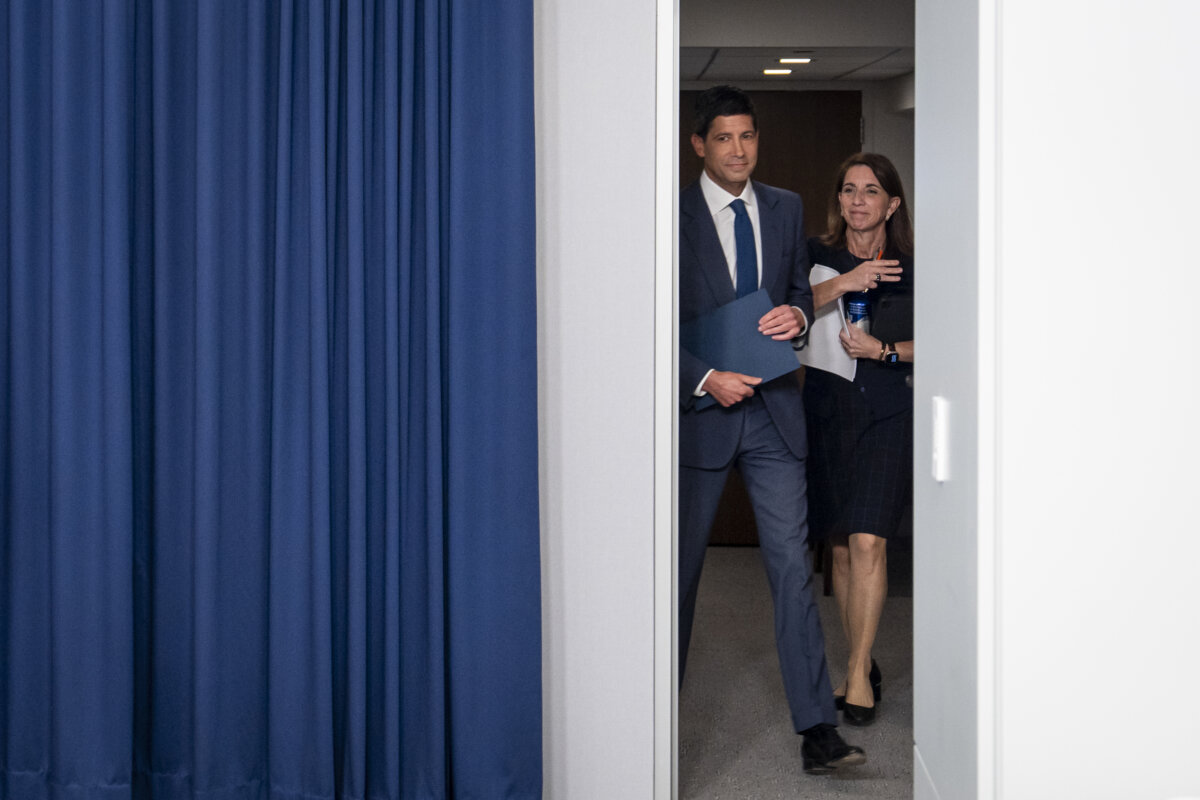
Wall Street will be tuned in to the Jackson Hole Economic Symposium at 10 a.m. EST on Aug. 28, when Federal Reserve Chairman Kevin Warsh delivers his first keynote address at the decades-old annual retreat as head of the central bank.
His predecessors—from Ben Bernanke to Jerome Powell—have used the yearly occasion to herald a monetary policy reset or to opine on the economy, inflation, and the labor market.
“It’s become a place where Fed chairs have delivered major policy signals,” Jay Woods, chief market strategist at Freedom Capital Markets, said in a note emailed to The Epoch Times.
Three months into his tenure, Warsh plans to “frame the big questions” facing the century-old institution—and Warsh and his colleagues are undoubtedly facing a series of tests.
‘Reaction Function’
From appearances on Capitol Hill to press conferences, the central bank leader has repeatedly pledged to deliver on the price stability side of the Fed’s dual mandate.
Its track record on inflation since the pandemic has been the target of scorn, with Warsh and others often remarking that the Fed has missed its 2 percent target for 64 straight months.
Warsh has committed to making elevated inflation a “thing of the past.” At the same time, the Fed chairman has yet to employ measures to lower inflation. The central bank has yet to make a move on interest rates this year, the money supply is still logging new record highs, and the balance sheet continues to expand.
Since financial markets are still acclimating to his speaking style and policy positions, one market observer is watching the “reaction function.”
“We should expect a focus on vocabulary as this is Warsh’s first Jackson Hole as chair. Investors have very little history with how he talks,” Natalia Lojevsky, managing director at CIFC Asset Management, told The Epoch Times in an emailed note.
“New chairs use this stage to set the frame for their tenure, and whatever language he establishes Friday gets applied to every data print for the next year.”
Lojevsky specifically pointed out that distinguishing between what he classifies as a threshold and what he views as noise could help determine the Fed’s next steps.
Energy prices, for example, remain elevated. A barrel of U.S. crude oil is above $80, and a gallon of gasoline is still around $4.
“So, the question is whether he thinks the pass-through into expectations has changed the inflation process,” she said.
During his Senate confirmation hearing, Warsh touted the efficacy of trimmed inflation, an economic measure that excludes outliers, such as high oil prices or low airfares.
July’s Personal Consumption Expenditures (PCE) Price Index, which came in at a higher-than-expected 3.7 percent, found inflation pressures were driven by non-war and non-tariff components, such as financial services, healthcare, and insurance. Additionally, prices for apparel, furnishings, and motor vehicles and parts declined.
Still, according to Kansas City Fed President Jeffrey Schmid, inflation remains “stubborn” and “sticky” and requires policy tools to “break through.”
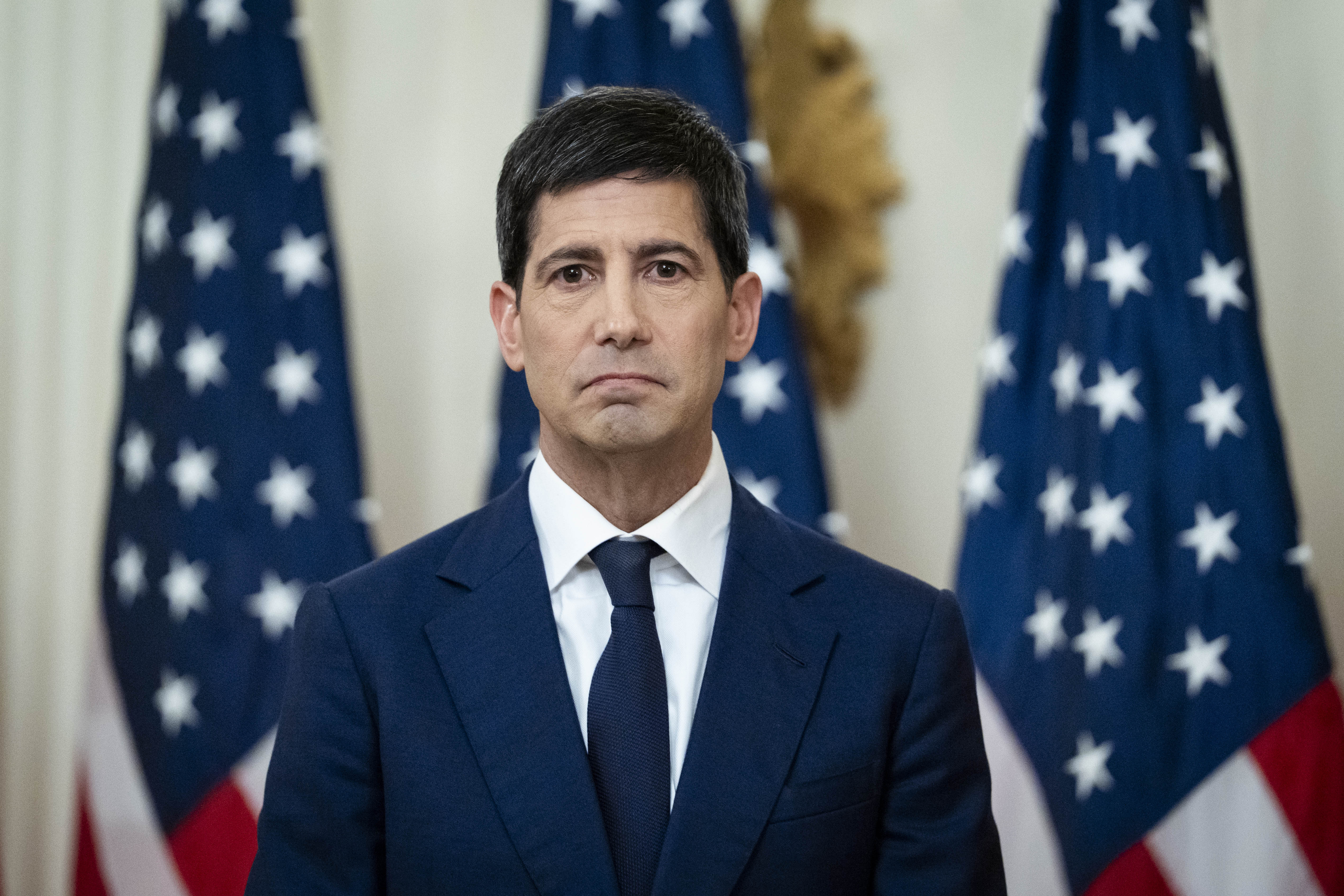 Fed Chair Kevin Warsh at the White House on May 22, 2026. (Madalina Kilroy/The Epoch Times)
“I don’t know what we’re restricting currently with the rate policy that we’re at today. I do know moving the rate does change behaviors in the market at a macro level.”
Schmid is not a voting member of the committee, but he was a hawkish participant at last year’s meetings and dissented twice from interest rate cuts.
Treasury Debt Buybacks
In addition to inflation challenges, the Fed is watching the Treasury Department bolster its debt buybacks from $2 billion to at least $4 billion to put pressure on long-dated bonds.
This endeavor may be at odds with Warsh’s proposed reforms, particularly his stated intention to no longer use the balance sheet to influence financial markets.
Lojevsky said the key question is whether Warsh even addresses the long end—including term‑premium repricing or the Treasury’s influence on it after last week’s surprise buyback announcement—given his repeated insistence that interest rates should be set by markets rather than by policymakers.
Yields on long-dated Treasury securities have stabilized, with the 20- and 30-year bonds holding steady at around 5.2 percent. The benchmark 10-year remains elevated but has been below 4.7 percent for much of the week.
Market watchers have presented various theories to explain the recent surge, ranging from persistent war-driven inflation fears to concerns surrounding fiscal policy. Others, including Warsh, say it could be markets adapting to the Fed no longer issuing forward guidance and holding the market’s hand.
“Prices reacted in real time to incoming information, and the reduction in forward guidance may have been a factor,” Warsh told reporters last month.
“Market participants are learning to play the ball, not the referee—and market prices will continue to respond in the direction and magnitude they see fit. This is, in my view, a change for the better—and we’re just getting started.”
As for the Fed balance sheet, it has been pressing higher again, climbing to an 18-month high of $6.74 trillion. Much of the increase has been concentrated on the Fed’s buying of short-term debt securities, an Epoch Times review of the Fed’s weekly balance sheet statement revealed.
Prediction Markets
Prediction markets suggest Warsh’s speech will touch upon a broad array of subjects.
Traders anticipate that the central bank chief will discuss artificial intelligence (AI), economic productivity, the 2008 Global Financial Crisis, the monetary policy task forces, the payment system, and Fed independence, according to Polymarket.
With Warsh committing to scaling back forward guidance, it could be challenging to determine the policy path—and investors just want a roadmap, said Woods.
“What does he need to see to become comfortable that inflation is sustainably moving toward 2 percent? How much labor-market weakness would change his thinking? And what could move the Fed off the sidelines in September?” Woods said.
 Friends Read Free
Copy
Facebook
Tweet
Friends Read Free
Copy
Facebook
Tweet