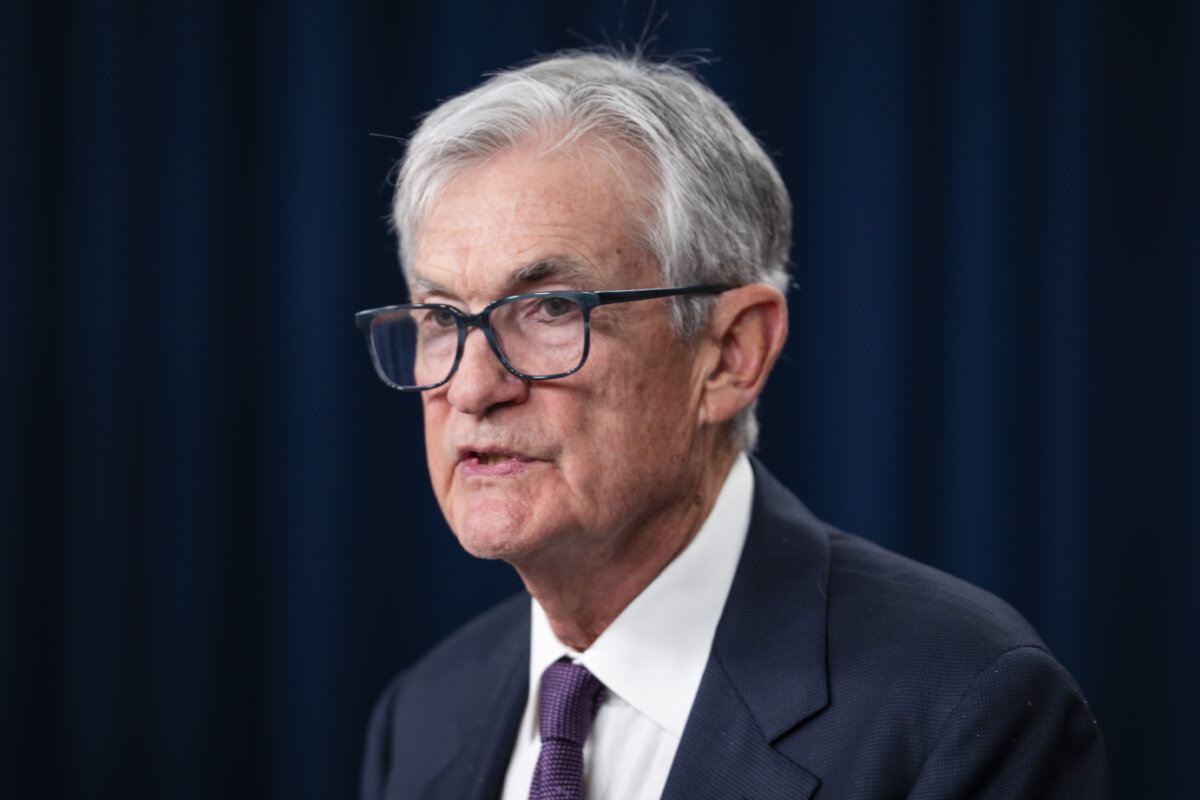

Federal Reserve officials expect an interest rate hike if inflation remains elevated, according to minutes from last month’s meeting released on May 20.
The Fed left interest rates unchanged at the April Federal Open Market Committee policy meeting in the current target range of 3.5 percent to 3.75 percent.
But April’s meeting had a notable outcome: four dissenting votes, the first since October 1992. Fed board member Stephen Miran—who resigned from the board on May 14—dissented, preferring a quarter-point rate cut.
The other three votes were from Cleveland Fed President Beth Hammack, Dallas Fed President Lorie Logan, and Minneapolis Fed President Neel Kashkari. Although they supported no rate action on May 20, the officials “did not support the inclusion of an easing bias in the statement at this time.”
The meeting minutes suggest that many officials also preferred eliminating the bias-easing language from the statement.
But they also believe that the institution needs to tighten monetary policy if inflation continues to run above its target rate.
“A majority of participants highlighted, however, that some policy firming would likely become appropriate if inflation were to continue to run persistently above 2 percent,” the meeting summary states.
For now, the consensus view is that the Fed should maintain its current policy stance amid higher inflation and uncertainty from the war in Iran.
“The vast majority of participants noted an increased risk that inflation would take longer to return to the Committee’s 2 percent objective than they had previously expected,” the minutes state.
At the same time, if there are “clear indications” of disinflation and if downside risks to the labor market appear, “it would likely be appropriate to lower the target range for the federal funds rate,” the document states.
Markets are signaling that they do not expect the Fed to loosen policy constraints anytime soon.
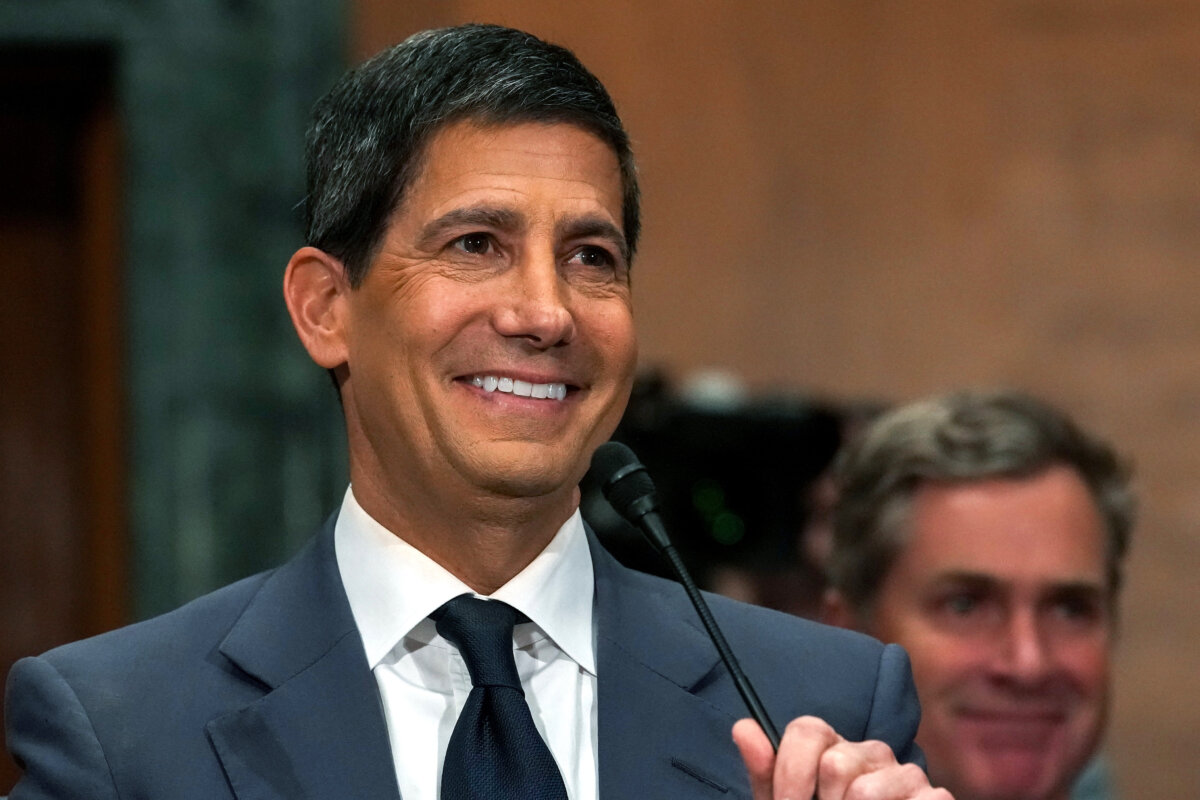
Despite incoming Fed Chairman Kevin Warsh espousing a dovish monetary stance, recent inflation developments could prevent the central bank from lowering interest rates.
The Fed might even consider a rate hike to push back against the inflation uptick observed over the past two months.
The latest data tranche suggests renewed headline and structural inflationary pressures.
Last month’s annual inflation rate advanced to 3.8 percent, the highest since May 2023.
Early estimates for the next consumer price index report indicate the 12-month rate topping 4 percent.
Underlying numbers—core inflation, producer price index, and import prices—have also edged up.
Investors have been spooked by persistent inflation risks, seen in U.S. Treasury yields and futures market data.
The longer-dated 30-year Treasury yield briefly touched 5.2 percent, the highest since July 2007.
The primary benchmark for U.S. borrowing—the 10-year yield—is at about a one-year high of roughly 4.6 percent.
The two-year yield, which tracks the short-term Fed policy outlook, reached 4.1 percent.
Justin Bergner, portfolio manager at Gabelli Funds, told The Epoch Times in an emailed note, “Clearly everyone is on the lookout for a second wave of inflation like the 1970s, which the Iran conflict might be pulling forward, but real yields are also back up above 2 percent.”
The pressure on yields may ease slightly, but the broader trend is unlikely to shift without a full resolution of the Iran conflict or a slowdown in artificial intelligence‑driven capital spending, “which wouldn’t be good for markets,” Bergner said.
“Nor is the Fed going to want to raise rates until after the mid-terms,” he said.
Investors have increasingly made a quarter-point rate hike their base case.
According to CME FedWatch data, the earliest boost could be in December. Prediction markets also show a 64 percent chance of a 25-basis-point jump in July.
Recent commentary from officials suggests that the price stability side of the dual mandate is in focus, as labor market conditions appear stable.
Philadelphia Fed President Anna Paulson, speaking at a May 19 event, said she agrees with the market’s reactions to economic news, taking into account various scenarios.
Ultimately, Paulson said she believes that holding rates steady would be appropriate to assess the economic fallout from the energy price shock.
“Risks to inflation have increased, and the timing and pace of any policy adjustments will be determined by the incoming data,” she said.
“If the conflict in the Middle East is resolved soon and shipping and oil production return to normal quickly, inflation and inflation risks are likely to subside relatively quickly.
“If it takes more time to resolve, inflation and inflation risks, along with risks to the labor market, are likely to be elevated for longer.”
Warsh, who will be sworn in during a White House ceremony on May 22, will lead his first two-day Federal Open Market Committee policy meeting on July 16 and July 17.
Although Warsh is only a single vote on the 12-person committee, he will still navigate a minefield.
He can advocate for lower interest rates, but the risk is that it would accelerate inflationary pressures at a time when crude oil prices and record-high money supply levels are already pushing inflation higher.
Or Warsh can keep monetary policy tight and rates higher for longer—a risk that could threaten growth and employment, and irk President Donald Trump.
However, for now, both the economy and the labor market are in good shape.
The widely watched Atlanta Fed GDPNow Model indicates that second-quarter growth will come in at 4 percent.
The unemployment rate remains at 4.3 percent, and the economy added a better-than-expected 115,000 new jobs in April.
Owen Evans contributed to this report.
 Friends Read Free
Copy
Facebook
Tweet
Friends Read Free
Copy
Facebook
Tweet